The return of Bernie Carbo to the Cardinals after a six-year absence was a minor free-agent signing with major consequences.
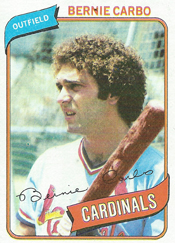 In March 1979, the Cardinals signed Carbo to a two-year contract for a guaranteed $115,000 per season.
Carbo was projected to be a backup outfielder and pinch-hitter for the Cardinals in 1979 and 1980.
Years later, Keith Hernandez, the Cardinals first baseman who in 1979 won a National League batting title and was named co-winner of the Most Valuable Player Award, testified in federal court he began using cocaine with Carbo when they were Cardinals teammates.
In retaliation for testifying against him, Carbo said he offered to pay someone to have Hernandez’s arms broken.
From Reds to Redbirds to Red Sox
Carbo had a troubled childhood in Detroit, but he possessed baseball talent and was chosen by the Reds in the first round of the 1965 amateur draft.
He made his major-league debut with the Reds in 1969, became their left fielder in 1970 and helped them win the National League pennant. Carbo batted .310 with 21 home runs and a .454 on-base percentage for the 1970 Reds, but was hitless in the World Series versus the Orioles.
According to the Cincinnati Enquirer, the relationship between Carbo and Reds manager Sparky Anderson deteriorated, and on May 19, 1972, Carbo was dealt to the Cardinals for first baseman Joe Hague.
As the Cardinals’ right fielder, Carbo batted .258 with a .381 on-base percentage in 1972 and .286 with a .397 on-base percentage in 1973.
The Cardinals traded Carbo and pitcher Rick Wise to the Red Sox for outfielder Reggie Smith and pitcher Ken Tatum on Oct. 26, 1973.
Two years later, in the 1975 World Series against the Reds, Carbo joined another former Cardinal, Chuck Essegian of the 1959 Dodgers, as the only players with two pinch-hit home runs in one World Series.
Limited options
In June 1978, the Red Sox sent Carbo to the Indians. After the season, Carbo, 31, became a free agent and “was shocked to find there was hardly any demand for his services,” according to The Sporting News.
The Cardinals were the only club to make him an offer. Carbo said, “I was depressed very, very much” by the lack of interest. “It hurts that nobody wants you.”
The reason the Cardinals took a chance was because of Carbo’s history with general manager John Claiborne, who’d been a Red Sox administrator.
With Lou Brock in left, Tony Scott in center and George Hendrick in right, Carbo was a backup for the 1979 Cardinals. He seldom played and hit .281 in 64 at-bats. In July, he showed up late for a game and got into an argument with manager Ken Boyer. Fined and told to stay out of uniform, Carbo apologized the next day and was reinstated.
In 1980, Carbo again opened the season as a Cardinals reserve, but he hit .182 in 11 at-bats and got released in May.
Demons and drugs
In September 1985, Hernandez was called to testify in U.S. District Court in Pittsburgh in the trial of a man accused of dealing drugs. Under oath, Hernandez said Carbo introduced him to cocaine in 1980.
Hernandez testified he used cocaine from 1980 to 1983 and played in one game for the Cardinals while under the influence of the drug. “It was a demon in me, an insatiable urge,” Hernandez said. Hernandez said other cocaine users on the Cardinals were Carbo, Joaquin Andujar, Lary Sorensen and Lonnie Smith, the New York Times reported.
Asked about Hernandez’s testimony, Carbo told the St. Louis Post-Dispatch, “He’s saying this to save his own career. He wants to put the blame on somebody else … He’s the one with the problem, spending big bucks on stuff like that.”
Twenty-five years later, in a 2010 interview with ESPN’s “Outside the Lines” program, Carbo said he sought to hire someone in 1985 to break the arms of Hernandez.
“I knew some people, and I had $2,000, and I asked them to break his arms,” Carbo said to ESPN.
According to the New York Post, Carbo changed his mind when told he likely would be implicated in any attack on Hernandez.
Carbo told ESPN, “When I went to an individual to have it done, he said, ‘We’ll do it in two or three years if you want it done, but we’re not going to do it today, Bernie. If we went and broke his legs today, or broke his arms, you don’t think they would understand that you are the one that had it done?’ ”
Years later, Carbo told ESPN, he wanted to apologize to Hernandez for getting him started on cocaine. “I would tell Keith Hernandez I’m sorry that I introduced you to the drug and I’m sorry that I was your problem,” Carbo said.
Hernandez told Newsday, “He doesn’t owe me an apology.”
Getting clean
In a 2001 interview with The Sporting News, Carbo said, “I was a drug addict and alcoholic for 28 years.” He said he “did cocaine when I was 22 or 23, and got into crystal meth, Dekedrines, Benzedrines, Darvons, codeine. There wasn’t much that I didn’t do.”
Carbo said to ESPN, “I was addicted to the point where I couldn’t play without the drugs.”
After Carbo was implicated in the drug trial, his mother committed suicide and his father died two months later. Carbo told ESPN, “I felt at that time I was responsible for my mother’s death.”
In 1992, Carbo wanted to take his own life. “I really didn’t have any hope or any reason to live any longer, so I was really contemplating suicide,” he said.
Carbo later wrote a book, “Saving Bernie Carbo,” and said he overcame his addiction to drugs and alcohol with the help of the Baseball Assistance Team (BAT) and with the encouragement of former players Ferguson Jenkins, Bill Lee and Sam McDowell.
In an April 2018 interview with The Detroit News, Carbo speculated clubs knew of his substance abuse problems during his playing days. “I think that’s why I got traded so many times,” he said. “I got traded every two or three years. They were probably aware of my wrongdoings.”
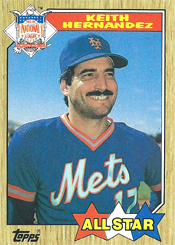 Hernandez, the former Cardinal, and Strawberry were two of the Mets’ most prominent players and their fight was visible evidence all was not right with team chemistry.
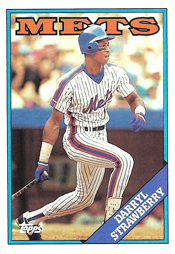 With the Mets playing the Dodgers in an exhibition game at Port St. Lucie on March 4, the soap opera took a twist when Strawberry returned with a grand entrance.
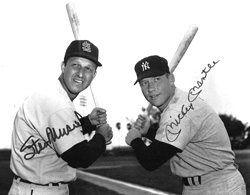 On March 1, 1969, Mantle, 37, announced his retirement, bringing an end to the career of one of baseball’s most exciting and popular players.
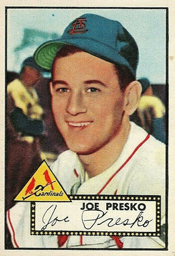 Presko was with the Cardinals from 1951-54, a period when the Dodgers won two National League pennants and twice finished in second.
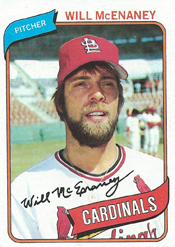 On Feb. 19, 1979, the Cardinals signed McEnaney to a minor-league contract and invited him to their spring training camp.
 Friend was a durable, dependable right-hander for 16 big-league seasons, 15 with the Pirates.
 RetroSimba