Feeds:
Posts
Comments

Struggling to score, the Cardinals opened the 1997 season by losing a franchise-record six in a row.
From April 1-6, the 1997 Cardinals scored a total of 12 runs in losing three to the Expos at Montreal and three to the Astros at Houston. All the games were played indoors.

It was the first time the Cardinals started a season 0-6.

The ugly start put the Cardinals in a hole from which they couldn’t recover. Never getting their record above .500, the 1997 Cardinals finished 73-89.

Expectations had been for a much different outcome.

High hopes

In 1996, Tony La Russa’s first season as St. Louis manager, the Cardinals (88-74) won the National League Central Division title and swept the Padres in the NL Division Series. After getting within a win of clinching the 1996 pennant before losing to the Braves in the NL Championship Series, the Cardinals were supposed to be contenders in 1997.

At a banquet in February 1997, La Russa raised the stakes, predicting the Cardinals would repeat as division champions.

The Cardinals had a successful spring training in Florida, posting a 19-11 record in exhibition games.

“So far, the signs are outstanding _ the way they’ve gone through the drills, the way they’ve competed in the games and the way they’ve related to each other and the coaches,” La Russa said to the St. Louis Post-Dispatch. “The signs are all go.”

After departing Florida, the Cardinals went to Arlington, Texas, and to Baltimore to play exhibition games against the Rangers and Orioles before opening the season on April 1 at Montreal.

In his column for the Post-Dispatch, Bernie Miklasz wrote, “La Russa has had the game face on since, oh, about Dec. 26. It should be a good year. The Cardinals should repeat as Central Division champions.”

Loss #1, April 1, at Montreal

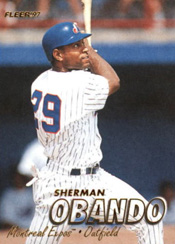
In the bottom of the ninth inning, with the score tied at 1-1, Cardinals reliever Tony Fossas walked pinch-hitter Sherman Obando with the bases loaded, forcing in the winning run and giving the Expos a 2-1 victory. Boxscore

Obando never took a swing in the six-pitch at-bat. “I didn’t see the ball up, so I didn’t swing,” Obando said.

The Cardinals scored their run in the sixth when Delino DeShields scampered home from third on a wild pitch from Jim Bullinger.

Loss #2, April 2, at Montreal

The Expos, behind the pitching of Jeff Juden, Omar Daal and 39-year-old Lee Smith, held the Cardinals to two singles and won, 4-1.

For the second consecutive game, the lone Cardinals run was scored by DeShields advancing from third to home on a wild pitch.

Said La Russa: “I have confidence that good hitters are going to hit.” Boxscore

Loss #3, April 3, at Montreal

The Cardinals blew leads of 2-0 and 4-2, losing 9-4. The Expos raked starter Alan Benes for 10 hits and seven runs in 4.2 innings.

“You can draw any conclusions you want to,” said La Russa. “They just flat outplayed us all three games.” Boxscore

The next day, in Houston, Miklasz met with La Russa before the game and described the manager as looking “as cheerful as your basic werewolf.”

“Those three insipid losses (at Montreal) made baseball’s most famous vegetarian more nauseated than he would by a plate stacked high with pepperoni, sausage and bacon,” Miklasz wrote.

Said La Russa: “We should have been more competitive in each of those three games. There’s no reason why we shouldn’t have done better in how we played _ and the manager should have done a better job.”

Loss #4, April 4, at Houston

Jeff Bagwell’s bases-loaded single off Eric Ludwick in the 11th snapped a 2-2 tie and lifted the Astros to a 3-2 victory.

The Cardinals started a season 0-4 for the first time since 1985.

St. Louis stranded 13 base runners. John Mabry drove in both Cardinals runs. Boxscore

In four games, the Cardinals were batting .167 with runners in scoring position.

“I feel terrific about our club,” La Russa said. “There isn’t anything we didn’t try to do tonight. The effort was there, the intensity, everything.”

Loss #5, April 5, at Houston

The Astros beat the Cardinals, 6-2. With their 0-5 record, the 1997 Cardinals matched the teams of 1902, 1919, 1960 and 1973 for worst start in franchise history.

Wrote Miklasz: “The lineup is as lethal as a Pez dispenser.”

Sid Fernandez started and earned the win in his final appearance of a 15-year major-league career. Ramon Garcia pitched four scoreless innings in relief for the save. Boxscore

“It’s a six-month test … I still like our club a lot,” said La Russa.

Loss #6, April 6, at Houston

Bagwell, hitting for infielder Tim Bogar in the eighth, delivered a two-run, two-out double off John Frascatore, erasing a 2-1 Cardinals lead and carrying the Astros to a 3-2 victory. Boxscore

The three-game sweep gave the Astros more wins against the Cardinals in 1997 than they had in 1996, when they lost 11 of 13 to St. Louis.

Having set the franchise record for most losses to begin a season, the Cardinals limped back to St. Louis for their home opener.

“I think I see guys trying to force things,” La Russa said. “It’s human nature. I hope they do. Otherwise, it means they don’t care.”

Said Cardinals third baseman Gary Gaetti: “It’s hard not to press when you’re really trying to get that first one.”

That’s a winner

After an off-day in St. Louis on April 7, the Cardinals played their home opener on April 8.

Willie McGee, 38, hitting for pitcher Mark Petkovsek, rescued the Cardinals by slashing a home run off Ugueth Urbina with two outs in the bottom of the ninth, giving St. Louis a 2-1 triumph over the Expos. Boxscore

“You couldn’t write a better script,” Mabry said of McGee’s streak-busting blast.

Said La Russa: “This was more dramatic than anything I’ve seen in a movie.”

Previously: Why Cards chose Delino DeShields over Ryne Sandberg
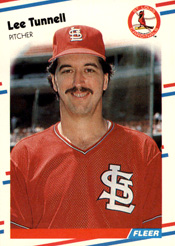
With his big-league career in decline, Lee Tunnell got an unexpected boost from a veteran scout and grabbed hold of an opportunity presented by the Cardinals. Six months later, Tunnell was pitching in the World Series.

During spring training in 1987, Cardinals scout Rube Walker was following the Pirates to assess whether catcher Tony Pena was a player St. Louis should acquire. While scouting Pena, Walker got to see Tunnell pitch.
Tunnell, a right-hander, was 11-6 with the Pirates in 1983, but skidded to 1-7 in 1984 and 4-10 in 1985. Tunnell spent the 1986 season in the minor leagues with Hawaii and was 4-11 with a 6.01 ERA.

“My career has been on a downhill slope, but (in 1986) it was pretty steep,” Tunnell said.

When he reported to spring training in 1987, the Pirates told Tunnell, 26, he no longer was in their plans and they would try to deal him. Tunnell handed the Pirates a list of places he’d like to pitch. St. Louis was one of those.

Scout’s honor

On April 1, 1987, the Pirates traded Pena to the Cardinals for outfielder Andy Van Slyke, catcher Mike LaValliere and pitcher Mike Dunne.

The Pirates also talked to the Cardinals about Tunnell. “We weren’t real interested in him because his record had been pretty weak,” Cardinals general manager Dal Maxvill said to the St. Louis Post-Dispatch.

Maxvill had a change of heart when he talked with Walker, a former pitching coach with the Mets and Braves. Walker told Maxvill that Tunnell had an effective fastball and breaking pitch. After reading Walker’s scouting report, Maxvill met with Lee Thomas, director of player development for the Cardinals. “We talked it over again and decided to go for him,” Maxvill said.

On April 6, 1987, the Cardinals purchased Tunnell’s contract from the Pirates and assigned him to their Class AAA minor-league affiliate at Louisville.

Rapid rise

Pitching for Louisville manager Mike Jorgensen, Tunnell regained his form and validated Walker’s endorsement. “This was just a time in my career where I needed a new start with somebody else,” said Tunnell. In six starts for Louisville, Tunnell was 4-1 with a 3.41 ERA.

On May 15, 1987, the Cardinals placed outfielder Jim Lindeman on the disabled list and called up Tunnell. Two days later, Tunnell got a start against the Reds in place of Joe Magrane, who had sprained an ankle.

The May 17 game between the Reds and Cardinals at St. Louis was a matchup of pitchers seeking to revive their careers. Starting for the Reds was Jerry Reuss, 37, a St. Louis native and former Cardinal who had joined the Reds after being released by the Dodgers.

Pitching in a big-league game for the first time in two years, Tunnell held the Reds to two runs in seven innings and got the win. Tunnell also singled and drove in a run in a 10-2 Cardinals victory. Reuss yielded 10 hits, two walks and seven runs in 4.2 innings. Boxscore

Tom Pagnozzi, who caught Tunnell’s gem and contributed a grand slam off reliever Guy Hoffman, said of the Cardinals starter, “His fastball was running in and out. He had a good slider and an outstanding curveball. He kept it down all game and they kept swinging and missing.”

Pena, watching from the Cardinals bench while on the disabled list, said of his former Pirates teammate: “He pitched today like he did in 1983. The Pirates lost confidence in him and then he lost his confidence. Sometimes it’s good to make a change. It was the right move and he’s excited about being here.”

Tunnell won three of his first four decisions with the Cardinals.

Big stage

In August 1987, he was placed on the 15-day disabled list because of a shoulder ailment. “Anytime I put effort into my fastball, it felt like my shoulder was coming out of its socket,” Tunnell said.

The rest enabled Tunnell to regain strength in the shoulder. On Aug. 29, he pitched effectively in a rehabilitation start for Class A Springfield, Ill. Three days later, he was reactivated by the Cardinals.

Utilized as a reliever, Tunnell pitched 8.2 scoreless innings in eight September appearances for the Cardinals, helping them clinch the National League East title.

His regular-season record: 4-4 with a 4.84 ERA.

For the NL Championship Series versus the Giants, Cardinals manager Whitey Herzog opted to keep eight pitchers on the postseason roster, leaving no room for Tunnell.

After the Cardinals won the pennant, Herzog determined injured first baseman Jack Clark wouldn’t be able to play in the World Series against the Twins, so he replaced Clark on the roster with Tunnell.

Tunnell appeared in relief in two World Series games, posting a 2.08 ERA in 4.1 innings.

In 1988, Tunnell spent the season at Louisville and was 6-8 with a 3.86 ERA. The Cardinals released him in October 1988.

Previously: Cardinals deal for Tony Pena not as lopsided as thought

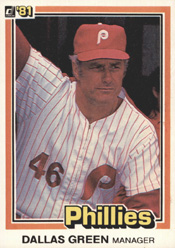
(In tribute to Dallas Green, who died March 22, 2017, at 82, I am posting here a story I did that was published in the Dec. 31, 2007, farewell edition of The Cincinnati Post.)

When Lou Piniella was chosen to manage the Reds, the ball club called a press conference at Riverfront Stadium on Nov. 3, 1989.

It was unusual for me, sports editor of The Post, to attend. I usually worked from the newsroom. But I went to the stadium that day.
The Reds were a troubled franchise. Pete Rose, who had managed them since 1984, had been banned from baseball. His interim successor, Tommy Helms, had departed bitterly, saying he never would work for club owner Marge Schott again.

Piniella, who had worked for New York Yankees owner George Steinbrenner, made a strong impression. He spoke convincingly about why the Reds would succeed.

When Piniella finished, I approached Schott. I had been named sports editor in August, a few days before Rose’s banishment, and hadn’t met Schott.

“I’m Mark Tomasik, new sports editor of The Post.”

“Nice to meet you, honey,” Schott said. “I hope you’ll bring some class to The Cincinnati Post.”

From March 1989 to December 1997, I had the privilege of working for The Post, most of that time as its sports editor. It was an era of big personalities and big stories in local sports: Rose, Schott, Piniella, Sam Wyche, Paul Brown, Boomer Esiason, Bob Huggins, Pete Gillen, Rick Pitino and dozens more.

The Post already had a lot of class when I arrived. Our sports section regularly was voted best in Ohio and one of the top 10 in the nation.

The staff talent was deep, diverse. Its best attribute: aggressiveness. Most big breaking-news local sports stories of that era were reported first by The Post.

The newsroom culture was to pursue news hard. So when I came to work at 5:30 the morning of Oct. 18, 1989, and was greeted by a story across Page 1 of the Enquirer headlined, “Dallas Green offered Reds’ manager’s job,” I knew what to expect.

Within minutes, the managing editor was at my door. “We have to have something that matches or advances that story for our Page 1,” he said.

“I don’t have any reporters at this hour,” I replied.

Our Reds reporter was in San Francisco, where that night an earthquake had rocked the Bay Area, led to more than 60 deaths and halted Game 3 of the World Series. I wasn’t going to call at 2:30 a.m. Pacific time and ask him to chase the Green story.

“I’ll take care of it,” I told the managing editor.

The Post had a source list of phone numbers for many of the biggest names in sports. Green, who lived near Philadelphia, was on the list.

Just before 7, with deadline an hour away, I dialed Green’s number. He answered. I identified myself and began to explain the call.

Green responded with a string of profanities, and hung up.

“He’s not talking,” I told the managing editor.

“You’ve got to find a way to get the story,” he said.

I waited 30 minutes.

I dialed again.

“Hello.”

“Please don’t hang up,” I pleaded. “I need your help.”

Green paused. I told him what the Enquirer was reporting and asked him to deny or confirm.

“You want to know why I was so upset when you called earlier?” he said.

“OK.”

“My daughter lives in San Francisco. That mean anything to you? We’ve been trying to contact her all night. We haven’t been able to get through. We’re worried sick. When the phone rang, we were hoping it was her.”

My impression of Dallas Green changed that instant.

“I haven’t been offered the Reds’ job,” he said. “Is that what you need?”

Yes. We printed it. Page 1. All editions.

Two weeks later, Piniella was named manager.

_ _ _

Copyright: Copyright (c) 2007 The Cincinnati Post

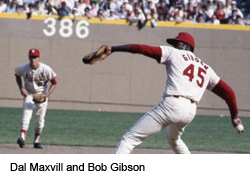
Clearly a believer in the Mark Twain adage of “Never let the truth stand in the way of a good story,” Bob Gibson told a terrific tale about the indignity of having Cardinals teammate Dal Maxvill pinch-hit for him. Problem is, it never happened.

Toward the end of an interview published in the March 11, 2017, St. Louis Post-Dispatch, Gibson was asked by Rick Hummel, “Worst experience in baseball?”

The Hall of Fame pitcher responded by spinning a story about the time manager Red Schoendienst called upon Maxvill, the light-hitting shortstop, to bat for Gibson.

“My worst experience in baseball was when Red had Maxvill pinch-hit for me,” Gibson said. “I was so mad. I sat on the bench and Maxie swung and missed a couple of pitches and then he popped up. I walked past Red and said, ‘Don’t ever do that again.’ I took a shower and went home.”

Either Gibson, a noted prankster, was playing a gag on Hummel, or the passage of time clouded the memory of the 81-year-old Cardinals legend.

Don’t blame Dal

The facts: Maxvill was not a successful pinch-hitter, but he never batted for Gibson in either a regular-season or postseason game.

Maxvill made 12 plate appearances as a big-league pinch-hitter, according to the reliable Web site retrosheet.org. He was 0-for-11, with a walk.

Gibson didn’t pitch in any of the 12 games Maxvill appeared as a pinch-hitter.

Maxvill made six pinch-hit appearances _ three in 1962 and three in 1963 _ when Johnny Keane was Cardinals manager. He made two pinch-hit appearances with the 1972 Athletics under manager Dick Williams.

Only four of his 12 pinch-hit appearances took place for the Cardinals when Schoendienst was manager. He had one in 1965, two in 1971 and one with the 1972 Cardinals before he was traded to the Athletics.

No Gibson sub

The four times Schoendienst sent Maxvill to pinch-hit resulted in:

_ Reached on an error as pinch-hitter for pitcher Ray Washburn on June 16, 1965. Boxscore

_ Grounded out to shortstop as pinch-hitter for pitcher Bob Chlupsa on June 4, 1971. Boxscore

_ Walked intentionally as pinch-hitter for pitcher Moe Drabowsky on June 8, 1971. Boxscore

_ Struck out as pinch-hitter for injured shortstop Dwain Anderson on Aug. 15, 1972. Boxscore

Only once did Maxvill pop out as a Cardinals pinch-hitter. That took place in his major-league debut on June 10, 1962, when Maxvill, batting for pitcher Bobby Shantz, hit a pop-up to Giants pitcher Billy O’Dell. Boxscore

This scenario fits

Perhaps Gibson was confusing Maxvill with Dick Schofield.

In 1968, Schofield was Maxvill’s backup at shortstop. Schofield, a .227 career hitter, batted .220 for the 1968 Cardinals.

On April 20, 1968, Schoendienst sent Schofield to bat for Gibson in the ninth inning.

Schofield popped out to third.

Gibson couldn’t have been happy. The Cubs won, 5-1, making Gibson winless in three starts. The Cardinals scored a total of seven runs in those three games.

Though he made 11 pinch-hit appearances for the 1968 Cardinals, Schofield never would bat for Gibson again.

Gibson would go on to have his most magnificent season in 1968, producing a 1.12 ERA and 28 complete games in 34 starts for the National League champions.

Gibson in a pinch

Maxvill has a career .217 batting average; Gibson, .206.

Gibson was more successful than Maxvill as a pinch-hitter.

In 14 career pinch-hit appearances for the Cardinals, Gibson produced three hits, two walks and a sacrifice bunt.

In 13 of those pinch-hit appearances, Gibson batted for a pitcher.

The exception was on May 27, 1966, when Gibson was Schoendienst’s choice to be a pinch-hitter for left fielder Bobby Tolan. Batting with a runner on third, one out and the Cardinals trailing by a run against the Reds, Gibson struck out against reliever Billy McCool. Boxscore

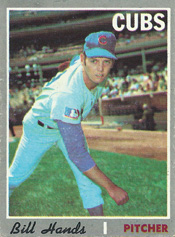
Bill Hands, whose effective starting pitching helped transform the Cubs from losers to contenders under manager Leo Durocher, was a familiar opponent of the Cardinals in the late 1960s and early 1970s. His best performance against the Cardinals came on a day when the behavior of the Wrigley Field Bleacher Bums got out of hand.

Hands pitched 11 seasons (1965-75) in the major leagues and had a career record of 111-110 with a 3.35 ERA.
A right-hander, Hands was best in a three-year stretch for the Cubs when he was 16-10 in 1968, 20-14 in 1969 and 18-15 in 1970.

Against the Cardinals, Hands was 14-12 with a 2.58 ERA in his career. He had more wins (14), innings pitched (205.2) and appearances (38) against the Cardinals than he did versus any other opponent.

After posting losing records in 13 of 14 seasons from 1953-66, the Cubs had 87 wins in 1967 and 84 in 1968. By 1969, they were a threat to the reign of the Cardinals, who had won consecutive National League pennants in 1967 and 1968.

Fired up

On June 28, 1969, the Cubs were in first place in the East Division at 46-26 entering a Saturday game with the Cardinals at Chicago. St. Louis was 35-37, 11 games behind the Cubs. Looking to put a dagger into the Cardinals’ title hopes, the Cubs started Hands against Dave Giusti.

The left field stands at Wrigley Field filled quickly with Cubs fans. Known as Bleacher Bums, the group was whipped into a frenzy by the early-season success of their hometown team and by the sight of the archrival Cardinals.

As Cardinals players appeared in the outfield to shag flies and play catch before the game, “bleacher fans showered the Redbirds players with flashlight batteries, quarters, paper cups, dry ice and other debris in pregame practice,” the St. Louis Post-Dispatch reported.

Cage match

Cardinals center fielder Curt Flood told the Chicago Tribune, “They were throwing steel ball bearings at me. If I turn and catch one in the eye, it’s bye-bye career. I can start carrying a lunch pail to work.”

Cardinals pitcher Mudcat Grant said he was hit in the mouth by a hard rubber ball thrown from the left-field bleachers. Someone also flung a hard hat at him. Teammate Bob Gibson picked up the hard hat and “played the conductor’s role in leading the Bleacher Bums as they jeered the Cardinals with chants,” the Post-Dispatch reported.

According to the Tribune, bleacher fans claimed Grant retaliated by hitting three of them with baseballs he threw into the stands.

“I just lobbed the ball,” Grant said to the Post-Dispatch. “They weren’t lobbing those nails and flashlight batteries and that helmet at me.”

Grant said he “scared” the fans by throwing two baseballs hard against the ivy-covered wall.

“You ought to put a cage over them,” Grant said.

The Bleacher Bums also taunted left fielder Lou Brock, a former Cub, with calls of “bush leaguer.”

“The thing that really bothers me about it is that they are showing you people (reporters) up,” Brock said. “You have glorified them and they show their gratitude by behaving like that. It’s not right.”

Bearing down

Once the game began, Hands became the story. He held the Cardinals to one hit _ a Tim McCarver single _ through five innings.

In the sixth, with the Cubs ahead, 1-0, Flood led off with a single to left. Brock stretched his hitting streak to 13 games with a double into the left-field corner, scoring Flood.

“Both the pitches they hit in that inning were mistakes,” Hands said. “Brock hit a fastball down the middle and Flood got a hanging slider.”

Reminding himself to bear down, Hands struck out Vada Pinson and Joe Torre _ “I got Pinson on a fastball on the corner and Torre missed a slider,” Hands said _ before McCarver flied out.

The Cubs went ahead, 2-1, when Willie Smith hit a home run off Giusti in the bottom half of the inning and they added a run in the seventh.

Hands retired the Cardinals in order in the last three innings, sealing the 3-1 win and finishing with a three-hitter. Boxscore

Koufax impressed

It was the third consecutive complete game pitched by Hands.

“I knew Hands was a good pitcher, but I didn’t know he was that good,” said Sandy Koufax, the retired Dodgers ace who was broadcasting the game for NBC. “He really showed me something today.”

Said Cardinals manager Red Schoendienst: “He threw a good slider about 85 percent of the time to our right-handed batters. He had marvelous control of it _ low and away.”

The loss dropped the Cardinals 12 games behind the Cubs. “They’re far enough behind us that they’ve got to win almost every one of the (13) games left between us,” said Cubs shortstop Don Kessinger.

Though the Cardinals didn’t catch them, the Cubs couldn’t hold onto the division lead. The Mets would finish in first place at 100-62. The Cubs (92-70) placed second and the Cardinals (87-75) were fourth.

Previously: How Mike Shannon put brakes on Cubs title hopes

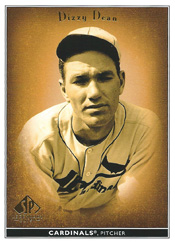
Prompted by his wife, Cardinals pitcher Dizzy Dean confronted a critic and initiated an argument that escalated into a brawl inside a crowded hotel lobby.

The principals in what became known as the Battle of Tampa were Dean, teammate Joe Medwick and journalists Jack Miley of the New York Daily News and Irv Kupcinet of the Chicago Daily Times.

Though the fisticuffs were real, the biggest blows may have been those that inflicted bruises to the egos of the participants.

The melee occurred on April 2, 1937, at the Tampa Terrace Hotel after the Cardinals lost to the Reds in a spring training game.

The seeds for the showdown were sown about a month earlier.

Money matters

Holding out for a more lucrative contract offer, Dean didn’t report when the 1937 Cardinals opened spring training camp at Daytona Beach, Fla.

Miley, a columnist, scolded the pitcher. According to The Sporting News, he wrote: “For a guy who was picking cotton for 50 cents a day a few years ago, Diz has an amusing idea of his own importance.”

While Dean stayed with his wife Patricia at their house in Bradenton, Fla., during the contract holdout, journalists camped out in the town, hoping for comments from the colorful Cardinals ace.

In “Diz,” a 1992 biography of Dean, author Robert Gregory wrote that when reporters cornered Dizzy and his wife at a post office, seeking an interview, Patricia “cursed them and stomped to the car, honking the horn every few seconds until he joined her.”

When Dizzy later agreed to pose for news photographers, Patricia kept the cameramen waiting five hours before allowing her husband to cooperate.

Miley went on the attack in his column. According to Gregory, Miley called Patricia “a plump, dominating cotton queen” and described Dizzy as a “hen-pecked, fat-between-the-ears sharecropper.”

Dizzy shrugged off such remarks, Gregory said, but Patricia vowed revenge.

War of words

When the Cardinals played the Reds at Tampa, Patricia spotted Miley at the ballpark. After the game, the Cardinals went to the hotel and, still in uniform, gathered in the lobby, awaiting room keys. Most of the Cardinals carried their spikes to keep from tearing up the lobby carpets.

Dizzy and Patricia were the first from the Cardinals group to get a room key. As they entered the elevator, Patricia saw Miley in the lobby _ just as Miley and Kupcinet emerged from the hotel bar, according to Gregory _ and urged her husband to confront the writer.

In the lobby were 18 Cardinals, about 20 other hotel guests and some hotel employees. Dean stepped out of the elevator and approached Miley. Piecing together accounts written by Miley, Gregory, the St. Louis Post-Dispatch and United Press, here is what happened next:

Dizzy: “Is your name Miley?”

Miley: “Yes.”

Dizzy: “I wish you would not write those things about me. You said some terrible things about me.”

As the conversation continued, 10 of Dizzy’s teammates gathered around him.

Dizzy: “You $125-a-month writers make me sick. Don’t you never mention me and my wife in one of them damned columns of yours again.”

Miley: “That’s a pleasure. I hate to write about bush leaguers anyway.”

Dizzy: “Remember what I told you. I warned you. That’s from the horse’s mouth.”

Miley: “I say it’s from a hillbilly horse’s ass. What are you going to do about it?”

Dizzy: “I’ll show you…”

Hit or miss

Kupcinet, a 6-foot, 195-pound former college quarterback at North Dakota, stepped between Dean and the rotund (5 feet 6, 250-pound) Miley.

“Why don’t you pick on somebody your own size,” Kupcinet said to the pitcher.

Dean replied: “Stay out of my way, you New York Jew.”

Dizzy unleashed a wild punch _ “a ladylike left hook,” Miley called it _ that either missed or grazed Miley’s head.

Mike Ryba, a Cardinals pitcher, reached over Dean’s shoulder and swung his spikes, cracking Miley in the forehead and opening a cut above his right eye. The blow knocked Miley to the floor.

As Kupcinet reached for Dean, Medwick landed a crunching punch to Kupcinet’s left cheekbone.

Kupcinet went sprawling into a potted palm tree “that swooshed backward and started a chain reaction, knocking down floor lamps, plants and four other palms,” Gregory wrote.

Dean scampered for cover under an overturned sofa.

As other players moved in on the fallen writers, Mike Gonzalez, a Cardinals coach, stopped the brawl from continuing.

In the Post-Dispatch, J. Roy Stockton wrote of the spectacle, “Cigar girls and bell boys were very much excited, but no serious harm had been done.”

Tough talk

As Dean strutted back to the elevator, he crowed, “There ain’t no doubt about it _ It’s still the Gashouse Gang.”

Kupcinet shouted at Dean: “I’ll fight you any place, any time you want to. Just name it.”

Miley said to Cardinals manager Frankie Frisch: “What’s the matter, Francis, can’t you control those ballplayers of yours?”

Replied Frisch: “No, I can’t.”

Kupcinet told a colleague, “Dean started the whole trouble, but when the fight started he didn’t get in it himself. They’re the Gashouse Gang all right, but they won’t fight unless they know they’ve got the edge on you.”

Post mortem

The Cardinals paid the hotel for the damages, Gregory reported.

Ford Frick, National League president, said he wasn’t inclined to take action because the fight didn’t occur on the baseball field.

Among media reaction:

_ Joe Williams, columnist for the New York World-Telegram, said of Patricia Dean: “There’s a lady for you, chums. I wouldn’t say she is hard-bitten, but Mr. Miley is lucky she wasn’t in there swinging.”

_ The Sporting News editorialized: “There is no defense for ganging up on a man. Only mobs, hysteria-crazed and cowards adopt that method … The Cardinals players who participated in that hotel scene have put themselves in the position of public scorn.”

A week later, Dizzy told the Associated Press he was “sorry” about the incident. “It’s the first time I ever had any trouble with a sports writer and you can take it from ol’ Diz it will be the last time,” he said.

In October 1937, The Sporting News reported, Miley left the New York Daily News “after a disagreement with Jimmy Powers, sports editor.” Miley joined King Features syndicate and then the New York Post.

Dean was traded to the Cubs in 1938. Kupcinet, still with the Chicago Daily Times, and Dean patched their differences, posed for a Page 1 photo and became friends, Gregory said.

In retelling the story, Dean denied he’d been in the fight and blamed Medwick for instigating it. In response, Medwick, in a letter to the Chicago Daily Times, wrote: “Dean’s right in one respect. He wasn’t in the fight once punches started to fly. He usually does a crawfish act when that happens.”

Kupcinet began writing a celebrity gossip column for the Chicago Daily Times in January 1943. It was widely read and he became an influential figure in Chicago. Kupcinet continued writing the column for the Chicago Sun-Times until the week he died at 91 in 2003.

Previously: How Dizzy Dean survived an armed robbery