Feeds:
Posts
Comments

In a move that shifted the balance of baseball power in St. Louis, Branch Rickey left the American League Browns and joined the National League Cardinals.

branch_rickey2On March 20, 1917, Rickey, the Browns’ business manager, became president of the Cardinals.

Rickey’s departure was fought by Browns owner Phil Ball, even though the two men didn’t get along.

At the time, the Browns were the dominant baseball franchise in St. Louis.

Under Rickey, the Cardinals would transform from a lackluster franchise into an elite one.

Meet the new boss

In 1915, Rickey served the dual roles of Browns manager and assistant to team owner Robert Hedges. Rickey performed many of the duties of a general manager.

After the 1915 season, Hedges sold the Browns to Phil Ball. One of Ball’s first moves was to hire Fielder Jones, former White Sox manager, to be manager of the Browns and reassign Rickey to the position of business manager.

In his 1982 book “Branch Rickey: A Biography,” author Murray Polner wrote Rickey and Ball “took an instant dislike to one another.”

“Ball thought Rickey’s ideas too radical and Rickey’s endless talk and large vocabulary made him uncomfortable,” Polner wrote. “Rickey was, in turn, uncomfortable with Ball’s crudeness. He considered Ball uncouth and, in matters of baseball, virtually illiterate.”

According to Rickey, Ball agreed to honor Rickey’s contract, but told him he wouldn’t stand in his way if Rickey wanted to leave.

First choice

The 1916 Browns entered September four games out of first place and finished with a 79-75 record.

The 1916 Cardinals were a mess and finished in last place at 60-93. Ownership was strapped for cash and had trouble paying bills.

On March 5, 1917, Cardinals owner Helene Britton sold the club for $375,000 to a consortium of investors led by former team president James C. Jones.

Jones and the investors polled a group of seven St. Louis journalists for their advice on who should be hired to run the baseball operations.

The response was unanimous: Rickey.

Lucrative offer

Jones offered Rickey a three-year contract at $15,000 per year to be Cardinals president, according to the St. Louis Star. Rickey, who was to be paid $7,500 as Browns business manager in 1917, went to Ball and asked to be released from his contract.

Rickey said he received absolute assurance from Ball on March 19, 1917, that he could negotiate for a job that would better his position, the St. Louis Post-Dispatch reported.

A day later, Rickey accepted the Cardinals’ offer and signed a contract with them, according to a Page 1 story in the Post-Dispatch.

Ball, though, was having second thoughts.

Baseball battle

Ban Johnson, president of the American League, didn’t want Rickey going to a club in the rival league, Rickey said. Johnson pressured Ball to stop Rickey from joining the Cardinals.

Displaying a Browns contract Rickey signed for 1917, Ball told the Post-Dispatch, “I will insist that he fulfill his agreement.”

“Rickey seems to be confused over certain promises I made to him when he signed this (Browns) contract,” Ball said. “I promised Rickey … I would also help him in bettering himself if any opportunity offered itself for him apart from baseball.

“I at no time had the notion that he would consider this offer applicable to any proposition he might receive from one of my competitors,” Ball said. “My idea was that should Rickey care to enter the law business in St. Louis I would give him every assistance that I could.”

Ball went to court and received a restraining order that prohibited Rickey from working for the Cardinals until a hearing could be held before a judge.

In the Post-Dispatch, columnist John Wray wrote, “The battle between Rickey and Ball … seems a useless waste of time and money in which the only persons to come out of the conflict with all the honors _ and considerable cash _ will be the attorneys.”

The St. Louis Star opined, “Squeamish people who have doubted that Rickey will be allowed to preside over the Cardinals on account of a prior contract with the Browns are now inclined to view the position of Rickey as one that will impregnably withstand legal assault.”

Let’s make a deal

On April 6, 1917, the day a hearing was to be held, a settlement was reached that allowed Rickey to join the Cardinals.

“Rickey agreed to the terms of the settlement only after much persuasion,” the Post-Dispatch reported. “He and his personal attorney, George Williams, were very eager to bring the case to trial, but they were persuaded in the end, for the good of baseball, to accept the settlement out of court as proposed by Ball’s lawyers.”

Though the Cardinals under Rickey improved significantly in 1917 _ they finished in third place at 82-70 _ it wasn’t until Sam Breadon became principal owner in 1920 that the franchise had the backing it needed to solidify and blossom.

Supported by Breadon, Rickey built professional baseball’s first farm system, providing the Cardinals with a steady supply of talent trained under a shared organizational philosophy.

Rickey, who had returned to the field as Cardinals manager in 1919 while still running the administrative baseball operations, was put back in the front office by Breadon fulltime in May 1925 and the Cardinals won their first pennant and World Series championship the next year.

Previously: The story of Branch Rickey and his final journey

(Updated May 26, 2020)

Looking to build on a reputation as a keen talent evaluator and decision-maker, Ted Simmons left a front-office job with the Cardinals for an executive position with a National League division rival.

ted_simmons19On Feb. 5, 1992, Simmons, 42, resigned as Cardinals director of player development and accepted an offer to become general manager of the Pirates.

Emerging from a field of finalists that included Walt Jocketty, Simmons got the job because of the work he had done in improving the Cardinals farm system and because of his connections with Pirates president Mark Sauer.

Simmons’ rise was derailed, however, when, 16 months after becoming general manager, he suffered a heart attack and resigned.

Talent show

Elected to the Baseball Hall of Fame in December 2019, Simmons, a catcher, played 13 seasons (1968-80) for St. Louis, batting .298 and producing 1,704 hits and 929 RBI in 1,564 games.

In 1988, after Simmons finished his playing career with the Braves, he rejoined the Cardinals as head of their minor-league system.

Ray Lankford, Bernard Gilkey and Todd Zeile were among the prospects who developed into Cardinals players during Simmons’ tenure, enabling St. Louis to replace Willie McGee, Vince Coleman and Terry Pendleton.

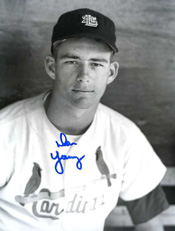
Donovan Osborne, John Mabry and Dmitri Young were drafted by the Cardinals while Simmons was farm director.

Sauer, an Anheuser-Busch executive, joined the Cardinals as deputy chief operating officer and learned the baseball operation from Simmons.

Sauer was promoted to Cardinals executive vice president and chief operating officer in 1990. He left in October 1991 to become president and chief executive officer of the Pirates.

Search for success

Three months after he arrived in Pittsburgh, Sauer fired general manager Larry Doughty. Though the Pirates had won division titles in 1990 and 1991, Sauer was dissatisfied with the quality of the farm system under Doughty.

In his search for a general manager, Sauer identified five finalists. In addition to Simmons, they were:

_ Cam Bonifay, Pirates assistant general manager.

_ Bill Lajoie, former Tigers general manager.

_ Murray Cook, former general manager of the Yankees, Reds and Expos.

_ Walt Jocketty, director of baseball administration for the Athletics.

Simmons interviewed with Sauer in late January 1992. Simmons told Dan O’Neill of the St. Louis Post-Dispatch the session was “thorough, intense and in-depth.”

Eliminating Jocketty (who two years later would become general manager of the Cardinals) and Cook, Sauer pared the list to Simmons, Lajoie and Bonifay.

Lajoie, a scout with the Braves, was the preferred choice of Pirates manager Jim Leyland. When he was scouting director of the Tigers, Lajoie was a mentor to Leyland, who had been a player and manager in Detroit’s farm system.

Simmons told the Post-Dispatch he thought Bonifay would get the job.

Earned reward

Simmons was in a meeting when Cardinals chief executive officer Stuart Meyer came in and told him to expect a call from Sauer. A short while later, Sauer asked Simmons to be general manager.

Sauer described Simmons as “an outstanding evaluator of young talent” and “a good communicator.”

Asked whether their friendship was a factor in hiring Simmons, Sauer told the Pittsburgh Press, “My experience with Ted gives me a comfort level and confidence in what he can do, but this was not an issue of friendship. What I think made Ted the best choice was his demonstration of skills in the area of developing players in St. Louis.”

Said Simmons: “There’s no question Mark and I are friends, but there is also no question that during the time I was with Mark in St. Louis he was my boss … If I thought I stood here as general manager of the Pirates because I was Mark’s friend, No. 1, I would be embarrassed; No. 2, I would be ashamed.”

Simmons departed the Cardinals with the respect of general manager Dal Maxvill and manager Joe Torre.

“I’m extremely happy for him,” said Maxvill. “We had a great relationship. He was very loyal to me and to the organization. You couldn’t ask for better than Teddy.”

Said Torre: “He never does anything halfway.”

Pressure in Pittsburgh

Dedication and drive were qualities that helped Simmons get the job. Those attributes could become negatives, though, if not kept in check.

In their praise of Simmons, Maxvill and Sauer unintentionally foreshadowed trouble.

“His skin will have to be thick,” Maxvill said. “You can’t get too excited or too upset … You have to not let things bother you and just try to do the best you can and the best for the ballclub. I think he knows that.”

Said Sauer: “He’s very consumed with baseball. He lives and breathes baseball on many different layers.”

The Pirates won a third consecutive division title in Simmons’ first year as general manager. They were on the verge of clinching the 1992 pennant until the Braves rallied for three runs in the ninth and won Game 7 of the NL Championship Series.

With ownership putting pressure on Sauer and Simmons to cut payroll, the Pirates’ best hitter, Barry Bonds, and best pitcher, Doug Drabek, became free agents and left. Second baseman Jose Lind was dealt to the Royals for prospects.

Simmons, who smoked two to three packs of cigarettes a day, was tasked with trying to rebuild from within the organization.

Medical emergency

On June 8, 1993, Simmons, 43, was working in his office when he was stricken with a heart attack.

“I thought I was going to die,” Simmons told the Pittsburgh Post-Gazette.

“It was tolerable pain in my chest and between my shoulder blades. It was acute, intolerable pain in my upper left arm. I knew what was happening.”

Simmons called the team trainer, who got Simmons to a car and drove him to a hospital. Simmons underwent an emergency angioplasty operation to re-open a completely blocked artery to his heart.

Two weeks later, on June 19, 1993, Simmons was back at the ballpark when he announced he was resigning to focus on his health.

Sauer promoted Bonifay to the position of general manager.

In an interview in 2020 with Stan McNeal of Cardinals Gameday Magazine, Simmons said, “I’m very proud of my time in Pittsburgh because it was a very difficult time for the franchise. By getting payroll down like I did, that was essentially the first step of what was a four-step process that led to their new ballpark.”

Simmons said he stopped smoking the day he went into the hospital: “You know what helped me? I was in intensive care, and one of the nurses was a smoker. She had that cigarette smell on her clothes, in her hair, and it dawned on me: That’s how I’ve been stinking all these years.”

Though relief pitcher Clay Carroll was successful in his lone season with St. Louis, his most significant Cardinals connection came as an opponent.

clay_carrollOn May 30, 1969, in what The Sporting News described as a storybook feat, Carroll hit the only home run of his big-league career. The improbable shot was struck against Bob Gibson in the 10th inning and it carried the Reds to a 4-3 victory over the Cardinals.

Eight years later, Carroll was traded to the Cardinals and excelled for them as a consistently reliable reliever.

Heavy lumber

Carroll’s home run against Gibson occurred in the opener of a series between the Reds and Cardinals at St. Louis. With the Cardinals ahead, 3-0, in the seventh inning, Johnny Bench tied the score with a three-run home run _ his first career hit against Gibson.

Carroll relieved Wayne Granger in the eighth and the game became a duel between Carroll and Gibson.

After Gibson retired the first two batters in the 10th, Carroll stepped to the plate with a bat he borrowed from teammate Alex Johnson, a former Cardinal. Johnson’s bats, Carroll explained to the St. Louis Post-Dispatch, “have a lot more wood in them than the one I had been using.” Johnson’s bats “normally are about as heavy as any in baseball _ some weighing as much as 40 ounces,” the Cincinnati Enquirer reported.

With the count 3-and-2, Carroll swung at a high fastball and lifted a fly ball to left. “I don’t want to brag, but when I hit the ball I knew it was gone,” Carroll said to United Press International. “Did you see it take off?”

The ball hit the top of the fence at Busch Stadium and bounced over the wall, giving the Reds a 4-3 lead.

“I was just swinging, trying to get on,” said Carroll. “Usually when I face Gibson, I just chop at the ball. That’s about all you can do against him.”

Said Reds manager Dave Bristol: “You should have seen the smile on Carroll’s face when he returned to the dugout. It looked like a cut watermelon.”

In the bottom half of the 10th, Carroll got Joe Hague to fly out before walking Lou Brock. Curt Flood grounded out, moving Brock into scoring position at second, before Vada Pinson, Carroll’s former Reds teammate, lined out to shortstop, ending the game.

Carroll pitched three hitless innings to earn the win. Boxscore

Championship caliber

Carroll was an important contributor to Reds teams that won pennants in 1970, 1972 and 1975. In 14 World Series appearances for the Reds, Carroll was 2-1 with a save and a 1.33 ERA over 20.1 innings. He was the winning pitcher in Game 7 of the 1975 World Series, shutting out the Red Sox for two innings.

Dealt by the Reds to the White Sox in December 1975, Carroll produced a 4-4 record, six saves and a 2.56 ERA for Chicago in 1976.

On March 23, 1977, the Cardinals acquired Carroll, 35, from the White Sox for pitcher Lerrin LaGrow. The Cardinals projected Carroll to set up closer Al Hrabosky.

“This is obviously what we’ve been after _ consistency and experience from a right-handed reliever, a guy who’s been under fire in championship play,” said manager Vern Rapp. “We had nobody on our staff who fit those qualifications.”

Said Carroll: “I want to work as often as possible because the more I work the more consistent I am. I like the Cardinals, especially because they’re an aggressive team at bat and on the bases.”

Carroll reported to camp at 215 pounds, according to the Post-Dispatch. Rapp wanted him to be at 200 pounds when the season began. He instructed Carroll to run extra laps each day during spring training.

A master at locating his pitches, Carroll delivered for the 1977 Cardinals. “When Carroll wasn’t saving games, he at least was dousing huge blazes to keep the Cardinals in the games,” The Sporting News reported. “The tighter the situation, the more (Carroll) seemed to enjoy it.”

Noting how Carroll got batters to swing at pitches out of the zone, Bristol said, “Carroll would rather eat a green fly at home plate than throw a strike.”

Carroll was 4-2 with four saves and a 2.50 ERA in 51 appearances for the Cardinals before they traded him back to the White Sox on Aug. 31, 1977.

3-for-1

The trade created “a lot of eyebrow raising” because Carroll had been the Cardinals’ most consistent reliever, The Sporting News reported.

The Cardinals were 10 games out of first place with about a month remaining in the season when the deal was made. The White Sox wanted Carroll because they were in contention for a division title, two games behind the first-place Royals.

St. Louis got three players in the deal: pitchers Silvio Martinez and Dave Hamilton and outfielder Nyls Nyman.

Carroll was disappointed to leave the Cardinals. “I thought I did a good job,” he said. “I guess they’re planning to go with a younger pitching staff next year.”

Two years after he made his big-league debut against St. Louis as a winner in a game that ended Bob Gibson’s career, Buddy Schultz surprised the Cardinals by becoming one of their most effective relievers.

buddy_schultzOn Feb. 28, 1977, Schultz was traded by the Cubs to the Cardinals for minor-league pitcher Mark Covert.

A left-hander, Schultz, 26, was acquired to pitch for the Cardinals’ top farm club.

When given a chance to fill in for an injured pitcher early in the Cardinals’ season, Schultz capitalized on the opportunity and gained the confidence of manager Vern Rapp.

On a staff with established talent such as Bob Forsch, John Denny and Al Hrabosky, it was Schultz who emerged as the Cardinals’ leader in earned run average that season.

Name game

Charles Budd Schultz was born Sept. 19, 1950, in Cleveland. “The middle name was for my Uncle Bud and they fancied it up by adding the extra ‘d,’ ” Schultz told Dick Kaegel of the St. Louis Post-Dispatch.

Schultz received a baseball scholarship from Miami University in Oxford, Ohio, where he earned a bachelor’s degree in industrial arts. In a game for Miami against Wright State, Schultz struck out 26 batters.

The Cubs selected Schultz in the sixth round of the June 1972 amateur free-agent draft.

Win vs. Gibson

Schultz made his big-league debut for Chicago on Sept. 3, 1975, at St. Louis. In the sixth inning, with the score tied at 6-6, Schultz relieved Tom Dettore and got Bake McBride to ground out to second, ending the inning.

In the seventh, the Cubs struck for five runs against Gibson, who had relieved Ron Reed. Pete LaCock, batting for Schultz, hit a grand slam off Gibson, giving the Cubs an 11-6 lead. Paul Reuschel shut out the Cardinals over the last three innings, preserving the win for Schultz. Boxscore

Gibson, 39, never pitched in a big-league game again, ending a career that led to induction into the National Baseball Hall of Fame.

A week later, on Sept. 10, 1975, Schultz pitched 1.1 scoreless innings in relief of Steve Stone and got his second win in the Cubs’ 7-5 triumph over the Cardinals at Chicago. Boxscore

In two seasons (1975-76) with the Cubs, Schultz was 3-1 with a 6.14 ERA in 35 games.

Getting a break

On the eve of spring training in 1977, Schultz got into a contract squabble, prompting the Cubs to make him available. Cardinals general manager Bing Devine took a chance on Schultz, signed him to a minor-league contract and instructed him to report to the Class AAA New Orleans Pelicans.

“Devine asked me what I wanted and I told him and I signed in one minute,” Schultz said. “Maybe I should have asked for more.”

On March 31, 1977, Schultz worked a scoreless eighth inning in a 2-1 Cardinals spring training victory over the Mets. He caught Rapp’s attention by retiring all three batters he faced, striking out two. “You had to like what Schultz did,” said Rapp.

However, when the 1977 big-league season opened, the Cardinals kept rookie relievers John Urrea and Johnny Sutton on the roster. Schultz stayed behind at the minor-league camp in Florida.

On April 9, two days after the Cardinals’ season opener, pitcher John D’Acquisto injured his right calf and was placed on the disabled list. Schultz was called up to replace him.

Good stuff

Mixing a slider with a fastball and palmball, Schultz pitched consistently well in long relief for the Cardinals.

On May 12, 1977, he combined with D’Acquisto and Hrabosky on a one-hitter against the Reds at St. Louis. Relieving D’Acquisto, who started and pitched four hitless innings, Schultz held the Reds hitless until Ken Griffey doubled with two outs in the eighth.

“The fastball Griffey hit was up in his eyes,” Schultz said.

Hrabosky pitched a hitless ninth, preserving the win for Schultz, who was 2-0 with a 1.23 ERA. Boxscore

A month later, the Cardinals made a series of moves that blindsided Schultz.

Strikeout artist

On June 15, 1977, the Cardinals acquired a starter, Tom Underwood, from the Phillies and a reliever, Rawly Eastwick, from the Reds.

Eastwick joined three other high-profile veterans _ Hrabosky, Clay Carroll and Butch Metzger _ in the St. Louis bullpen. Needing to open a roster spot for the newcomers, the Cardinals demoted Schultz (3-1, 1.41 ERA) to New Orleans, with instructions to use him as a starter.

Stunned, Schultz took out his frustration on American Association batters.

In his first start for New Orleans, on June 18, 1977, Schultz struck out 15 in a 9-3 victory over Denver. Schultz also contributed a double, single and RBI. “Maybe they sent me down here to work on my hitting,” he said to The Sporting News.

In his second start, Schultz struck out 10 before a blister developed on a left finger, causing him to depart in the sixth.

Over two starts for New Orleans, Schultz struck out 25 in 14.2 innings.

When John Denny pulled a hamstring and was placed on the disabled list, the Cardinals recalled Schultz to replace him.

Triumphant return

On June 28, 1977, the Cardinals gave Schultz his first big-league start in the opener of a doubleheader against the Pirates at St. Louis. Schultz, who held the Pirates to a run over 7.1 innings in a 6-1 Cardinals victory, departed to a standing ovation.

“With that, he suddenly produced a two-arm victory thrust and yelled, ‘I’m back,’ ” Neal Russo of the Post-Dispatch reported.

Before he could make a second start for St. Louis, Schultz pulled a leg muscle and was placed on the disabled list. When he returned, the Cardinals utilized him primarily as a reliever.

“He’s much too valuable to take out of the bullpen,” said Cardinals pitching coach Claude Osteen.

Schultz finished the 1977 season with a 6-1 record and a team-leading 2.32 ERA.

Previously: Bob Gibson and his final days with Cardinals

(Updated Nov. 30, 2024)

In his first spring training as a big-league player, Stan Musial felt the pressure of high expectations, went into a slump and nearly lost a starting spot in the Cardinals outfield.

stan_musial32Musial, 21, reported to spring training at St. Petersburg, Fla., in 1942 as the favorite to join veterans Terry Moore and Enos Slaughter as outfield starters.

A year earlier, Musial had faced an uncertain baseball future when he converted from pitcher to outfielder at the Cardinals’ minor-league spring training camp. The transformation was a spectacular success, with Musial rapidly rising through the Cardinals system and reaching the big leagues in September 1941.

Based on his strong but brief trial _ .426 batting average (20-for-47) in 12 games with the 1941 Cardinals _ Musial was firmly in the club’s plans entering spring training in 1942.

The Natural

The 1942 Cardinals were seeking to fill a gap at first base created by the departure of Johnny Mize, who was traded to the Giants in December 1941.

The Cardinals entered 1942 spring training expecting Johnny Hopp and rookie Ray Sanders to compete for the first base job. Hopp had platooned in left field with Don Padgett and Coaker Triplett in 1941. With Hopp shifting to first base, the Cardinals pegged Musial to take over in left field.

“We lost a little strength in Mize, to be sure, but Johnny Hopp, Stan Musial and others will help to make it up,” Cardinals executive Branch Rickey told the St. Louis Post-Dispatch in its Feb. 22, 1942, edition.

After Musial reported to Cardinals camp on Feb. 27, the St. Louis Star-Times reported, “You can take it from Billy Southworth, who manages the St. Louis Cardinals and has been in organized baseball for 30 years, that Stan Musial … is the best-looking young left-handed batter to come up to the major leagues since Paul Waner jumped from San Francisco to Pittsburgh in 1926.”

Southworth told Sid Keener of the Star-Times that Musial “is destined to become the rookie of the year” in the National League in 1942.

“He does everything well and looks like he’s been doing it for years the way he runs the bases,” Southworth said. “What is even more amazing is the fact that only a year ago he was a pitcher, just out of the Class D ranks. He hits straightaway like a seasoned veteran.”

In the groove

Musial did well at the start of the Grapefruit League exhibition season. In the opener, on March 6 against the Yankees, Musial hit an inside-the-park home run off Hank Borowy and also produced a RBI-double and a single. Four days later, Musial had two singles and a RBI against the Reds.

Analyzing Musial’s batting stroke, J. Roy Stockton of the Post-Dispatch observed:

“He has an impressive style at bat. He keeps that left arm stiff and swings in a flat arc, which undoubtedly accounts for the fact that he hits so many line drives. Occasionally, he will get under the ball, driving it over the right-field barrier … Musial seems to take a short swing, but his timing is so excellent and his coordination so good that he gets unexpected distance with his drives. His swing reminds you of the drives of a golfer whose game is well-grooved.”

Said Southworth: “Much depends this year on Stan Musial. I’d say he already was one of our key men.”

Facing a challenge

Musial, however, went into a skid the last three weeks of March and his batting average dropped to .194.

In his 1964 book “Stan Musial: The Man’s Own Story,” Musial said he had trouble adjusting to the poor hitting background at Florida ballparks.

While Musial struggled, another rookie left fielder, Harry Walker, 23, hit consistently well for the Cardinals that spring. Unlike Musial, Walker didn’t have the burden of high expectations and the pressure that came with it.

Entering April, the Cardinals conceded Walker was a contender for the left field job. “Walker seems to have found himself,” Southworth said. “He has quit pressing and is just about a 100 percent better ballplayer than he was last spring.”

In his book, Musial said, “If I hadn’t come up to the Cardinals in the fall of 1941 and hit so hard, I’m convinced I would have been sent down in the spring of 1942 because I hit so softly … I was a lemon in the Grapefruit League.”

Blessing from boss

On April 3, near the end of the Cardinals’ time in Florida, Musial broke out of his slump with an inside-the-park home run and a single against the Tigers.

Soon after, when the Cardinals left Florida to return to St. Louis for a set of exhibition games against the Browns before opening the regular season at home, Southworth approached Musial and said, “Don’t worry, Stan. You’re my left fielder. You can do it.”

Said Musial: “Billy had a way with young players. His confidence when I was hitting under .200 helped.”

Musial was the 1942 Cardinals’ Opening Day left fielder. He went on to have a strong first full season in the big leagues, batting .315 with 147 hits in 140 games. Musial produced 32 doubles, 10 triples, 10 home runs and had a on-base percentage of .397.

In the book “Voices From Cooperstown,” Musial told author Anthony J. Connor, “The key to a good season for a team or an individual is consistency. Avoid those slumps. What I did was to listen to advice from only one person _ our coach Buzzy Wares. If I had two or three bad days in a row, I’d ask Buzzy to watch me carefully. He knew my style better than I did, and he could pick it up if I was overstriding, or standing up too straight, or turning my head. After he left the team, Harry Walker took over that job. I’d only listen to Harry then. Otherwise, you just get confused because everybody has a different theory.”

Musial was a key contributor to a 1942 Cardinals club that clinched the National League pennant with a 106-48 record and went on to become World Series champions. “The first few years of my career were my happiest because we were young and winning pennants,” Musial said to Anthony J. Connor. “Beating the Yankees in the 1942 World Series _ that was exciting. We had a good, spirited club, happy go lucky.”

(Updated Jan. 7, 2026)

In a classic clash of individual free will versus organizational authority, Al Hrabosky challenged the rules of manager Vern Rapp, creating a controversy that threatened to divide the Cardinals during spring training in 1977.

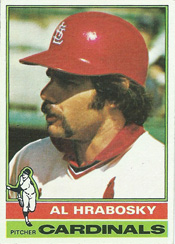
al_hrabosky3Rapp, the Cardinals’ first-year manager, declared no player could have a beard, moustache, long sideburns or long hair. Hrabosky, the Cardinals’ top relief pitcher, earned the nickname “Mad Hungarian,” in part, because of an intimidating look that featured a Fu Manchu moustache.

Bristling at what he considered unnecessarily rigid rules and convinced a clean-shaven look hampered his effectiveness as a pitcher, Hrabosky ripped Rapp in comments to media.

For Rapp, who never had been in the big leagues until replacing the popular Red Schoendienst as manager, Hrabosky’s outburst was a critical test of his ability to command the respect of the team.

Spirit of St. Louis

A St. Louis native, Rapp was a catcher in the Cardinals’ system from 1946-50 and from 1953-54. He was a Cardinals minor-league manager from 1965-68 before moving to the Reds organization.

After the Cardinals fired Schoendienst, they hired Rapp because of a no-nonsense reputation. Before leaving for 1977 spring training, Rapp, 48, revealed his edict on hair. “Rapp’s tonsorial order took priority over a lot more important matters among St. Louis fans,” The Sporting News reported. “The two daily newspapers were swamped with letters, most of them in favor of the manager.”

In explaining why he implemented the ban, Rapp told the St. Louis Post-Dispatch, “I’ve had those codes on teams I’ve managed since 1965. It’s to give the players a feeling of being responsible to the profession they’re in. The dress and hair codes reflect their character and personality to the public. It’s a big way they can start developing pride.”

Rapp’s rules

Most Cardinals players reported to spring training clean-shaven and with haircuts. Third baseman Ken Reitz “was asked by the manager to get his hair trimmed and did, but not enough to suit Rapp,” the Post-Dispatch reported.

“There are a couple of others who still didn’t get their hair trimmed enough at the sides, but they will,” Rapp said.

The first player to challenge the rule was outfielder Bake McBride, who attempted to keep a goatee. When Rapp ordered McBride to shave, McBride responded, “You’re going to make enemies.”

Said Rapp: “I didn’t come down here to win friends.”

Hrabosky, ever the showman, invited the media to film and photograph him as he shaved his Fu Manchu and beard.

The hair code wasn’t the only change introduced by Rapp. He issued daily mimeographed instructions to the players, gave them identical team exercise suits to wear, required them to attend a demonstration by coach Sonny Ruberto on how uniforms should be worn and scheduled workouts before and after lunch.

After the Cardinals lost, 10-0, to the Mets in their spring training opener, “Rapp sent his players on a 15-lap tour from first to home,” the Post-Dispatch reported.

Hate mood

Hrabosky initially tried to use his unhappiness with the hair code as motivation to pitch well. “I want to prove to Rapp that I’m his No. 1 relief pitcher,” Hrabosky said. “I want to be his No. 1 stopper. I wanted to be in a hate mood and Rapp put me there by taking away my beard and moustache. Look, I super-like Vern. I want to help him, help the ballclub and help myself. He has aroused something in me to fight back.”

A few days later, though, Hrabosky directed his frustration at Rapp.

Al apologizes

On March 20, Hrabosky told the Associated Press, “My mental outlook is atrocious. There’s more dissension on this club than I’ve ever seen.”

That same day, Hrabosky told United Press International his teammates were being stifled by Rapp. “The guys are just standing still,” Hrabosky said. “The reason is they’re afraid to move.”

Informed of Hrabosky’s comments, Rapp told the Post-Dispatch, “I just don’t understand it.”

Before the Cardinals left for their March 21 exhibition game against the Red Sox at Winter Haven, Fla., Rapp called a team meeting.

“I wanted to get everything out in the open,” Rapp said. “I wanted the players to know that I am the manager of this team. They fully realize this and they are willing to accept it.”

Hrabosky stood up at the meeting and apologized.

“I’m man enough to admit I was wrong … I’m going to keep my mouth shut and do what I have to do,” Hrabosky told the Post-Dispatch. “I offended Vern. I feel I threatened his helm. As a team member, I felt I had no right to say what I did.”

Catcher Ted Simmons, the only other player to speak at the meeting, urged his teammates to conduct themselves professionally. Said Simmons of Rapp: “He is the manager and that’s that. If he wants you to stand on your head, then you should do it.”

Family feud

The Cardinals opened the 1977 regular season with a victory at Pittsburgh. Hrabosky pitched 2.1 innings and helped protect the win for starter John Denny.

Afterward, a jubilant Hrabosky was asked by The Sporting News to reflect on his spring training criticism of Rapp. “Maybe I was a little selfish and a little childish about the matter,” Hrabosky said. “I accept it now.”

Peace, though, wasn’t long-lasting.

In May, Rapp suspended Hrabosky for insubordination after the pitcher refused the manager’s request to meet.

In June, McBride, who remained unhappy with Rapp, was traded to the Phillies.

In July, with Hrabosky beginning to grow facial hair and threatening to file a grievance with the players’ union, Cardinals owner Gussie Busch ordered Rapp to discontinue the hair code.

Hrabosky led the 1977 Cardinals in saves (10) and games pitched (65) but his ERA was 4.38. After the season, he was traded to the Royals.

Rapp was fired in April 1978 and replaced by Ken Boyer.

In a 1989 interview with Kris Thompson of the Tampa Tribune, Hrabosky said, “Vern was the most insecure person I’ve ever been around. He tried to instill discipline by coming up with these new rules all the time. It was always you got to do this my way or else. Most of what he wanted to do didn’t make any sense … We were grown men and Rapp was treating us like a bunch of babies … I just made a stand against a person that I couldn’t respect.”