(Updated Aug. 15, 2026)
Weakened by injuries that stripped him of his power and reduced his mobility, Roger Maris appeared unwanted and was considering retiring after the 1966 season, five years after he hit 61 home runs for the Yankees and broke Babe Ruth’s major-league record. Unexpectedly, the Cardinals took a chance on him.
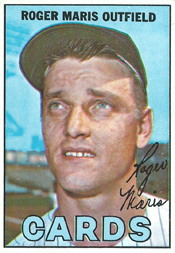 On Dec. 8, 1966, in a deal made by Bob Howsam and sealed by Stan Musial, Maris was sent to the Cardinals for third baseman Charlie Smith.
Though Maris was a marquee name, he no longer was a marquee player. His diminished skills, along with a reputation for surliness, caused some to wonder why the Cardinals wanted him.
Damn Yankees
In 1965, Maris, who’d broken the hamate bone in his right hand, hit .239 with eight home runs in 46 games. The hand still was weak when he returned in 1966. Then he injured his left knee in a collision at home plate with Tigers catcher Bill Freehan. Maris hit .233 with 13 home runs in 119 games for the 1966 Yankees.
Unhappy in New York and embarrassed by his declining performance, Maris planned to assess his future during the off-season and make a decision about whether to continue playing.
At 32, Maris was “almost positive” he would retire, according to the book “Roger Maris: Baseball’s Reluctant Hero.”
In November 1966, Yankees general manager Lee MacPhail called Maris and asked about his plans. Maris said he wanted to wait until spring training to declare his intentions, then added, “If you’re going to trade me, tell me now and I’ll send in my retirement papers to you right away.”
MacPhail told Maris the Yankees didn’t intend to trade him.
Let’s make a deal
A month later, at the baseball winter meetings, Bob Howsam, the Cardinals’ general manager, was having lunch when he was approached by Yankees manager Ralph Houk, who had managed the Denver Bears in the 1950s when Howsam was the minor-league club’s top executive.
“I started to kid Ralph and said, ‘Hey, when are we going to make a trade?’ ” Howsam told Neal Russo of the St. Louis Post-Dispatch. “Houk then said, ‘Would you be interested in Maris?’ I told him that I’d have to think it over. When I got on the plane heading back to St. Louis, I figured we might be able to use Maris.”
In St. Louis, Howsam met with Cardinals manager Red Schoendienst and asked him whether he’d like to have Maris on the club. Replied Red: “Who wouldn’t?”
(In the book “The Man Stan Musial Then and Now,” Musial said a member of the Cardinals’ board of directors, attorney Mark Eagleton, father of future U.S. Senator Thomas Eagleton, “spoke up” and urged Howsam to acquire Maris.)
Mike Shannon, the Cardinals’ right fielder, had worked during the off-season on learning to play third base. Howsam and Schoendienst were certain Shannon could make the move to third, opening right field for Maris.
In his book, “Season of Glory,” Houk said, “After the 1966 season, (Maris) told me he wouldn’t come back (to the Yankees). He was going to quit baseball. When Roger left the Yankees, he was pissed off at the world. Then we made the deal with St. Louis.”
Healthy outlook
Maris learned of the trade from a news photographer who showed up at the Maris house in Independence, Mo., to get reaction shots.
Contacted by the Post-Dispatch, Maris said, “I wouldn’t say I’m overjoyed about the trade.”
In an article for the Post-Dispatch, Joe McGuff, a Kansas City journalist who knew Maris well, explained, “Maris is concerned about his physical condition and he doesn’t want to play if he feels he can’t give the Cardinals a good effort … At this stage, pride is more important to Maris than money. It would mean a great deal to Maris to bow out with a big year.”
McGuff added: “If Maris decides to play for the Cardinals, he will be a definite asset. If he is sound physically, he could bring them a pennant.”
Johnny Keane, who had managed the 1964 Cardinals to a World Series championship before becoming Maris’ manager with the 1965-66 Yankees, told Post-Dispatch sports editor Bob Broeg, “If Roger is interested, if he’ll be aroused by this challenge, he could do a big job for the Cardinals.”
Said Schoendienst: “Maris is a real threat. He’ll help in more ways than one. He’s a good outfielder and has good judgment on the bases.”
The reaction in New York, though, was that Maris was through.
In his syndicated column, Red Smith wrote of Maris, “More surprising than yesterday’s deal and the modest price accepted was the fact that the Yankees found a club willing to accept their damaged goods. There was no secret about the guy’s being marked disposable … When Lee MacPhail dropped his name into conversations at the recent winter meetings, people walked away.”
Smith concluded, “He could have owned New York. Now he’s gone and won’t be missed. He was a demigod. Now he is a line in the record book, with an asterisk.”
Cardinal Way
Soon after the trade, Howsam left the Cardinals to join the Reds. Musial, a team vice president, replaced Howsam. In one of his first moves as general manager, Musial invited Maris and his wife Pat to St. Louis for lunch with he and his wife Lil.
When Maris returned home, he received in the mail from Musial a 1967 contract for $75,000, an increase from what the Yankees had paid him.
Maris was in no rush to commit and Musial didn’t pressure him. Impressed, Maris told Musial in early February he’d report to the Cardinals.
At spring training, Maris gained the trust of Cardinals players by working hard and selflessly on the field and interacting happily and humbly off the field. “He meshed well with his new teammates, joining them in barbecues and chatting and joking often with them at the club’s motel,” Neal Russo reported.
In the book “Few and Chosen,” Cardinals catcher Tim McCarver said, “I will admit that when he came to us, most of the players were suspicious and curious. Were we wrong! Roger was a terrific teammate … He was a good guy with a sense of humor, and an outstanding all-around ballplayer.”
With defense, hustle, smart baserunning and solid fundamentals, Maris’ value to the Cardinals transcended statistics. They won two National League pennants and a World Series title in his two seasons with the club. McCarver described him as “the missing piece to the puzzle.”
Maris produced 18 doubles, seven triples, nine home runs, 55 RBI and hit .261 in 125 games in 1967. In the World Series against the Red Sox, Maris hit .385 with a home run and seven RBI.
Maris played in 100 games in 1968 and had 18 doubles, five home runs, 45 RBI and hit .255.
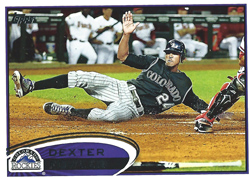 On July 7, 2010, Fowler crushed a three-run home run in the eighth inning off Cardinals reliever Jason Motte, tying the score at 7-7 and positioning the Rockies for a win in the ninth.
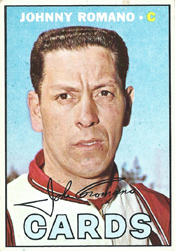 On Dec. 14, 1966, the Cardinals traded pitcher Don Dennis and outfielder
 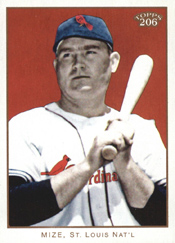 On Dec. 11, 1941, the Cardinals traded Mize, a first baseman, to the Giants for pitcher Bill Lohrman, catcher Ken O’Dea, first baseman Johnny McCarthy and $50,000.
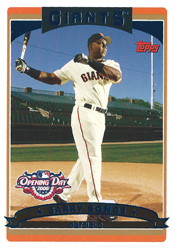 In December 2006, the Cardinals and Bonds, a free agent, expressed mutual interest in exploring a deal.
 After the Red Sox won Game 5, giving them three wins in the best-of-seven Series, Cronin indicated he’d start Ferriss in Game 6. Ferriss had shut out the Cardinals in Game 3 and he had led the Red Sox in wins during the regular season, with 25.

