(Updated April 4, 2025)
To get insights into what made Tony La Russa a Hall of Fame manager, I recommend the book “The Wizard of Waxahachie.” Written by Warren Corbett, it is a well-researched biography of Paul Richards, a baseball innovator who had a long career as a player, manager and executive in the minors and majors.
 Richards managed the White Sox and Orioles. He was director of player development for the White Sox when La Russa began his managerial career in the Chicago farm system. Richards became a mentor to La Russa.
In an interview with Cardinals Yearbook in 2014, La Russa said, “Managing is about preparation and leadership. It’s a message Paul Richards preached and it’s more true now than ever before.”
La Russa wrote the introduction to Richards’ biography. Reading it provides a link to the philosophies La Russa followed.
“During the three-year period from 1978 to 1980, when I’d managed in AA, AAA, and the White Sox, Paul’s influence was a career maker for me,” La Russa said. “He continually provided lessons on baseball fundamentals, strategies and leadership.
“To this day his emphasis on playing the game correctly and what that meant has been a key to my survival as a manager in baseball. His explanation of different offensive and defensive strategies has helped put my teams in a position to compete. And his leadership advice set the foundation for my contributions as a decision maker that I am expected to provide.
“My favorite example of a ‘Paulism’ was his principle that a manager should make decisions by ‘trusting your gut, not by trying to cover your butt.’ A manager’s decision must avoid the temptation of taking the popular or conventional path that your bosses, fans and media expect. Instead your responsibility as a manager is to decide what you think is your team’s best shot and then take it.”
La Russa was true to that principle throughout his Cardinals career.
An example of how La Russa applied Richards’ teachings is how he handled an incident in Game 2 of the 2006 World Series. Tigers pitcher Kenny Rogers appeared to be caught doctoring the baseball. La Russa told the umpires about the foreign substance on the ball but didn’t ask them to inspect Rogers. Critics claimed La Russa was protecting his friend, Tigers manager Jim Leyland. Instead, it was La Russa following a principle he learned from Richards, and later manager Sparky Anderson.
In the book “Tony La Russa: Man on a Mission,” author Rob Rains explained, “It was Anderson and Paul Richards who taught him the difference between having a strategy and a philosophy, and those thoughts filled his head as he watched Rogers pitch.”
La Russa explained, “I had the luxury and good fortune of teachers who taught me the difference between philosophy and strategy. In that situation, I might have strategized, ‘Hey, I can get this guy thrown out of the game.’
“Strategies have their place, but they don’t replace philosophy, because philosophy is what you represent, and what you want your team to represent … We want to win within our philosophy. Part of that philosophy is abhorring BS baseball. I don’t like it … I believe in the beauty of the competition. Let’s play the game. We get ready, they get ready. You play as hard as you can, and there’s a winner and a loser.
“I was so appreciative of all the teachers I had over the years, and in the end you just have to believe in the lessons you have learned about their philosophies.”
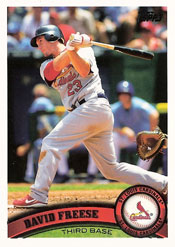
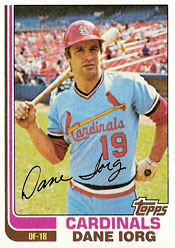 The Cardinals twice were a strike away from elimination but rallied to score twice in the ninth to tie and twice in the 10th to tie before winning, 10-9, in the 11th on a home run by David Freese.
  _ Albert Pujols hit three home runs in Game 3.
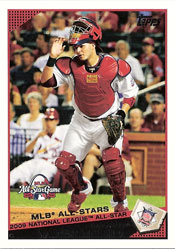 Though it paled in comparison to the hitting of Pujols (the first Cardinals player with three home runs, five hits and six RBI in a World Series game), Molina also accomplished a franchise standard in Game 3.
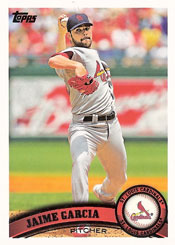 Garcia held the Rangers without a run for seven innings in Game 2 of the 2011 World Series but got no decision when Texas scored twice against the bullpen in the ninth and won, 2-1.
 All five Cardinals age 40 or older to play in a World Series were pitchers:
 RetroSimba