Feeds:
Posts
Comments

(Updated May 25, 2019)

The history between the Cardinals and Rangers is highlighted by the seven-game World Series they played in 2011. Before then, their interactions were more quirky than rich.
Since the Washington Senators relocated to Texas and became the Rangers after the 1971 season, they have made some noteworthy trades with the Cardinals.

The Rangers also launched the managerial career of one of the Cardinals’ legends, Whitey Herzog, who was 47-91 with Texas in 1973.

Here’s a look at some of the deals between the Rangers and Cardinals:

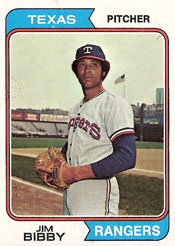
_ Cardinals send pitcher Jim Bibby to the Rangers for pitcher Mike Nagy and catcher John Wockenfuss, June 6, 1973: The trade was a bust for St. Louis. Bibby, seldom used by the Cardinals, became a 19-game winner for Texas in 1974. The right-hander recorded 111 wins in a 12-year big-league career.

Herzog had pushed for the Rangers to acquire Bibby. When Herzog was farm director of the Mets, Bibby was a prospect in New York’s minor league system.

At the time of the trade, Cardinals general manager Bing Devine told The Sporting News, “Whitey said Bibby has a better arm than half his pitchers.”

Nagy never won a game for the Cardinals and Wockenfuss (who became a reliable utility player for the Tigers) never played a regular-season game for St. Louis.

_ Cardinals send outfielder Tommy Cruz and cash to the Rangers for pitcher Sonny Siebert, Oct. 26, 1973: Cruz, the middle of the trio of outfielder brothers for St. Louis (Jose and Hector were the others), never played a regular-season game for Texas.

Siebert, a St. Mary, Mo., native who had success with the Indians and Red Sox, realized a lifelong dream by joining the Cardinals. He had been a high school basketball standout in suburban St. Louis and had been a baseball and basketball player at the University of Missouri.

Siebert, 37, opened the 1974 season in the Cardinals’ rotation. He was 6-3 with a 1.98 ERA on June 10. He finished the season 8-8 with a 3.84 ERA.

The right-hander’s most memorable win for St. Louis came on Sept. 11, 1974, at Shea Stadium in the Cardinals’ 4-3 25-inning victory over the Mets. Siebert pitched 2.1 innings of scoreless relief to earn the win, his last as a Cardinal. Boxscore

_ Cardinals send shortstop Eddie Brinkman and pitcher Tommy Moore to the Rangers for outfielder Willie Davis, June 4, 1975: St. Louis acquired the mercurial Davis with the hope his offense would spark them to a championship in 1975. Though the Cardinals fell short, Davis mostly delivered, filling in for injured outfielders Bake McBride and Reggie Smith.

Davis batted .291 with 50 RBI in 98 games. Brinkman, the Cardinals’ Opening Day shortstop, played one game for cash-strapped Texas before he was peddled to the Yankees. Moore never won a game for the Rangers.

Davis, 35, had clashed with Rangers manager Billy Martin. He staged a sitdown protest in center field when teammate Steve Hargan failed to hit a batter in retaliation after Davis was brushed back by an opponent’s pitch. Davis also irked Texas general manager Dan O’Brien by repeatedly asking for advances in his salary. “At some point, you’ve got to draw the line,” O’Brien told United Press International.

The trade was popular with Cardinals players. St. Louis second baseman Ted Sizemore, who had been Davis’ teammate with the Dodgers, told the Associated Press, “The man can play. He comes to play. He likes to play.”

Said Davis to The Sporting News: “With the Cardinals, I know I can play baseball again without being suppressed. I can be loose again.”

By September, though, Davis’ personal and financial problems caught up with him. He refused to play some games while his wife pursued an alimony case that threatened to restrict his wages. After the season, when he demanded a five-year contract for $1 million, the Cardinals traded him to the Padres.

_ Cardinals send shortstop Royce Clayton and pitcher Todd Stottlemyre to the Rangers for pitcher Darren Oliver, third baseman Fernando Tatis and outfielder Mark Little, July 31, 1998: Clayton and Stottlemyre were eligible to become free agents after the season and the Cardinals were uncertain they could re-sign them.

On the day of the trade, Texas was a game behind the first-place Angels in the American League West. The Cardinals were six games under .500 and 13.5 games behind the first-place Astros in the National League Central.

Clayton hit .285 for Texas in 1998 and Stottlemyre won five of 10 starts, helping the Rangers win the division title. St. Louis general manager Walt Jocketty, meanwhile, was positioning for the future.

“The guy we liked is Tatis,” Jocketty told The Sporting News when the trade was made. “We needed to find a third baseman and he was the best guy available.”

Tatis slugged 34 home runs for the Cardinals in 1999 and contributed to their division championship season in 2000.
(Updated Dec. 15, 2016)

A dominant bullpen contributed to the success of the Cardinals’ 2011 postseason, resulting in a World Series championship. To fully appreciate how far the Cardinals’ bullpen progressed, it’s important to look back to where it was on Opening Day in 2011.

Consider:

_ Of the seven relievers on the Cardinals’ 2011 Opening Day roster, only two, Mitchell Boggs and Jason Motte, remained with the team in the postseason.

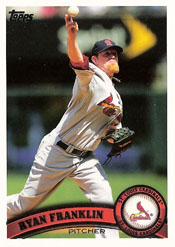
_ Five of the Cardinals’ relievers on Opening Day were Bryan Augenstein, Miguel Batista, Ryan Franklin, Trever Miller and Brian Tallet. None remained with the team in the postseason.

_ Opponents batted .367 in 27.2 innings against Franklin, who opened the season as St. Louis’ closer. Since 1996, the Cardinals’ first season with manager Tony La Russa and pitching coach Dave Duncan, only one St. Louis pitcher had a higher batting average against in 27 or more innings: Mike Maroth, whom opponents batted .394 against in 38 innings in 2007.

_ The quartet of Augenstein (.407 batting average against in 5.2 innings), Franklin (.367 in 27.2 innings), Miller (.306 in 15.2 innings) and Tallet (.339 in 13 innings) all allowed opponents to bat better than .300 against them in 2011.

_ The 26 blown saves by the 2011 Cardinals during the regular season were the most by any of the nine St. Louis teams to make the postseason since the arrival of La Russa and Duncan.

_ Only three Cardinals teams under La Russa and Duncan qualified for the postseason while failing to successfully convert at least 65 percent of their save opportunities. Those teams: 1996 Cardinals (64 percent, with 43 saves in 67 chances), 2000 Cardinals (63 percent, with 37 saves in 59 chances) and 2011 Cardinals (64 percent, with 47 saves in 73 chances).

_ The trio of Batista, Franklin and Miller had seven blown saves in nine opportunities in 2011, setting a terrible early-season pattern for the Cardinals.

_ Once help arrived for the bullpen, the Cardinals found an effective mix. Six Cardinals relievers held opponents to batting averages of .207 or less during the 2011 regular season: right-handers Eduardo Sanchez (.144 batting average against), Octavio Dotel (.182), Fernando Salas (.186), Motte (.202), Lance Lynn (.203) and left-hander Arthur Rhodes (.207).

_ The trio of Dotel, Salas and Sanchez in 2011 were the first Cardinals to each pitch at least 24 innings and hold opponents to a regular-season batting average of less than .200 since Troy Percival (.171), Jason Isringhausen (.179) and Russ Springer (.181) in 2007.

_ Three Cardinals relievers each pitched at least 22 innings and held opponents to one home run apiece during the regular season: Dotel, left-hander Marc Rzepczynski and Sanchez. To put into perspective how important that was to the bullpen’s turnaround, consider that Franklin yielded nine homers in 27.2 innings and Tallet gave up four homers in 13 innings.

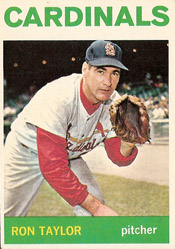
One of the Cardinals’ best single-game postseason relief efforts was performed by Roger Craig and Ron Taylor in the crucial Game 4 of the 1964 World Series at Yankee Stadium.

Craig and Taylor pitched 8.2 innings of scoreless relief, limiting the Yankees to two hits, in the Cardinals’ 4-3 victory on Oct. 11, 1964. Boxscore The win evened the series at 2-2 and repositioned the Cardinals to clinch the championship in seven games.
Few could have predicted Craig and Taylor would shut down the Yankees. Though the Cardinals sizzled in September to overtake the Phillies and win the pennant on the final day of the regular season, Craig and Taylor stumbled to the finish.

Craig started in eight of his last nine regular-season appearances and was 1-4 in his last six starts. Taylor surrendered eight runs over 7.1 innings in his last five regular-season relief appearances.

Until Game 4, Craig and Taylor made their marks in the World Series off the field.

Before Game 2 at St. Louis, Craig and his road roommate, catcher Bob Uecker, walked out to left field, where a band was entertaining the crowd. “Uecker borrowed a tuba and blew vigorously without too much success as Craig popped baseballs into the tuba Uecker was blowing,” The Sporting News reported.

Meanwhile, Taylor was collaborating with journalist Neil MacCarl on World Series articles for his hometown Toronto Star.

Ray Sadecki, a 20-game winner in 1964, started Game 4 for St. Louis but was ineffective. The Yankees scored twice against the left-hander in the first inning and had Roger Maris at third base with one out when Cardinals manager Johnny Keane lifted Sadecki for Craig.

The first batter Craig faced was Elston Howard. The catcher singled, scoring Maris from third and giving New York a 3-0 lead. Craig then struck out Tom Tresh and retired Joe Pepitone on a flyout to right.

From then on, Craig was in control. He struck out the side in the second and in the fourth. He picked off Mickey Mantle at second base. In 4.2 innings, Craig struck out eight and yielded two hits.

“I was throwing mostly breaking stuff, ” Craig said. “My curve was breaking so big it had the batters ducking away.”

When Craig was lifted after the fifth inning, the Yankees maintained their 3-0 lead, but in the sixth Cardinals third baseman Ken Boyer hit one of the biggest home runs in franchise history _ a grand slam against Al Downing. Video

Taylor entered to pitch the bottom of the sixth with a 4-3 lead.

“After I got that homer off a high changeup, I told Taylor to keep ’em fast and low. He did,” Boyer told the Associated Press.

Relying mostly on fastballs, Taylor pitched four scoreless, hitless innings to earn the save for Craig.

Said Taylor: “Kenny told me as I came out that I ought to keep the ball low and fast. I did, and I threw a few curves and sliders. But I kept it low and no changeups. It was the biggest thrill of my life to help win the game.”

Only one batter, Johnny Blanchard, who flew out to center, hit a ball out of the infield against Taylor. Eight of the 12 outs he recorded were groundouts, including all three in the ninth inning.

“We didn’t do much toward the end of the season,” Craig said, referring to he and Taylor. “We wondered if we’d get a chance in the Series. Our pride was hurt. And we talked about it in the bullpen.”

Said Keane: “I’ve never seen them better. They were absolutely great.”

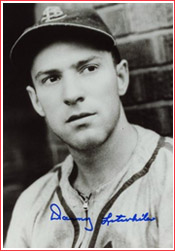
Danny Litwhiler, left fielder for the Cardinals’ National League championship teams in 1943 and 1944, was manager Billy Southworth’s kind of player.

In 1942, when Litwhiler was with the last-place Phillies, he beat the Cardinals in a September game by stretching a single into a double and later crashing into catcher Walker Cooper to score the winning run. Southworth was impressed by Litwhiler’s all-out hustle while playing late in the season for a terrible team.
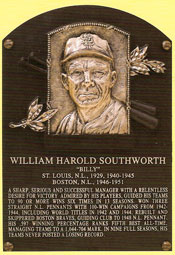
On June 1, 1943, on the advice of Southworth, Cardinals general manager Branch Rickey acquired Litwhiler and outfielder Earl Naylor from the Phillies for outfielders Buster Adams, Coaker Triplett and Dain Clay.

Among the many good trades made by Rickey, this was one of the best. Litwhiler fit perfectly on Cardinals teams that dominated the National League in 1943 and 1944.

In the book “Stan Musial: The Man’s Own Story,” Musial said Litwhiler “was a high-class fellow and a man I was proud to have as my friend.”

A right-handed batter, Litwhiler hit .279 with seven home runs and 31 RBI in 80 games for the 1943 Cardinals. He took over in left field for Debs Garms, who, at 36, was nine years older than Litwhiler.

In the book “The Spirit of St. Louis” by Peter Golenbock, Litwhiler described his feelings about being traded to the Cardinals and playing for Southworth:

“I felt pretty bad about (the trade), because I really liked Philadelphia. In fact, I cried. It broke my heart, because I was leaving Philadelphia. I really liked the fans … Billy (Southworth) and I started off in pretty good shape. He was a great teacher … Billy’s offensive philosophy was to bunt the ball and get the runner over. That’s why we won. He taught the fundamentals … It was bunting, and learning how to slide, even the pitchers, and we would take the extra base.”

Though he wasn’t a dominant slugger (107 home runs in 11 big-league seasons), Litwhiler had power. On June 27, 1943, at Chicago’s Wrigley Field, the Cubs led the Cardinals 2-0 after six. In the seventh, Litwhiler hit a solo homer off Claude Passeau, and in the ninth he slammed a two-run shot off Passeau, lifting St. Louis to a 3-2 victory. Boxscore

In the 1943 World Series against the Yankees, Litwhiler batted .267 (4-for-15) with two RBI. In Game 3 at Yankee Stadium, Litwhiler made a shoestring catch of Joe Gordon’s drive in the second and drove in both Cardinals runs off Hank Borowy in New York’s 6-2 victory. Boxscore

Batting primarily from the sixth spot in the order, Litwhiler hit .264 with 15 homers and 82 RBI in 140 games for the 1944 Cardinals. He batted .359 against the Cubs in 22 games that season and .302 against the Dodgers in 18 games.

On July 29, 1944, Litwhiler slugged a grand slam off Dodgers rookie Ralph Branca in the Cardinals’ 14-2 victory at Brooklyn. Boxscore On Aug. 3, Litwhiler drove in six runs, including three on a homer against Preacher Roe, in St. Louis’ 15-2 victory at Pittsburgh. Boxscore

In Game 5 of the 1944 World Series, the Cardinals were clinging to a 1-0 lead against the crosstown Browns when Litwhiler led off the eighth with a homer to right-center off Denny Galehouse, capping a 2-0 Cardinals victory. Boxscore

“When I hit my home run off Galehouse, the fielder jumped up, and I heard this terrific roar,” Litwhiler told Golenbock. “I thought, ‘… He jumped up and caught it.’ But I looked out, and I saw the ball bouncing in the stands. I thought, ‘… It’s a home run!’ I don’t even remember touching the bases after that.”

The Cardinals won the World Series championship in six games. “A great feeling, one you’ll never forget,” Litwhiler said.

In 1945, Litwhiler served in the Army Special Service. He returned to the Cardinals in May 1946, but Southworth had left St. Louis to become manager of the Braves and the Cardinals had committed to rookie Erv Dusak as the left fielder. On June 9, 1946, the Cardinals sold Litwhiler’s contract to the Braves, where he was reunited with Southworth.

Litwhiler finished his big-league career with the Reds in 1951. His career batting mark was .281.

Litwhiler became baseball coach at Florida State, compiling a 190-83-1 record in nine seasons, and at Michigan State, where he was 488-362-8 in 19 seasons. Among the college players he prepared for big-league careers were Dick Howser and Woody Woodward at Florida State, and Steve Garvey and Kirk Gibson at Michigan State.

A brilliant innovator, Litwhiler developed the radar speed gun and created a powder, known as diamond dust, that enabled wet infields to dry quickly.

(Updated July 2, 2014)

When it comes to double plays, the Cardinals, more than any other National League franchise, have experienced the extremes.

The 2011 Cardinals set the NL single-season record for grounding into the most double plays, with 169. The 1958 Cardinals had held the NL mark of 166. The single-season major-league record for double plays is 174 by the 1990 Red Sox.
A Cardinals team also holds the NL and major-league single-season record for grounding into the fewest double plays. The 1945 Cardinals hit into 75.

Because of military service during World War II, the 1945 Cardinals were without top hitters such as Stan Musial, Enos Slaughter, Harry Walker, Terry Moore, Walker Cooper and Danny Litwhiler.

The lineup was short on sluggers but loaded with contact hitters who ran the bases exceptionally well.

In its Sept. 6, 1945, edition, The Sporting News wrote of the Cardinals:

Despite the fact the Redbirds have gained a nationwide reputation as speedboys in winning their last three pennants, (manager) Billy Southworth’s scheme of attack is based more on the hit-and-run, and taking that extra base on a hit, than trying to steal his way around.

The 1945 Cardinals ranked first in the NL in hits (1,498) and second in runs (756) and sacrifice hits (138).

Third baseman Whitey Kurowski was the lone Cardinal to reach double figures in hitting into double plays (10).

Reserve outfielder Augie Bergamo had 304 at-bats and never hit into a double play.

Among the regulars, rookie left fielder Red Schoendienst had 565 at-bats, 157 hits and grounded into just six double plays. Center fielder Buster Adams slugged 20 home runs and 26 doubles in 578 at-bats, with just eight double plays. Second baseman Emil Verban struck out only 15 times in 597 at-bats and hit into just nine double plays.

To put that into perspective, Pirates first baseman Babe Dahlgren hit into 23 double plays in 1945 and Reds first baseman Frank McCormick hit into 20. Each was one of four players on his team to reach double figures in hitting into double plays.

Even though Kurowski, Schoendienst, shortstop Marty Marion, first baseman Ray Sanders, outfielder Johnny Hopp and catcher Ken O’Dea all missed games because of injuries, Billy Southworth had the 1945 Cardinals playing fundamentally sound baseball. St. Louis posted a 95-59 record and finished in second place, three games behind the Cubs.

In the Oct. 4, 1945, edition of The Sporting News, Frederick G. Lieb wrote:

Nothing but praise can be bestowed on Billy Southworth for his grand job in keeping the Cards in the race until next to the last day of the season. Everyone votes it Billy’s greatest managerial job … There was scarcely a day that he had his regular lineup in the field.

(Updated May 4, 2018)

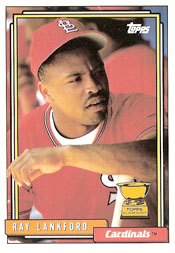
In a sport noted for great center fielders, the Cardinals’ Ray Lankford established a production standard for the position that largely hasn’t received the attention it deserves.

In 1992, Lankford became the first center fielder in major-league history to achieve at least 40 doubles, 20 home runs and 30 steals in a season.

Since then, two others have accomplished the feat: Carlos Beltran of the 2002 Royals (44 doubles, 29 homers, 35 steals) and Jacoby Ellsbury of the 2011 Red Sox (46 doubles, 32 homers, 39 steals), according to MLB.com.

Lankford (40 doubles, 20 homers, 42 steals) remains the only National League center fielder to meet the standard.

Four others who came close to achieving those numbers were Willie Mays of the 1959 Giants, Vada Pinson of the 1959 Reds, Andre Dawson of the 1980 Expos and Mike Trout of the 2013 Angels.

Mays (43 doubles, 34 homers, 27 steals) missed by three stolen bases; Pinson (47 doubles, 20 homers, 21 steals) missed by nine stolen bases; Dawson (41 doubles, 17 homers, 34 steals) missed by three home runs; and Trout (39 doubles, 27 homers, 33 steals) missed by one double.

Hall of Fame center fielders such as Ty Cobb, Tris Speaker, Joe DiMaggio, Mickey Mantle and Duke Snider never came close. Same with other top center fielders such as Ken Griffey Jr. (he missed by 12 steals in 1991, the only season he had a chance to match Lankford), Jim Edmonds, Bernie Williams, Kirby Puckett, Andruw Jones, Dale Murphy and Torii Hunter.

Lankford did it in dramatic fashion: his last two hits of 1992 were a double and a home run, putting him exactly at the 40 and 20 totals for those categories.

On Oct. 2, 1992, in the opener of a season-ending three-game series with the Phillies at St. Louis, Lankford hit a two-out, sixth-inning double to right off Curt Schilling. (The Cardinals won, 2-1, even though Schilling pitched a four-hitter). Boxscore

After going 0-for-4 the next day, Lankford went into the season finale on Sunday, Oct. 4, needing a home run to reach 20. He got it in the first inning _ a two-run blast to right-center off Tommy Greene, giving the Cardinals a 2-0 lead in a game they won, 6-3. Boxscore

The home run also enabled Lankford to become the first Cardinals player to achieve 20 homers and 20 steals in a season since Lou Brock in 1967.

Although Lankford struck out a NL-leading 147 times, the 1992 season was a breakthrough for him. Thanks, in large part, to the work of first-year hitting coach Don Baylor, Lankford led the Cardinals in 13 offensive categories. After hitting .251 with nine homers and 69 RBI in 1991, Lankford batted .293 with 20 homers and 86 RBI in 1992.

When Baylor resigned after the 1992 season to become manager of the Rockies, St. Louis general manager Dal Maxvill told The Sporting News, “His importance to the Cardinals was demonstrated by the development of our young hitters last season, especially Lankford.”

After 1992, Lankford hit 20 or more homers five times and topped 30 steals once more, but he never again achieved 40 doubles in a season.