Feeds:
Posts
Comments

(Updated June 11, 2024)

With 21 games remaining in the season, bad omens hung over the Cardinals like a murky mist along the Delaware River and threatened to choke out their division title hopes.

In September 1982, the Cardinals clung to first place in the National League East Division by a half game, entering a series against the pursuing Phillies at Philadelphia.

It didn’t take a carnival fortune teller to see the warning signs:

_ After gaining a 3.5-game lead over the Phillies with a Sept. 1 win against the Dodgers, the Cardinals lost six of their next nine.

_ Shortstop Ozzie Smith had severe swelling in his right thigh and was unavailable for the Phillies series _ and for several games after that.

_ Like the ghost of seasons past, Steve Carlton, who relentlessly tormented his former club as payback for the pettiness of club owner Gussie Busch, was the scheduled starter for the Phillies in the series opener.

After winning 12 in a row in April and leading the division for most of the season, the Cardinals, who never had won a division title, were at a crossroads.

Crunch time

The mood in Philadelphia was electric with anticipation on the eve of the series.

“This is a month when a baseball man needs strong nerves and an informative scoreboard,” columnist Mark Whicker wrote in the Philadelphia Daily News.

Phillies third baseman Mike Schmidt told Jayson Stark of the Philadelphia Inquirer, “Our fate is in our hands for the next three or four days.”

If Cardinals manager Whitey Herzog felt pressure, it didn’t show. “A race like this is fun, to seesaw back and forth and watch that scoreboard,” Herzog said to the Inquirer’s Peter Pascarelli. “This is easy. I’ll tell you what’s tough. It’s managing a team in September that’s out of the race. That is the hardest job in baseball.”

Actually, for the Cardinals, the hardest job was trying to beat Carlton. He entered the game with a career record against the Cardinals of 33-10, including 3-1 in 1982. (Carlton would finish his Hall of Fame career 38-14 versus the Cardinals, including 5-1 in 1982.)

Phillies take first

The Sept. 13 opener was everything the Phillies hoped it would be. Carlton pitched a three-hit shutout, striking out 12 and walking none, and hit a home run in the Phillies’ 2-0 victory.

“That’s the best he’s pitched against us since I’ve been here,” Herzog told the St. Louis Post-Dispatch.

Hal Bodley of The Sporting News noted, “Much of Carlton’s success can be attributed to his conditioning routine and his fearsome slider. Without his uncanny strength, he would not be able to throw the nasty slider. Carlton’s great strength enables him to get a tighter grip on the ball. Because it’s thrown so hard, it breaks and drops sharply.”

Phillies manager Pat Corrales, who caught Carlton as a Cardinals backup catcher in 1966, said, “It’s amazing to watch a man almost 38 throwing like he is 28. That just goes to show what desire, talent and preparing yourself can do.” Boxscore

The win moved the Phillies into first place, a half game ahead, and put them into position “to cripple the Cardinals’ division hopes,” the Post-Dispatch noted.

“Sometimes,” Cardinals first baseman Keith Hernandez said to the Philadelphia Inquirer, “a game like that can make you get swept.”

Dramatic duel

The turning point in the series, and perhaps the Cardinals’ season, occurred the following night, Sept. 14.

Darrell Porter’s two-run home run against Mike Krukow and the pitching of rookie starter John Stuper gave the Cardinals a 2-0 cushion as the Phillies came to bat in the eighth. After retiring the first batter of the inning, Stuper walked Bob Molinaro and gave up a single to Pete Rose. Bruce Sutter relieved and yielded an infield single to Gary Matthews, loading the bases for slugger Mike Schmidt.

(Guarding the line, third baseman Ken Oberkfell made a tumbling stop of Matthews’ grounder. After considering a throw to second for a possible force out, Oberkfell instead fired to first and barely missed retiring Matthews. If Oberkfell had thrown to first without hesitation, Matthews likely would have been out, and Herzog, with first base open, would have ordered an intentional walk to Schmidt.)

Schmidt had faced Sutter twice during the season and doubled both times.

Sutter got ahead with two quick strikes, but then Schmidt worked the count even. Swinging at a sinking split-fingered pitch, Schmidt tapped the ball to Sutter, who started a home-to-first double play, ending the threat.

“That confrontation between Sutter and Schmidt _ that is what baseball is all about,” Stuper said to the Post-Dispatch.

Schmidt said, “He’s at his best when the hitter has a lot of pressure on him.”

Getting Schmidt to bounce into the double play was “the turning point of the race,” Herzog told Cardinals Magazine.

After winning the showdown of future Hall of Famers, Sutter held the Phillies scoreless again in the ninth, securing the Cardinals’ victory and enabling them to reclaim first place. Boxscore

The Cardinals would remain atop the division the rest of the season.

Championship caliber

In the series finale on Sept. 15, Joaquin Andujar pitched a three-hit shutout for the Cardinals, who won, 8-0. The Cardinals scored five runs in the third against former teammate John Denny, who was making his first Phillies start since being acquired three days earlier from the Indians.

After the game, “the mood bordered on the funereal” in the Phillies’ locker room, the Post-Dispatch reported. Boxscore

Having withstood the Phillies’ challenge, the Cardinals went on a roll. In addition to winning the last two games of the Phillies series, they swept a five-game series with the Mets at New York, including doubleheaders on consecutive days, and won the opener of a two-game rematch with the Phillies at St. Louis.

The eight straight wins lifted the Cardinals’ record to 87-63 and put them 5.5 games ahead of the second-place Phillies.

Ozzie Smith was out of the lineup from Sept. 11 through Sept. 23, but in that stretch the Cardinals were 10-4. His replacement, Mike Ramsey, made 14 September starts at shortstop and didn’t commit an error.

The Cardinals clinched the division title on Sept. 27, swept the Braves in the National League Championship Series and prevailed in a seven-game thriller against the Brewers in the World Series.

As Cardinals, pitchers Murry Dickson and Howie Pollet were beneficiaries of the productive hitting of Enos Slaughter. As Pirates, they were victims of the same.

In September 1952, Slaughter delivered walkoff wins for the Cardinals in consecutive games versus the Pirates.

One of those game-winning hits came against Dickson. The other occurred an inning after Slaughter tied the score versus Pollet.

Six years earlier, Dickson (15 wins) and Pollet (21 wins) were two of the top starters for the 1946 World Series champion Cardinals. Slaughter led the National League in RBI (130) that season and made a daring dash from first to home to score the winning run in Game 7 of the World Series.

A lot had changed by 1952. The Cardinals no longer were a consistent contender, and Dickson and Pollet were pitching for one of the all-time worst teams.

Getting it done

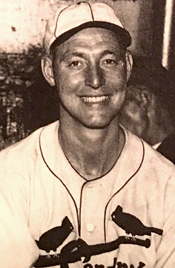
At 36, Slaughter still had a prominent role with the 1952 Cardinals as their right fielder, cleanup hitter and team captain. Though not a classic power hitter, Slaughter was a challenge for any pitcher. He led the 1952 Cardinals in RBI (101) and triples (12), and hit .300.

Slaughter was in his usual lineup spot for the Cardinals against the Pirates on Saturday night, Sept. 6, 1952, at Sportsman’s Park in St. Louis. With 20 games left to play, the Cardinals were 77-57, but nine behind the first-place Dodgers.

Starting for the Pirates was Murry Dickson. The year before, he had 20 wins for the Pirates. In 1952, he would suffer 21 losses. The Pirates entered the game with a 39-98 record on their way to a 42-112 finish. The Pirates’ catcher was another former member of the 1946 Cardinals, Joe Garagiola.

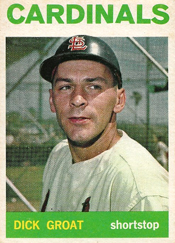
Dickson and the Pirates took a 4-3 lead into the bottom of the eighth. Red Schoendienst led off for the Cardinals and singled. Stan Musial followed with a sharp grounder to first baseman Tony Bartirome, who threw to shortstop Dick Groat, covering second, for the force out of Schoendienst. Groat’s relay throw to Bartirome nearly completed a double play, but umpire Babe Pinelli ruled Musial safe at first.

(Pinelli’s call peeved the Pirates. As the Pittsburgh Post-Gazette noted, “Joe Garagiola sounded off quite freely with Pinelli after the game on the trip to the clubhouse. Both exercised the freedom of speech article in the Constitution.”)

Instead of batting with the bases empty, Slaughter came up with Musial on first and laced a double off the screen in right field. Musial raced home, tying the score at 4-4.

Dickson still was pitching in the 10th when Solly Hemus led off with a double. After Schoendienst popped out, Musial was walked intentionally, bringing up Slaughter. (Musial in his career batted .419 with 52 hits versus Dickson. Slaughter batted .267 with 27 hits against him.)

Slaughter hit Dickson’s first pitch onto the right field roof for a three-run walkoff home run and a 7-4 Cardinals victory. Boxscore

The home run was Slaughter’s 1,900th career hit. He would finish with 2,383.

(Slaughter hit four walkoff home runs in the majors, three for the Cardinals and one for the Athletics.)

Encore performance

The next day, before what the St. Louis Post-Dispatch described as a “slender Sunday crowd” of 9,298, Howie Pollet started against his former team.

Pollet shut out the Cardinals for seven innings, limiting them to two hits, but in the eighth, with the Pirates ahead, 3-0, the Cardinals loaded the bases with none out. Musial struck out, but Slaughter followed with a triple high off the screen in right-center, tying the score.

“Came the ninth and now defeat was inevitable,” The Pittsburgh Press noted. “It always is with the Pirates.”

Pirates manager Billy Meyer sent Jim Waugh, an 18-year-old rookie, to pitch the bottom of the ninth against the Cardinals. After retiring the first batter, he walked the next three.

Another rookie, Cal Hogue, relieved, facing Slaughter with the bases loaded. Hogue’s best pitch was “a jagged overhanded curve,” according to Bob Broeg of the Post-Dispatch.

Working the count to 3-and-1, Slaughter sent a fly into medium right-center. Dick Hall, the Pirates’ 6-foot-6 rookie center fielder, loped over to the ball, then turned away and shielded his eyes from the sun.

The ball fell a few feet in front of him for a single as Solly Hemus streaked home from third with the winning run.

Unlike his game-winning home run the night before, Slaughter’s walkoff single wasn’t crushed but the result was the same. Martin J. Haley, covering the game for the St. Louis Globe-Democrat, described it as a “sun-kissed single.”

(St. Louis native Dick Hall eventually was converted from an outfielder to a pitcher. He became a successful reliever, pitching in three World Series for the Orioles and earning 93 wins and 71 saves in the majors.)

According to the Globe-Democrat, even if Hall had caught the ball, Hemus “undoubtedly would have scored” from third on the sacrifice fly.

“The sad sack Buccos walked off the field as though trailing a funeral procession,” The Pittsburgh Press reported. Boxscore

Jubilant Cardinals manager Eddie Stanky told Broeg that “all the adjectives in the world can’t describe” Slaughter.

“I didn’t expect him to do nearly what he’s done this season,” Stanky said. “I didn’t think he’d come close to driving in 100 runs.”

Tasked with putting team ahead of family, Andy Benes didn’t like the assignment but he performed like a pro and did his job exceptionally well.

On Sept. 6, 2002, brothers Andy Benes of the Cardinals and Alan Benes of the Cubs were the starting pitchers in a game at St. Louis. It was the first time a Cardinals starting pitcher was matched against a sibling, the St. Louis Post-Dispatch reported.

Andy was the winner, pitching a complete game and producing two hits _ one to ignite an uprising and another to drive in a run _ against his younger brother in an 11-2 Cardinals victory.

The win was the 155th and last of Andy’s career in the majors.

Baseball brotherhood

Picked by the Padres as the first overall choice in the 1988 amateur baseball draft, Andy was a free agent when he signed with the Cardinals in December 1995.

Alan was chosen by the Cardinals in the first round of the 1993 draft immediately after the Blue Jays selected pitcher Chris Carpenter.

Andy and Alan were Cardinals teammates in 1996 and 1997. They were the Cardinals’ first brother pitching tandem since Lindy McDaniel and Von McDaniel in 1957-58.

The Benes brothers combined for 31 wins (Andy, 18; Alan, 13) in 1996 and 19 wins in 1997 (Andy, 10; Alan, 9). Alan came within an out of pitching a no-hitter against the Braves.

A contract snafu made Andy a free agent after the 1997 season and he went to the Diamondbacks. Alan injured his right shoulder and required two operations _ one in September 1997 and the other in September 1998.

Granted free agency after the 1999 season, Andy returned to the Cardinals, and he and Alan were teammates again in 2000 and 2001.

Alan’s shoulder surgeries took a toll, though, and he no longer was a promising starter. He was a reliever with the 2000 Cardinals and spent most of 2001 in the minors before becoming a free agent. The Cubs signed him to a minor-league contract for 2002.

Alan opened the 2002 season in the Cubs farm system. Andy made three April starts for the 2002 Cardinals before being sidelined because of an arthritic knee.

Family matter

On July 3, 2002, Andy was with the Cardinals’ Memphis affiliate, working himself back into form after his stint on the disabled list, when he and Alan, pitching for Iowa, opposed one another as starters for the first time. Alan got a hit, but Andy got the win in an 8-5 Memphis triumph.

Two weeks later, Andy rejoined the Cardinals. In late August, the Cubs called up Alan.

That set up their September showdown in St. Louis.

Because of their competitiveness, “I know he would throw some balls in on me if he needs to, and I would throw some balls in on him if I need to,” Alan told the Chicago Tribune.

The matchup of Andy, 35, and Alan, 30, was the first time pitching brothers started against one another in the majors since Ramon Martinez of the Dodgers faced Pedro Martinez of the Expos on Aug. 29, 1996. Ramon got the win in a 2-1 Dodgers triumph at Montreal. Boxscore

(Brothers Bob Forsch of the Cardinals and Ken Forsch of the Astros never faced one another as starting pitchers, but they did pitch as opponents in the same game four times.)

Oh, brother

Attending the 2002 Cubs versus Cardinals game at St. Louis were Benes family members, including Charles Benes, the father of Andy and Alan. Seated 20 rows behind home plate, Charles wore a Cardinals cap while Andy pitched and switched to a Cubs cap when Alan was on the mound.

“We were hoping for a 1-0 game,” Andy told the Associated Press.

The game was scoreless when Alan led off the top of the third inning and hit a soft liner to his brother. Andy caught it for an out, but then let the ball slip out of his glove in order to make Alan think he should run to first base. Alan took a few steps up the line before veering back to the dugout.

“I was just being playful,” Andy said to the Associated Press.

The kid stuff ended in the bottom half of the inning. Andy led off for the Cardinals and drove a high fastball to left for a single.

The hit triggered a merciless assault on poor Alan.

After Fernando Vina singled, Alan unleashed a wild pitch, enabling Andy and Vina to each move up a base. Eli Marrero singled, scoring Andy for a 1-0 lead. After Jim Edmonds walked, Albert Pujols singled, scoring Vina and Marrero. The Cardinals led 3-0.

Scott Rolen struck out, but Tino Martinez lofted a fly ball to deep right. Sammy Sosa leaped for the ball, missed it completely and it fell for a double, driving in Edmonds and Pujols and making the score 5-0.

During the barrage, Andy left the dugout and went into the tunnel that led to the clubhouse. “It just kind of killed me watching it,” Andy explained to the Belleville (Ill.) News-Democrat. “I had to kind of regroup. He’s my younger brother and I’m his second-biggest fan behind his wife. It’s gut-wrenching. It’s like you can beat up your younger brother, but nobody else can.”

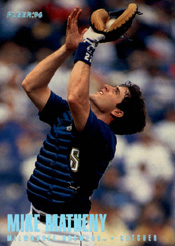
After Edgar Renteria was walked intentionally, Mike Matheny made the second out, bringing Andy to the plate for the second time in the inning.

Andy delivered the knockout blow, a single to center that scored Martinez and made it 6-0.

Alan was relieved by Jesus Sanchez, who allowed both runners he inherited, Renteria and Andy, to score. Those runs were charged to Alan. The Cardinals scored 11 runs in the inning. Alan was responsible for eight of those. Boxscore

“I couldn’t make the big pitch to slow them down,” Alan told the Post-Dispatch.

Andy concluded, “I knew it was going to be tough today. It was going to be very emotional for everybody, regardless of results.”

In the same year Jackie Robinson integrated the big leagues, Dan Bankhead became the first black pitcher in the majors.

In August 1947, Bankhead debuted for the Dodgers against the Pirates. His second appearance came against the Cardinals.

Unlike Robinson, Bankhead didn’t have a Hall of Fame career. He pitched in three seasons for the Dodgers and had a 9-5 record. Versus the Cardinals, he was 2-0, including his lone shutout.

Talent search

During the 1947 season, while the front-running Dodgers tried to fend off the Cardinals in the National League pennant race, Dodgers executive Branch Rickey launched a nationwide search for pitching help. Two of his scouts, Hall of Famer George Sisler and Wid Matthews, recommended Bankhead, a right-hander with the Memphis Red Sox of the Negro American League.

Bankhead was 20 when he began his pro baseball career in 1940 with the Birmingham Black Barons of the Negro American League. According to the New York Times, he served three years (1942-45) in the Marine Corps at Camp Lejeune in North Carolina.

After his discharge, Bankhead joined the Memphis Red Sox and his baseball career soared. B.B. Martin, a dentist who owned the Memphis club and had been involved in Negro League baseball for many years, called Bankhead “one of the great pitchers I have ever seen,” the Associated Press reported.

On July 27, 1947, Bankhead was the winning pitcher in the Negro League All-Star Game before 48,112 spectators, including Dodgers scouts, at Comiskey Park in Chicago. About the same time, Rickey began his search to bolster a Dodgers pitching staff led by 21-year-old ace Ralph Branca and closer Hugh Casey.

“I’ve flown all over the country trying to find the best possible solution to a problem that I consider desperate,” Rickey told the Brooklyn Daily Eagle.

Rickey eventually focused his attention on Bankhead. In August, he saw him pitch a five-hitter and strike out 11 in a win against Birmingham. Rickey was as impressed with Bankhead’s poise and confidence as he was with his fastball. For the season, Bankhead was 11-5 with more strikeouts than innings pitched.

Rickey, who told the Brooklyn Daily Eagle, “In the last three weeks, I’ve looked at more pitchers than any man in North America,” became convinced Bankhead, 27, could help the Dodgers immediately.

Dan or Diz?

On Aug. 24, 1947, the Dodgers purchased Bankhead’s contract from Memphis for $15,000. He became the second black player in the National League, joining Dodgers teammate Jackie Robinson, who integrated baseball four months earlier.

As the first black pitcher in the big leagues, Bankhead’s arrival in Brooklyn received much attention. Rickey upped the ante when he told the Brooklyn Daily Eagle, “If he were a couple of inches taller and if he had better command of that change of pace, his style would strongly suggest that of Dizzy Dean.”

Rickey added, “He wouldn’t be here if we didn’t think he had extraordinary ability, but, at the same time, I regret the necessity of rushing him right into the National League.”

On Aug. 26, two days after he signed with the Dodgers, Bankhead made his debut at Ebbets Field in Brooklyn. About one-third of the crowd of 24,069 were blacks, according to the Associated Press. As the game began, Bankhead walked to the bullpen “to the tune of welcoming applause,” the New York Times reported.

Pitching in relief of starter Hal Gregg, Bankhead gave up eight runs in 3.1 innings. His highlight came in his first plate appearance in the big leagues: a two-run home run into the left field seats against the Pirates’ 39-year-old Fritz Ostermueller. Boxscore

Dodgers manager Burt Shotton suggested Bankhead was tipping his pitches, inadvertently letting the Pirates know what was coming.

“I admit the boy didn’t look good,” Shotton said to the Associated Press, “but he certainly showed me he knows how to pitch. He has speed, a good curve and control. His delivery could be improved. The boys were calling all his pitches before they were made. His motion is too slow with men on bases.”

Noting that at Memphis he made three starts a week and often relieved on other days, Bankhead told the Associated Press, “I’m quite a bit overworked,” but added, “This is no alibi … They (the Pirates) smoked back every pitch faster than I threw it.”

Another test

Bankhead didn’t pitch again until two weeks later, Sept. 12, at St. Louis.

The Cardinals were an especially difficult test. Before facing Jackie Robinson for the first time in May, some of the Cardinals’ players reportedly threatened to boycott the game in protest of having a black player on the field. Three months later, Cardinals baserunner Enos Slaughter spiked Robinson on the foot. Some thought it was intentional.

Naturally, the first Cardinals batter to face a black pitcher was Slaughter.

Entering in relief of Casey with two outs and a runner on third in the seventh, Bankhead got Slaughter to ground out. Boxscore

(It would take seven more years, 1954, before the Cardinals had a black pitcher, Bill Greason, play for them.)

Bankhead pitched in four games, earning one save, for the 1947 Dodgers, who won the pennant. His roommate on the road, Jackie Robinson, won the Rookie of the Year Award.

In the book “We Played the Game,” another black pitcher, Don Newcombe, who was with the Dodgers’ farm team in Nashua, N.H., in 1947, said Bankhead “was a pretty good pitcher who struck out a lot of batters, but I think he was brought in mostly as a companion for Jackie.”

Sign of the times

Bankhead spent the next two years in the minors, achieving 20 wins in each season.

With nothing more to prove in the minors, Bankhead seemed ready for a return to the Dodgers in 1950, but there was a catch. According to the New York Daily News, Branch Rickey Jr., the Dodgers’ farm director and son of Branch Rickey Sr., candidly called it the “saturation point.” The 1950 Dodgers already had three blacks _ Roy Campanella, Don Newcombe and Jackie Robinson _ and the ignorant consensus of the time was that a ballclub wasn’t ready for more.

Branch Rickey Sr. “worked hard” to sell Bankhead’s contract to the White Sox, but was unsuccessful, The Sporting News reported. The Braves wanted Bankhead but the cost was deemed too steep.

“Rickey made it clear his price for Bankhead ran in the six figures,” The Sporting News reported.

Right stuff

Unable to trade Bankhead, the Dodgers opened the season with him and he won his first four decisions.

On June 18 at Brooklyn, Bankhead shut out a Cardinals lineup that included Stan Musial, Red Schoendienst and Enos Slaughter.

“Bankhead smothered each scoring chance as he poured across his fastball and snapped off his curve,” the St. Louis Globe-Democrat reported.

Bankhead also had three hits and scored a run. Boxscore

The New York Daily News described him as “the tremendous triple threat man who is the pleasant surprise of the season. Dan can pitch, he can hit and he can run.”

Moved to the bullpen, Bankhead was 3-0 with two saves for the Dodgers in September. He finished the 1950 season at 9-4 and was hailed by The Sporting News as “a competitor of high quality. He has the stuff and the brass.”

Border crossings

In 1951, Dan’s brother, Sam Bankhead, became the first black manager “in organized baseball” when he signed to lead the Farnham club of the Class C Provincial League in Canada, United Press reported. As player-manager of the Homestead Grays of the Negro National League, Sam had led them to pennants in 1949 and 1950.

The 1951 season didn’t go so well for Dan Bankhead. He began the year with the Dodgers, went 0-1 in seven games and never again pitched in the majors.

“Dan and I were roommates for a while,” Don Newcombe told author Danny Peary. “He was a good pitcher, but didn’t have that much desire to play in the majors. Dan preferred playing in the wintertime because he had fallen in love with a woman in Mexico.”

Bankhead pitched in the Mexican League until 1966 when he was 42. He also became a manager there.

A season that began with Dal Maxvill in a batting slump, resulting in his benching, ended for him with a World Series championship.

On Aug. 30, 1972, the Cardinals traded Maxvill to the Athletics for minor-league third baseman Joe Lindsey and a player to be named (minor-league catcher Gene Dusan).

A gifted fielder, Maxvill was a winner, and he brought those qualities with him to the Athletics.

Maxvill was a member of seven World Series clubs _ five as a player (Cardinals of 1964, 1967, 1968 and Athletics of 1972 and 1974) and two as a general manager (Cardinals of 1985 and 1987). Four of those (1964 and 1967 Cardinals and 1972 and 1974 Athletics) won World Series titles.

Getting it done

A graduate of Washington University in St. Louis with a degree in electrical engineering, Maxvill signed with the Cardinals in 1960 and made his mark with them when he started at second base in all seven games of the 1964 World Series as a replacement for injured Julian Javier.

After fending off a challenge from Jerry Buchek, Maxvill became the Cardinals’ shortstop in 1966. A light hitter with little power, Maxvill earned the job because of his glove. He was their shortstop on the 1967 and 1968 World Series teams. The 1968 season was Maxvill’s best: He hit .253 and earned a Gold Glove Award.

Maxvill, 33, was the Opening Day shortstop for the Cardinals in 1972, but he went hitless in his first 21 at-bats and was replaced by Ed Crosby.

Though Crosby lacked Maxvill’s fielding skills, the Cardinals were willing to play him if he hit. After batting .324 in April, Crosby hit .217 in May and Maxvill returned to the starting lineup.

Rejuvenated, Maxvill hit .280 in June and .253 in July. To his delight, he hit for a higher average in those months than his road roommate, Joe Torre, the reigning National League batting champion, did. Torre hit .250 in June and .252 in July.

Maxvill drove in four runs against the Phillies on July 2 Boxscore and hit his last big-league home run, an inside-the-park poke against the Astros’ Larry Dierker, on July 9. Boxscore

“He’s being more aggressive at the plate,” Cardinals hitting coach Ken Boyer told The Sporting News. “He’s not taking so many good pitches.”

Cardinals manager Red Schoendienst said Maxvill also was fielding better “than any other infielder in the National League.”

The Cardinals, though, fell out of contention, and general manager Bing Devine was looking to trade for prospects.

Change of scene

With their record at 58-61, the Cardinals traded outfielder and first baseman Matty Alou to the Athletics on Aug. 27. Three days later, Maxvill was dealt.

The Maxvill trade was the fifth involving the Athletics and Cardinals in 1972. Describing Athletics owner Charlie Finley as “an aggressive guy,” Devine told The Sporting News, “He calls every day and does not seem to worry about a player’s age or salary.”

On the day they acquired Maxvill, the Athletics were in first place, a half game ahead of the White Sox, in the American League West Division.

Maxvill’s departure left Lou Brock and Bob Gibson as the only Cardinals players from the 1967 and 1968 pennant-winning teams.

“The future is more important than the present now,” Devine said to the St. Louis Post-Dispatch.

Maxvill told the newspaper he hadn’t expected to be traded but was grateful the Cardinals sent him to a contender.

Fitting in

The Athletics got Maxvill to play second base. Their shortstop, Bert Campaneris, led the American League in stolen bases for the sixth time in 1972 and he also led the league’s shortstops in putouts that season.

Dick Green, the Athletics’ Opening Day second baseman, suffered a herniated disc in April and needed back surgery. His replacement, Larry Brown, suffered the same injury in June.

Maxvill was one of 11 players used at second base by the Athletics in 1972.

In his Athletics debut, on Sept. 1 against the Tigers, Maxvill started at second and contributed two hits and a sacrifice bunt. Boxscore

Maxvill made 21 September starts at second for the 1972 Athletics, but manager Dick Williams often lifted him for a pinch-hitter early in the games. During one stretch, he made five starts without getting a plate appearance.

Key contributor

On Sept. 20, Maxvill contributed two defensive gems to help the Athletics beat the second-place White Sox and move five games ahead of them with two weeks left to play. In the clubhouse after the game, a grateful Dick Williams greeted Maxvill “with a big kiss on the cheek,” The Sporting News reported. Boxscore

“I like this ballclub,” Maxvill told the Oakland Tribune. “This is the type of ballclub we had in St. Louis five or six years ago when we won pennants.”

A week later, on Sept. 28, Maxvill drove in the winning run in the division title clincher against the Twins.

With the score tied at 7-7, Sal Bando led off the bottom of the ninth and was hit by a pitch from Dave LaRoche. Williams ordered the next batter, Maxvill, to attempt a sacrifice bunt. Squaring to bunt, Maxvill watched the first three pitches sail wide, then took a called strike.

Given the green light by Williams to swing at the 3-and-1 pitch, Maxvill drove a double into left-center, scoring Bando with the winning run and giving the Athletics the division title. Boxscore

Maxvill told the Oakland Tribune, “This was one of the most important hits I’ve ever had. The most important.”

It turned out to be his only RBI for the 1972 Athletics.

Helping hand

Dick Green was back for the American League Championship Series against the Tigers, so he started at second base and Maxvill was a reserve.

In Game 2, shortstop Bert Campaneris was ejected in the seventh inning for flinging his bat toward the mound after being hit in the ankle by a Lerrin LaGrow pitch. Video Maxvill replaced Campaneris at short. Boxscore

American League president Joe Cronin suspended Campaneris for the remainder of the series. Maxvill started at shortstop in each of the following three games and fielded flawlessly, helping the Athletics clinch their first pennant since 1931. Game 5 video clips

Baseball commissioner Bowie Kuhn allowed Campaneris to play in the 1972 World Series but extended the suspension to the first five games of the 1973 regular season.

Maxvill was on the World Series roster but didn’t appear in a game of the classic won by the Athletics against the Reds.

Because of Campaneris’ suspension, Maxvill was the Opening Day shortstop for the reigning champions in 1973. The Cardinals’ Opening Day shortstop, Ray Busse, was a bust and eventually got replaced by Mike Tyson.

In July 1973, Maxvill’s contract was purchased by the Pirates. Released in April 1974 after starting at shortstop on Opening Day for the Pirates, he was reacquired by the Athletics and helped them win another World Series title.

Maxvill played two innings in the 1974 World Series against the Dodgers. For his career, he played in 179 World Series innings (120 at shortstop and 59 at second base) and committed no errors.

Maxvill, 36, began the 1975 season as a coach on the staff of Athletics manager Al Dark. Activated in August, Maxvill contributed to their division title run.

After stints as a coach with the Mets, Cardinals and Braves, Maxvill became the Cardinals’ general manager in 1985 and remained in that role until 1994.

The St. Louis Hawks had a significant role in launching Bill Russell into a NBA career with the Boston Celtics.

In April 1956, the Celtics traded for the rights to the Hawks’ first-round draft spot and used it to take Russell. Eight months later, when Russell made his NBA debut with the Celtics, it came in a game against the Hawks.

A five-time recipient of the NBA Most Valuable Player Award who helped the Celtics win 11 league championships, Russell was a center who revolutionized the game, excelling at rebounding, blocking shots and playing defense.

Draft moves

With the tandem of Russell and guard K.C. Jones, the University of San Francisco won consecutive NCAA basketball championships in 1955 and 1956.

Russell generally was regarded as the best amateur basketball player in the country, but at the NBA draft on April 30, 1956, the Rochester Royals used the first overall pick to take Duquesne guard Sihugo Green.

According to the New York Times, money was a factor in the Royals’ decision. The Harlem Globetrotters were expected to make a lucrative offer to Russell and the cash-strapped Royals didn’t want to get into a bidding war with them.

Defending the choice, Royals owner Lester Harrison called Green “the best all-around player in the country, bar none,” International News Service reported.

Russell told the San Francisco Examiner, “I think Rochester made a good choice for its No. 1 man. I always said Sihugo and my friend, K.C. Jones, were the two best ballplayers I ever looked at.”

(Green played in nine NBA seasons, including four with the Hawks, and finished his career as Russell’s teammate with the 1965-66 Celtics.)

Please come to Boston

After the Royals selected Green, the Hawks, with the No. 2 overall pick, had the chance to take Russell. Like the Royals, though, the Hawks didn’t think they could afford him, especially if the Globetrotters bid high, the St. Louis Post-Dispatch and the New York Times reported.

The Hawks also were looking to generate local interest. In the 1955-56 season, their first since moving from Milwaukee to St. Louis, they finished 33-39. Club owner Ben Kerner thought Celtics center Ed Macauley, a St. Louis native who had been a standout performer at St. Louis University, was just the sort of popular local player the Hawks needed to attract customers.

In exchange for Macauley, the Celtics got the Hawks’ draft spot and used it to select Russell.

Two days later, on May 2, the Celtics sent Cliff Hagan to the Hawks in a cash transaction. Kerner said the acquisition of Hagan “had nothing to do with” the deal for Russell, the Post-Dispatch reported. Over time, though, several publications, including the Post-Dispatch, reported the transaction as Macauley and Hagan to the Hawks for Russell.

(The Celtics made quite a haul in the 1956 draft, getting K.C. Jones and Tommy Heinsohn of Holy Cross in addition to Russell.)

After acquiring Russell, Celtics coach Red Auerbach told the Boston Globe, “He’s the greatest defensive center I’ve ever seen.”

Russell said to the San Francisco Examiner, “I was pleased when I heard I was drafted. It was flattering to know they thought enough of me to pick me among the first.”

The Celtics in 1950 had become the first NBA team to draft a black player, Chuck Cooper.

Decades later, in a 2013 interview with Bill Simmons that aired on the NBA’s TV network, Russell, discussing the trade to acquire him, said, “St. Louis was overwhelmingly racist. If I would have gotten drafted by St. Louis, I wouldn’t have been in the NBA.”

Great expectations

Though drafted, Russell remained an amateur so he could play for the United States in the 1956 Summer Olympics. The Games at Melbourne, Australia, were held Nov. 22 to Dec. 8.

After helping the U.S. win a gold medal, Russell returned home and got married. He and his bride arrived in Boston on Dec. 16. Three days later, Russell signed a one-year $17,000 contract with the Celtics.

“He is one of the most publicized performers to join a Boston team in years _ and if he lives up to his advance notices he will belong in a class with Ted Williams,” columnist Harold Kaese wrote.

Jack Barry, who covered the Celtics for the Globe, wrote, “Bill Russell may revolutionize the game of basketball … Russell could be the first player to become a drawing card on his defensive ability.”

After three practice sessions with the Celtics, Russell was deemed ready to play in a regular-season game. His first opportunity came on Dec. 22 against the Hawks at Boston Garden.

Arnie Risen, in the NBA since 1948, was the Celtics’ starting center that Saturday afternoon. Russell came off the bench, totaled six points (he missed eight of 11 shots and all four free throws), but grabbed 16 rebounds and excelled on defense. Boxscore

“Demonstrating his great defensive strength,” Russell “three times went high into the air to block shots by Bob Pettit, generally considered the NBA’s top big man,” United Press reported.

Risen told the wire service, “He’ll block a shot by any man who shoots straight away in front of him. Fellows will have to be very tricky to score against him.”

(In a 1999 interview with the Globe’s Bob Ryan, Risen said, “I feel flattered when I hear Bill Russell say I was his mentor. I’m not so sure that isn’t just an old friend boosting a teammate. If I did anything for him, it was to tell him what to expect from the other players in the league, and to help him with our offense.”)

Russell said to United Press, “I have to admit I was very nervous. I was very tight all the way. My shooting was way off and I was just plain lousy at the foul line.”

Regarding his four missed free throws, Russell said to the Globe, “I choked.”

Auerbach told United Press that Russell “revealed his potential but also his greenness.”

Celtics owner Walter Brown said to the Globe, “I don’t care if he can’t shoot, as long as he gets those rebounds and cuts down some of those guys who have been murdering us for years.”

True greatness

The Celtics won the NBA championship in Russell’s rookie year, beating the Hawks in the final round of the playoffs. The next season, the Hawks won their lone title, prevailing against the Celtics in the finals.

After that, Russell and the Celtics dominated, winning eight consecutive NBA championships from 1959 to 1966.

Russell had several strong performances against the Hawks, including:

_ 37 rebounds on Dec. 23, 1966. Boxscore

_ 35 points on Nov. 14, 1961. In that game, the Hawks’ Clyde Lovellette, averaging 23 points a game, “couldn’t cope with Russell’s defensive tactics” and was held to two points, the Associated Press reported. Boxscore

_ 29 rebounds and 26 points on Nov. 21, 1962. Boxscore

_ 28 points and 27 rebounds on Feb. 4, 1964. Boxscore

In 1966, Russell became the NBA’s first black head coach. In three seasons as player-coach of the Celtics, Russell led them to two NBA championships. 

Russell five times led the NBA in rebounding. The top three career rebounders in the NBA are Wilt Chamberlain (22.9 per game), Russell (22.5) and Pettit (16.2).

During the 1960s, when Kareem Abdul-Jabbar was a teen named Lew Alcindor at Power Memorial High School in New York, he saw the Celtics play many times at Madison Square Garden.

“The man I studied was Bill Russell,” Abdul-Jabbar said to Bob Ryan. “I learned so much. Watching him, I learned the dynamics of the game, and how to win.”