Feeds:
Posts
Comments

Archive for the ‘Games’ Category

On the verge of being unable to complete his masterpiece, Bud Smith rediscovered the strike zone in the nick of time and got the job done.
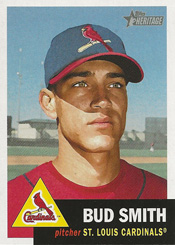
On Sept. 3, 2001, Smith pitched a no-hitter for the Cardinals against the Padres.

With his pitch count rising and his command fading, Smith was in danger of getting a mound visit from manager Tony La Russa, who was considering lifting the rookie left-hander.

One pitch away from creating an uncomfortable situation, Smith managed to prevent the conversation neither he nor La Russa wanted to have.

Tapping his potential

Born and raised in the Los Angeles metropolitan area, Robert Allan Smith got the nickname Bud from his father, Allan, a construction worker, who would come home from work and ask his son to get him a cold Budweiser from the refrigerator, according to the St. Louis Post-Dispatch.

Smith was 18 when he was chosen by the Cardinals in the fourth round of the 1998 amateur draft.

His breakout season came in 2000 when he had a 17-2 record in the minors. Among the wins were a pair of seven-inning no-hitters for Arkansas.

A finesse pitcher, Smith was listed at 6 feet, 170 pounds. When Cardinals broadcaster Jack Buck got a look at him at spring training in 2001, he exclaimed to Post-Dispatch columnist Bernie Miklasz, “He’s as thin as soup.”

The Sporting News described Smith as “a Tom Glavine-type: smallish but with a good enough fastball and decent changeup.”

“I create ground balls,” Smith told Miklasz. “I’m not a big strikeout guy.”

Ups and downs

Smith, 21, started the 2001 season in the minors, but was called up to the Cardinals in June. He made his debut for them with an inning of scoreless relief at Denver. Boxscore

On June 17 against the White Sox, Smith got his first big-league win in his first big-league start. Boxscore

He was 2-0 with a 2.25 ERA in July, but 0-2 with a 5.73 ERA in August.

In his last three August starts, Smith gave up 14 earned runs in 14 innings. The last game in that stretch was against the Padres in St. Louis. The Cardinals won, 16-14, but Smith was shelled for seven runs, five earned, before he was lifted in the fourth. Ryan Klesko hit a 472-foot home run against him. Boxscore

Looking good

La Russa was considering removing Smith from the rotation if he didn’t improve in his next start, Sept. 3, in a rematch versus the Padres at San Diego.

The game would be Smith’s first in his home state as a big-leaguer. In attendance were his mother, stepfather, 14 other immediate family members and 10 high school buddies, the Associated Press reported.

“Smith tried to change speeds and use both sides of the plate better than he did in his three previous outings,” The Sporting News reported.

In sync with catcher Eli Marrero, Smith executed the strategy splendidly. “That’s the first time I’ve felt that comfortable in a while,” he told the Post-Dispatch.

Smith retired the first five batters before issuing a walk to ex-teammate Ray Lankford in the second. Rickey Henderson walked in the third. Five of the Padres’ first 15 outs were strikeouts. In five innings, Smith’s pitch count was at 70.

“I was almost rooting for him to give up a hit so we could get him out of there,” pitching coach Dave Duncan told the Post-Dispatch.

Henderson walked again in the sixth, but the no-hitter was intact.

In the seventh, Smith hung a changeup to Bubba Trammell, who drove the pitch deep to left.

“That ball was the biggest scare of the night,” Smith told the Post-Dispatch.

As he watched left fielder Albert Pujols run toward the wall, “I thought the only chance I had was if Albert jumped and robbed him,” Smith said.

The ball didn’t carry as far as Smith feared, and Pujols caught it at the wall.

Mission accomplished

In the late innings, aware a no-hitter was at stake, “I was shaking,” Smith said to the Post-Dispatch. “I was so nervous.”

With the Cardinals ahead, 4-0, La Russa made some defensive changes in the eighth, including shifting Pujols from left to first base in place of Mark McGwire.

In the same inning, Tony Gwynn, 41 and in his last season of a Hall of Fame career, got a standing ovation as he came to the plate as a pinch-hitter. Smith was so focused, “I couldn’t hear anybody in the stands,” he told the Post-Dispatch.

Gwynn grounded out to shortstop Edgar Renteria.

In the ninth, relievers Dave Veres and Steve Kline warmed up rapidly in the Cardinals’ bullpen. Henderson, like Gwynn, a future Hall of Famer, led off and hit a broken-bat grounder to short for the first out.

After getting ahead on the count 1-and-2 to D’Angelo Jimenez, Smith walked him. La Russa sensed trouble. Smith had thrown more than 120 pitches and leaving him in the game “went against La Russa’s instincts,” The Sporting News noted.

The next batter was Ryan Klesko, who had hit the mammoth home run against Smith five nights earlier. When the first three pitches to Klesko missed the strike zone, La Russa said he was tempted to relieve Smith if he walked Klesko, the Post-Dispatch reported.

Asked whether he really would have lifted Smith, La Russa replied, “I probably would have made a trip (to the mound) and asked him to be honest. If he said, ‘I’m toast,’ it would have been better to let the reliever make the mistake.”

La Russa never had to leave the dugout. On the 3-and-0 pitch to Klesko, Smith threw a fastball for a strike. He came back with a curve for strike two. On the next pitch, Klesko sliced a grounder toward short. Renteria grabbed it on the short hop and fired to first in time for the second out.

Next was cleanup batter Phil Nevin. He got the count to 2-and-1. On Smith’s 134th pitch, Nevin smacked a sharp grounder up the middle. Smith snared it, ran halfway to first base and flipped underhanded to Pujols for the final out.

“He hit it right to me, but I didn’t know I had the ball,” Smith told the Associated Press. Boxscore and Video of last 3 innings

Smith was the third Cardinals rookie to pitch a no-hitter, joining Paul Dean (1934) and Jose Jimenez (1999).

The no-hitter was the start of a stretch of 12 wins in 13 games for the Cardinals. Smith was 3-0 with an 0.43 ERA in three September starts, helping the Cardinals finish in a tie with the Astros atop the division and qualify for the playoffs.

Smith’s record with the Cardinals in the regular season: 6-3 with a 3.81 ERA.

In the National League Division Series against the Diamondbacks, Smith started and won Game 4. Boxscore

The next year, Smith was 1-5 with a 6.94 ERA when the Cardinals packaged him in a trade to the Phillies for Scott Rolen.

After the deal, Smith never appeared in another big-league game. The no-hitter was his only complete game in the majors.
Read Full Post »

An experiment with technology went haywire for the Reds in a game against the Cardinals.

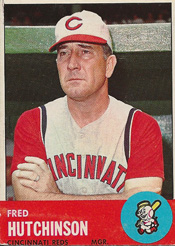
On Aug. 18, 1961, Reds manager Fred Hutchinson used a shortwave radio to communicate instructions from the bench to his third-base coach.

The innovative effort lasted an inning before Hutchinson went back to using traditional hand signals to relay signs.

Sign language

The Reds were the surprise of the National League in 1961. In addition to talents such as Frank Robinson, Vada Pinson and Wally Post, the Reds were loaded with former Cardinals. They included the manager (Fred Hutchinson), hitting coach (Dick Sisler), relief ace (Jim Brosnan) and three infield starters (second baseman Don Blasingame, shortstop Eddie Kasko and third baseman Gene Freese).

On Aug. 18, the Reds (73-46) were in first place, 13 games ahead of St. Louis (58-57) and one ahead of the second-place Dodgers (69-44), entering a weekend series with the Cardinals at Cincinnati.

Earlier that season, the Dodgers unveiled a walkie-talkie system for manager Walter Alston to communicate with base coaches, the Dayton Journal-Herald reported. The Reds were determined not to be left out of the modern communications game.

Before the series opener against the Cardinals, Hutchinson informed reporters of the new way he planned to send instructions to the third-base coach.

Hutchinson had a microphone in the dugout and coach Reggie Otero, stationed at third, was provided an earpiece.

“A blue wire, connected to an amplifier in the dugout, has been run underground to the third-base coaching box, where it forms a loop around Otero,” the Dayton Journal-Herald reported. “Otero is equipped with a receiver under his shirt and an earplug. Anything broadcast through the amplifier can be heard by Otero as long as he’s within the loop.”

Party line

In the first inning, Otero heard Hutchinson’s instructions just fine. Problem was, so did a lot of others.

Because of a snafu in the system, Hutchinson’s instructions to Otero also were coming through the loudspeaker in the press box.

Fans in seats near the press box could hear what was being said, too, United Press International reported.

“It threw the Reds’ bosses into a tizzy,” the Associated Press noted.

General manager Bill DeWitt Sr. called Hutchinson in the dugout and told him to stop using the shortwave device.

Hutchinson went back to using hand signals to send signs to Otero, who relayed them the same way to the batters and runners.

Unfazed, the Reds scored four runs in four innings against Bob Gibson. Gordy Coleman hit a three-run triple with two outs in the first. Frank Robinson stole home with two outs in the third.

Behind the complete-game pitching of American League castoff Ken Johnson, who mixed knuckleballs with sinkers, the Reds won, 6-3. Boxscore

They finished the season four games ahead of the Dodgers and became National League champions for the first time in 21 years.

Read Full Post »

(Updated March 9, 2022)

A troubled talent, Cardinals shortstop Garry Templeton let his emotions reach a boiling point, resulting in a public meltdown.

On Aug. 26, 1981, during a game at St. Louis, Templeton got booed for not hustling and reacted by making obscene gestures.

Ejected by umpire Bruce Froemming, Templeton was approaching the dugout when he was confronted by manager Whitey Herzog, who pulled him down the steps and backed him against a wall before teammates separated them.

The Cardinals suspended and fined Templeton, then moved him to the disabled list when he entered a St. Louis hospital for treatment of emotional problems.

Three weeks later, Templeton returned to the Cardinals’ lineup and finished the season. During the winter, the Cardinals traded him to the Padres for a future Hall of Famer, Ozzie Smith.

Good and bad

A first-round choice of the Cardinals in the 1974 amateur draft, Templeton was 20 when he took over for Don Kessinger as starting shortstop in August 1976.

In his book “You’re Missin’ a Great Game,” Herzog said Templeton, a switch-hitter with speed, “was the single most talented all-around player I’d seen since Mickey Mantle.”

In 1979, Templeton became the first player to get 100 hits from each side of the plate in one season, but he also was the center of controversy, demanding a trade and snubbing the All-Star Game.

Battle of wills

In 1981, Herzog’s first full year as Cardinals manager and general manager, Templeton hit .345 in April, but slumped in May.

On May 25, Herzog moved Templeton out of the leadoff spot and put Tommy Herr there. Herr “was the best leadoff man we’ve had here,” Herzog said to The Sporting News. “Templeton is not a good leadoff man. He doesn’t get any walks.”

Miffed, Templeton told the St. Louis Post-Dispatch he wanted to be traded to a team near his home in southern California.

“Put Tony Scott and me in a package deal and send us to San Diego for Ozzie Smith and Gene Richards,” Templeton told the Post-Dispatch in a story published June 1.

“This organization has had enough of me,” Templeton said. “I’m tired of this.”

Herzog responded, “No player is going to make out my lineup for me.”

Templeton batted in the No. 2 spot in the order until the players went on strike June 12.

Sign language

When play resumed Aug. 10, Templeton was restored to the leadoff position, but he wasn’t content. He informed Herzog he didn’t want to play in day games after night games.

In “You’re Missin’ a Great Game,” Herzog said his response to Templeton was, “What’s the matter with you? You’re tired?”

According to Herzog, Templeton’s teammates were tired of his antics. “They could see he was dogging it on ground balls, pulling up short on the bases, and generally acting like he didn’t give a damn about baseball or them,” Herzog said.

After a night game on Tuesday, Aug. 25, the Cardinals had a game against the Giants the next afternoon at Busch Memorial Stadium.

In his book “White Rat: A Life in Baseball,” Herzog said, “I told Templeton he’d have to play, even if he didn’t feel like it.”

The start of the game was delayed 88 minutes because of rain, and some of the 7,766 spectators spent the time drinking.

In the first inning, Templeton struck out, but catcher Milt May dropped the third strike. Rather than hustle to first, Templeton took a few steps up the line, then veered toward the dugout. Fans booed the lack of effort.

In “White Rat,” Herzog said, “I didn’t blame them. If I’d paid good money to see a professional ballplayer put out, I’d have been booing, too.”

Templeton responded to the jeers by slapping his left hand under a raised right arm with fist clenched.

Plate umpire Bruce Froemming warned Templeton that any more gestures would lead to an ejection.

Out of control

In the bottom of the third, when Templeton entered the on-deck circle, he was booed. He turned toward the fans and grabbed his crotch.

After Froemming ejected him, Templeton started toward the dugout, stopped, clutched his genitals and raised a middle finger to the fans, the Associated Press reported.

In “White Rat,” Herzog recalled, “When he got to the dugout, I reached out and pulled him down the steps, and if the other players hadn’t come between us, I guess we’d have had a pretty good fight. I’d never been so mad at a player.”

Herzog ordered Templeton to go to the clubhouse and wait for him, but Templeton packed and left the ballpark under police protection, The Sporting News reported.

Herzog suspended Templeton indefinitely and fined him $5,000.

“There’s no ballplayer big enough to show up the fans and make the gestures he was making,” Herzog told the Post-Dispatch. “When he grows up to be a man and publicly apologizes to our fans and to his teammates, he can come back and play. It’s up to him.”

Asked about Templeton, Cardinals catcher Gene Tenace said to The Sporting News, “We’re better off without him. He’s a loser. I’ve lost all respect for him as a human being.” Boxscore

Ready to return

In “You’re Missin’ a Great Game,” Herzog said Cardinals owner Gussie Busch told him, “Get rid of the son of a bitch.”

Busch wanted Templeton traded the next day. “He didn’t care what we got in return,” Herzog said, “but that wasn’t going to help us any.”

Instead, team physician Dr. Stan London met with Templeton on Aug. 27 and convinced him to undergo a psychiatric evaluation the next day. London said Templeton was “very receptive” to be evaluated.

On Aug. 31, Templeton entered a St. Louis hospital for treatment of depression, the Post-Dispatch reported. The Cardinals lifted his suspension and put him on the disabled list.

On Sept. 15, Templeton returned to the club. He apologized to his teammates in the clubhouse before a doubleheader at Montreal and they welcomed him back.

“He was kind of emotional, but he made it short and to the point,” Tenace told the Post-Dispatch.

Tommy Herr noted, “He said he wanted to come back and play hard. That’s all I wanted to hear.”

Batting second in the order, Templeton had four hits in the opener versus the Expos. Boxscore

On Sept. 23, in his first home game since his return, Templeton “was cheered when the lineups were read and again before each time at-bat,” the Post-Dispatch reported. “The applause drowned out a smattering of boos.”

Templeton had two hits and a RBI in the game against the Phillies. Boxscore

Herzog kept Templeton in the second spot in the order the rest of the season. He hit .386 in 18 September games.

For the season, Templeton batted .288, including .351 with runners in scoring position, and had 96 hits in 80 games.

Batting leadoff in 1981, Templeton had a .273 batting average and .279 on-base percentage. From the No. 2 spot, he hit .336 with a .366 on-base percentage.

In March 1982, after he was traded to the Padres, Templeton, in an interview with the Post-Dispatch, said of his 1981 incident in St. Louis, “It’s over with. I made a mistake. People say it was drugs. People say it was a chemical reaction. I did something that was wrong, that’s all.”

Regarding the reactions of Cardinals players upon his return to the team in September 1981, Templeton said, “I had a better reception by visiting players than a lot of my teammates … A lot of my teammates feel like I let them down. I have an understanding of that. Everybody’s different and you can’t blame them, but I feel a lot of guys should have received me better.”

Read Full Post »

A four-game sweep by the Cardinals contributed to an epic Phillies losing streak.

In 1961, the Phillies lost 23 consecutive games _ the longest losing streak by a team since the American League joined the National League to form the majors in 1901.
Before then, two clubs deemed as major-league had longer losing streaks. The Cleveland Spiders of the National League lost 24 in a row in 1899. The Louisville Colonels of the American Association lost 26 straight in 1889.

Dim view

Managed by Gene Mauch, 35, the 1961 Phillies were not expected to be good. In its preview of the 1961 season, Sports Illustrated listed the Phillies’ weak spots as “pitching and hitting.”

In May, the Phillies traded one of their best pitchers, Turk Farrell, to the Dodgers for outfielder Don Demeter and third baseman Charlie Smith. By the end of June, the Phillies were 22-45 and out of contention.

The first of their 23 consecutive losses came on July 29 against the Giants. In the first inning, with Giants runners on second and third, one out, Mauch ordered an intentional walk to Willie Mays. Orlando Cepeda followed with a grand slam and the Giants won, 4-3. Boxscore

Wrong direction

The losing streak was at five when the Phillies went to St. Louis for a four-game weekend series with the Cardinals.

In the Aug. 4 opener, the Phillies trailed by a run in the ninth, but had runners on first and second, none out.

Tony Gonzalez hit a drive to deep right. Joe Cunningham leaped and caught the ball for the first out, but the runner on second, rookie George Williams, failed to tag and didn’t advance. The baserunning lapse prompted Mauch to stage “a helmet-throwing tantrum in the dugout,” according to the Philadelphia Daily News.

The next two batters, ex-Cardinal Bobby Gene Smith and Lee Walls, struck out, and the Cardinals escaped with a 9-8 victory. Boxscore

In the clubhouse, Mauch “singed the entire team with a post-game lecture,” the Philadelphia Daily News reported.

“It was building up, up, up,” said Mauch, who regretted the outburst.

On Aug. 5, the Cardinals won, 7-0, on a shutout by Curt Simmons, a former Phillie, and two home runs by Bill White. Boxscore

The next day, the Cardinals used the Polish power of Ray Sadecki and Carl Sawatski to win both games of a Sunday doubleheader .

In the opener, Sadecki hit a three-run double and pitched a four-hitter for a 3-1 Cardinals triumph. Boxscore

In the second game, Sawatski, a former Phillie, drove in all three runs in a 3-2 victory. Boxscore

The Cardinals’ sweep stretched the Phillies’ losing streak to nine. “This team doesn’t act like a team that goes out to get beat,” Mauch told the Philadelphia Daily News. “They’re trying.”

That’s a winner

The Phillies had one extra-inning game during the streak and it resulted in their 20th consecutive loss, 7-6 to the Braves on Aug. 17. The Braves won in the 11th on a RBI by Philadelphia native Al Spangler. Boxscore

“The Phillies have had some inept clubs, but nothing to match this,” The Sporting News declared. “It was hard to assess more blame on the pitching than the hitting. Both were failing.”

Three days later, in a Sunday doubleheader at Milwaukee, the Braves won the opener, 5-2, on Warren Spahn’s five-hitter, giving them 10 consecutive wins and extending the Phillies’ losing streak to 23. Boxscore

Relief came in the second game. Clay Dalrymple had three hits, ex-Brave Wes Covington hit a home run and the Phillies prevailed, 7-4. Boxscore

The winning pitcher, John Buzhardt, went the distance and held Eddie Mathews and Joe Torre hitless.

“I had a feeling we were going to win,” Buzhardt told the Philadelphia Daily News. “I said, ‘Get me two runs and I’ll win.’ It’s a good thing they got me seven.”

Buzhardt was the lucky charm the Phillies had been seeking. He wore uniform No. 23, same number as the losing streak, and he was the winning pitcher in the Phillies’ last victory before the streak began.

“The kid probably felt like he was pitching in the seventh game of the World Series,” Mauch said to the Associated Press.

In the victorious Phillies clubhouse, the mood was more consolation than celebration. “We were so embarrassed by then that we had no elation,” Mauch recalled to Sports Illustrated.

Stan Hochman of the Philadelphia Daily News observed, “If you think champagne corks popped or pheasant suddenly appeared out from under glass, think again. They had spare ribs, cheese and crackers, and beer in the clubhouse.”

Welcome home

The Phillies’ charter flight from Milwaukee arrived in Philadelphia at 1:10 a.m., 90 minutes late.

As the plane taxied to the gate, the Phillies saw a crowd of about 200 people waiting for them in a drenching rain.

Peering from his window seat, Phillies pitcher and funnyman Frank Sullivan shouted to his teammates, “They are selling rocks at $1.50 a pail. Leave the plane at five-minute intervals. That way, they can’t get us all with one burst.”

The fans had come to congratulate the team on snapping the losing streak, “and nobody threw anything more dangerous than confetti,” the Philadelphia Daily News reported.

As a band played “Hail, Hail the Gang’s All Here” and “Take Me Out to the Ballgame,” fans hoisted Mauch on their shoulders and staged an impromptu victory march through the airport.

Mauch told the crowd, “One day, we’ll come home after winning 23 out of 24, and they’ll have to build a new airport.”

Summing up the day, Frank Sullivan dead-panned, “Well, we gained a half-game on first-place Cincinnati.”

Bad numbers

The 1961 Phillies lost 19 of 22 games against the champion Reds and finished the season in last place at 47-107.

The Cardinals were 13-9 versus the Phillies. Curt Simmons (4-0, 1.52 ERA) and Bob Gibson (3-0, 0.67) did best against them.

Don Demeter led the Phillies in home runs (20) and RBI (68). Their top hitter was Tony Gonzalez (.277).

John Buzhardt finished with a 6-18 record. Frank Sullivan needed a sense of humor. He was 3-16. Future Hall of Famer Robin Roberts was 1-10.

The Phillies placed last in the league in hitting (.243), on-base percentage (.310) and runs (584). Their staff ERA (4.61) was worst in the league.

Read Full Post »

(Updated Oct. 6, 2024)

Adding a mix of controversy and comedy with a demonstration of clout, baseball’s greatest showman gave a commanding performance while reaching a milestone before a St. Louis audience.

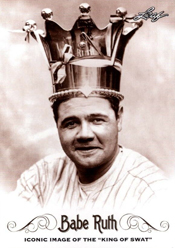
On Aug. 21, 1931, in a game against the Browns at Sportsman’s Park, Yankees slugger Babe Ruth hit his 600th career home run.

Usually, such a feat would provide enough drama for one day, but not for Babe. Next, he got ejected. Then, he sparked a treasure hunt by offering a reward for his home run ball.

Big blow

Ruth, 36, hit his 599th home run, a ninth-inning grand slam, on Aug. 20 against the Browns at Sportsman’s Park. Boxscore

The next day, a Depression Era crowd of 4,000 came to Sportsman’s Park to see if he could hit No. 600.

Before the game, Ruth informed Browns secretary Willis Johnson he’d like to have the ball if he hit the milestone home run, the St. Louis Globe-Democrat reported.

In the third inning, with a runner on first, Ruth did his part. He hit a pitch from George Blaeholder high and deep to right, “a gorgeous, virile blow” that “stirred the sopranos to violent shrilling,” the New York Daily News noted.

The ball carried over the pavilion roof and struck a parked car on Grand Avenue, according to the Associated Press.

“The din had just subsided” when Lou Gehrig “duplicated the Bambino’s feat,” the Daily News reported. According to the St. Louis Post-Dispatch, Gehrig’s ball bounced off the roof and into the street.

Prize money

Four innings later, with the Yankees ahead, 8-1, Browns cleanup batter Red Kress hit a three-run home run to left against Hank Johnson.

Ruth, playing left field, claimed a spectator in the bleachers interfered with the ball while it was in play. When Ruth persisted with his argument, umpire Roy Van Graflan ejected him. It was the 10th of Ruth’s 11 career ejections as a player, but only the second time the gate attraction had been tossed since 1924.

Done for the day, Ruth’s thoughts were on his home run ball. When he got to the clubhouse, he sent word to the press box, asking that radio stations relay his request for the ball to be returned to him. Ruth said he would reward the finder with $10 and a new baseball.

Ruth was drawing a salary of $80,000 in 1931 _ when asked after signing the contract whether he believed he deserved to be making more money than President Herbert Hoover, Babe supposedly replied, “’I had a better year than he did.” _ but a $10 offer for a baseball was a good deal during the depths of economic depression.

Three St. Louis radio stations (KMOX, KWK and WIL) carried Browns home games in 1931, so when Ruth’s request went on the airwaves it reached a wide audience.

Kid stuff

When a 10-year-old newsboy, Tom Collico of North Grand Avenue, showed up at the Sportsman’s Park press gate with a ball, Willis Johnson, the Browns’ secretary, took him to meet Ruth.

According to Dick Farrington of The Sporting News, “Babe greeted the kid like a father. He fished around and handed the boy a $10 bill and in another few minutes had a brand new ball for him.”

While Collico was meeting with writers in the press box, another boy arrived at the gate and said he had the Ruth home run ball. According to The Sporting News, the boy was brought to Ruth, who gave him $10 and a new ball, too.

“Babe doesn’t know which of the balls he purchased was the one he hit,” The Sporting News noted.

Ruth guessed one of the balls was Gehrig’s home run. Boxscore

Ruth finished the season with 46 home runs, the 12th and last time he led the American League in that category.

Against the Browns in 1931, he hit .383 with eight home runs, including four at Sportsman’s Park.

For his career, Ruth batted .351 with 96 home runs versus the Browns. He hit 58 regular-season home runs at Sportsman’s Park. He also hit six there against the Cardinals _ three in Game 4 of the 1926 World Series Boxscore and three in Game 4 of the 1928 World Series. Boxscore

Read Full Post »

(Updated Sept. 12, 2021)

Three future Hall of Famers converged on center stage for a climactic scene in a Cardinals classic. On the mound, Bob Gibson. Behind the plate, Ted Simmons. In the batter’s box, Willie Stargell.

On Aug. 14, 1971, Gibson got his lone no-hitter when he struck out Stargell for the last out.

Finishing a no-hitter is a formidable task under any circumstance, but for Gibson the degree of difficulty was heightened. Stargell was leading the majors in home runs and RBI.

Simmons, in his first full season as Cardinals catcher, had an intriguing role in the drama. He earned respect with his bat, but took pride in his catching, too. Being involved in a Gibson no-hitter would help secure Simmons’ reputation.

Pride still matters

Gibson earned his second National League Cy Young Award in 1970. At 35, he looked as dominant as ever at the start of the 1971 season, winning three of his first four decisions. The only loss in that stretch was in extra innings to the Cubs’ Ferguson Jenkins.

Trouble soon followed. In his last April start, Gibson got shelled in a loss to the Mets’ Tom Seaver. In May, Gibson was 1-3 with a 5.21 ERA. He tore a thigh muscle late in the month and didn’t pitch from May 30 through June 20. When he returned, he lost two June starts, dropping his record to 4-7 with a 4.31 ERA.

Losing none of his intensity and focus, Gibson told The Sporting News, “I get paid for winning,” and he set his sights on earning the money.

Gibson was 5-2, including consecutive shutouts of the Phillies and Mets, with a 1.95 ERA in seven starts in July.

“Pride keeps him going,” teammate Joe Torre told The Sporting News. “He’s the greatest competitor I ever saw.”

On Aug. 4, with Simmons catching, Gibson struck out nine, including Willie Mays twice, and beat Gaylord Perry and the Giants for his 200th career victory. Boxscore

Overpowering stuff

Ten days later, Gibson was the starter against the Pirates on a Saturday night at Three Rivers Stadium in Pittsburgh.

The Cardinals knocked out Pirates starter Bob Johnson in the first inning and also pounded relievers Bob Moose and Bob Veale. Gibson contributed three RBI. Simmons had four hits, a RBI and scored three times. Torre also had four hits and a RBI, and scored twice.

On the mound, Gibson was in command.

“This was the first time in my life I ever was overpowered by anyone,” Pirates center fielder Al Oliver said to the St. Louis Post-Dispatch. “I never was able to get my bat around in time.”

Pirates second baseman and future Hall of Famer Bill Mazeroski told the Associated Press, “Gibson was throwing them right where he wanted. He hit the outside corner every time. I broke two of my bats.”

Simmons told the Baseball Hall of Fame yearbook in 2021, “I can remember specifically thinking in the fourth inning that I was watching something that was pretty special … The slider was just so wicked. Complete and total command of a fastball that he could ride and sink, four-seam and two-seam.”

When the Cardinals scored three runs in the eighth to take an 11-0 lead, the outcome wasn’t in doubt. The focus was on whether the Pirates would get a hit. Gibson never had pitched a no-hitter at any level, amateur or professional.

“In the last two innings, I was bearing down extra hard,” Gibson told The Sporting News. “I was trying not to make any bad pitches. Even when I was falling behind in the count, I was being careful not to groove any pitches. I was throwing sliders and curves on 3-and-2 counts.”

Despite his best efforts, Gibson made a mistake to Dave Cash. With two outs in the eighth, Gibson said he hung a slider. Cash hit a high bouncer to third. For a moment, Joe Torre couldn’t see it in the lights.

“It scared the heck out of me, man,” Torre told the Baseball Hall of Fame yearbook in 2021. “I’m thinking, ‘I’m going to whiff this thing,’ but it didn’t happen. I was able to make the play.”

Stretching on tiptoes, he snared the ball and fired a throw to first to nip Cash.

Friend or foe?

“By the ninth inning, I was so nervous my knees were actually knocking,” Gibson said in his book “Stranger to the Game.”

The first batter was Vic Davalillo, a former Cardinal who started in right field instead of Roberto Clemente. Gibson got him to ground out to shortstop Dal Maxvill.

Al Oliver followed and grounded out to second baseman Ted Kubiak.

Willie Stargell was all that stood between Gibson and a no-hitter _ and he stood like a giant from the left side of the plate.

“His weight shifting rhythmically from one foot to the other, his bat moving in circles like an airplane propeller, Stargell creates a feeling of menace as he waits for the pitch,” Newspaper Enterprise Association reported.

At that point in the season, Stargell had 39 home runs and 101 RBI. No one else in the majors had more.

Stargell also had hit four home runs in his career versus Gibson then.

(The final career numbers for Stargell against Gibson: .290 batting average, .388 on-base percentage, five home runs, 20 walks and 41 strikeouts. According to baseball-reference.com, Stargell struck out more times versus Gibson than he did against any other pitcher. Gibson and Phil Niekro were the only pitchers to issue as many as 20 walks to Stargell.)

In “Stranger to the Game,” Gibson said, “Aside from former teammates, the only opposing player I ever really made friends with was Willie Stargell. I don’t have a good excuse for this, except that Stargell’s personality left me no choice. I was just fortunate he didn’t spread around the league that I was a nice guy or something. I couldn’t have that.”

Caught looking

Increasing the tension with every pitch, Gibson got ahead in the count, 1-and-2, on Stargell. On the next one, “I was looking for a fastball,” Stargell told The Sporting News.

Instead, with his 124th pitch of the game, Gibson threw a slider.

Stargell watched it go into Simmons’ mitt and heard umpire Harry Wendelstedt call, “Strike three!”

“That last pitch to Stargell really exploded,” Cardinals manager Red Schoendienst said to The Sporting News.

Stargell said the slider “cut over the plate at the last instant.” Boxscore and Video

“You can tell all those people who have been saying that Gibson was washed up that they should have been at the plate with a bat in their hands,” Stargell said.

Jack Buck, calling the ninth inning on the KMOX radio broadcast, said after the completion of the no-hitter, “If you were here, it would have made you cry.” Audio broadcast of Jack Buck and Jim Woods

Gibson’s no-hitter was the first in a big-league game in Pittsburgh since 1907 when rookie Nick Maddox of the Pirates did it against the Dodgers at Exposition Park. No big-leaguer pitched a no-hitter at Forbes Field, the Pirates’ home from 1909-69.

Gibson finished the season with a 16-13 record, 3.04 ERA, 20 complete games and five shutouts, his most since his most dominant season in 1968.

Read Full Post »

« Newer Posts - Older Posts »