Feeds:
Posts
Comments

Archive for the ‘Trades’ Category

(Updated May 25, 2019)

The history between the Cardinals and Rangers is highlighted by the seven-game World Series they played in 2011. Before then, their interactions were more quirky than rich.
Since the Washington Senators relocated to Texas and became the Rangers after the 1971 season, they have made some noteworthy trades with the Cardinals.

The Rangers also launched the managerial career of one of the Cardinals’ legends, Whitey Herzog, who was 47-91 with Texas in 1973.

Here’s a look at some of the deals between the Rangers and Cardinals:

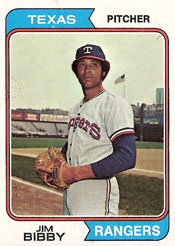
_ Cardinals send pitcher Jim Bibby to the Rangers for pitcher Mike Nagy and catcher John Wockenfuss, June 6, 1973: The trade was a bust for St. Louis. Bibby, seldom used by the Cardinals, became a 19-game winner for Texas in 1974. The right-hander recorded 111 wins in a 12-year big-league career.

Herzog had pushed for the Rangers to acquire Bibby. When Herzog was farm director of the Mets, Bibby was a prospect in New York’s minor league system.

At the time of the trade, Cardinals general manager Bing Devine told The Sporting News, “Whitey said Bibby has a better arm than half his pitchers.”

Nagy never won a game for the Cardinals and Wockenfuss (who became a reliable utility player for the Tigers) never played a regular-season game for St. Louis.

_ Cardinals send outfielder Tommy Cruz and cash to the Rangers for pitcher Sonny Siebert, Oct. 26, 1973: Cruz, the middle of the trio of outfielder brothers for St. Louis (Jose and Hector were the others), never played a regular-season game for Texas.

Siebert, a St. Mary, Mo., native who had success with the Indians and Red Sox, realized a lifelong dream by joining the Cardinals. He had been a high school basketball standout in suburban St. Louis and had been a baseball and basketball player at the University of Missouri.

Siebert, 37, opened the 1974 season in the Cardinals’ rotation. He was 6-3 with a 1.98 ERA on June 10. He finished the season 8-8 with a 3.84 ERA.

The right-hander’s most memorable win for St. Louis came on Sept. 11, 1974, at Shea Stadium in the Cardinals’ 4-3 25-inning victory over the Mets. Siebert pitched 2.1 innings of scoreless relief to earn the win, his last as a Cardinal. Boxscore

_ Cardinals send shortstop Eddie Brinkman and pitcher Tommy Moore to the Rangers for outfielder Willie Davis, June 4, 1975: St. Louis acquired the mercurial Davis with the hope his offense would spark them to a championship in 1975. Though the Cardinals fell short, Davis mostly delivered, filling in for injured outfielders Bake McBride and Reggie Smith.

Davis batted .291 with 50 RBI in 98 games. Brinkman, the Cardinals’ Opening Day shortstop, played one game for cash-strapped Texas before he was peddled to the Yankees. Moore never won a game for the Rangers.

Davis, 35, had clashed with Rangers manager Billy Martin. He staged a sitdown protest in center field when teammate Steve Hargan failed to hit a batter in retaliation after Davis was brushed back by an opponent’s pitch. Davis also irked Texas general manager Dan O’Brien by repeatedly asking for advances in his salary. “At some point, you’ve got to draw the line,” O’Brien told United Press International.

The trade was popular with Cardinals players. St. Louis second baseman Ted Sizemore, who had been Davis’ teammate with the Dodgers, told the Associated Press, “The man can play. He comes to play. He likes to play.”

Said Davis to The Sporting News: “With the Cardinals, I know I can play baseball again without being suppressed. I can be loose again.”

By September, though, Davis’ personal and financial problems caught up with him. He refused to play some games while his wife pursued an alimony case that threatened to restrict his wages. After the season, when he demanded a five-year contract for $1 million, the Cardinals traded him to the Padres.

_ Cardinals send shortstop Royce Clayton and pitcher Todd Stottlemyre to the Rangers for pitcher Darren Oliver, third baseman Fernando Tatis and outfielder Mark Little, July 31, 1998: Clayton and Stottlemyre were eligible to become free agents after the season and the Cardinals were uncertain they could re-sign them.

On the day of the trade, Texas was a game behind the first-place Angels in the American League West. The Cardinals were six games under .500 and 13.5 games behind the first-place Astros in the National League Central.

Clayton hit .285 for Texas in 1998 and Stottlemyre won five of 10 starts, helping the Rangers win the division title. St. Louis general manager Walt Jocketty, meanwhile, was positioning for the future.

“The guy we liked is Tatis,” Jocketty told The Sporting News when the trade was made. “We needed to find a third baseman and he was the best guy available.”

Tatis slugged 34 home runs for the Cardinals in 1999 and contributed to their division championship season in 2000.
Read Full Post »

(Updated Dec. 27, 2024)

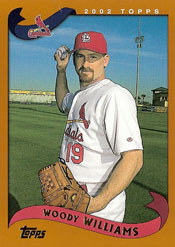
In August 2001, the Cardinals began a transformation from underachievers to postseason qualifiers when they acquired pitcher Woody Williams from the Padres for outfielder Ray Lankford.

After winning the National League Central championship in 2000, the Cardinals were expected to contend in 2001, but they entered August in third place at 53-51 _ 8.5 games behind the first-place Cubs and four behind the Astros.

With the emergence of rookie Albert Pujols, the Cardinals had a surplus of outfielders, including Jim Edmonds, J.D. Drew and Lankford. Complaining about a lack of respect, Lankford, 34, was falling out of favor with team management. It didn’t help that he was hitting .235 with 105 strikeouts in 264 at-bats. Lankford had missed on 36 percent of his swings.

On Aug. 2, 2001, the Cardinals sent Lankford (who agreed to waive his no-trade clause) and more than $2.8 million to the Padres for Williams. Andy Benes was struggling (7.06 ERA entering August) and the Cardinals needed a fifth starter to join a rotation of Matt Morris, Darryl Kile, Dustin Hermanson and Bud Smith.

“We’re extremely happy,” Cardinals general manager Walt Jocketty said to the St. Louis Post-Dispatch. “Woody Williams is a quality pitcher and a quality person.”

Williams, who would turn 35 Aug. 19, didn’t appear to be the obvious solution. He was 8-8 with a 4.97 ERA for the Padres, yielding 170 hits in 145 innings.

“I’m going to use this as a steppingstone that will allow me to get back to where I want to be,” Williams said.

Relying on a change of speeds and sharp location, Williams made his first Cardinals start on Aug. 4, 2001, against the Marlins at St. Louis and pitched six shutout innings. He left the game to a standing ovation from the crowd of 42,312. Luther Hackman and Gene Stechschulte combined to pitch three shutout innings in relief, preserving the win for Williams in a 3-0 victory. Boxscore

Starting with that game, the Cardinals went 38-16 the remainder of the season, finishing in a tie for first place with the Astros at 93-69 and qualifying for the playoffs for a second consecutive season.

The Cardinals couldn’t have done it without Williams, who was 7-1 with a 2.28 ERA for them, limiting batters to 54 hits in 75 innings.

Looking back on his Cardinals days, Williams told Stan McNeal of Cardinals Magazine in 2024, “When I got to St. Louis, I’d had a problem with giving up the long ball in my career … In St. Louis, my mentality became, ‘I’m going to attack the zone and keep the ball in the ballpark.’ I’ll be doggone if those guys behind me didn’t support me like crazy and make me look like a much better pitcher.”

Read Full Post »

(Updated Feb. 24, 2019)

The Orioles traded one of their most popular players, Boog Powell, for catcher Dave Duncan.

A 6-foot-4, 250-pound first baseman, Powell slugged 303 home runs in 13 years with the Orioles, won the American League Most Valuable Player Award in 1970 and helped Baltimore to four World Series appearances.

After Powell had his second consecutive subpar season in 1974 (12 home runs, 45 RBI), the Orioles acquired first baseman Lee May from the Astros, making Powell expendable.

On Feb. 25, 1975, the Orioles traded Powell and pitcher Don Hood to the Indians for Duncan and outfield prospect Al McGrew.

According to The Sporting News, the Orioles initially wanted pitching prospect Dennis Eckersley as the player to join Duncan in the deal, but settled for McGrew when the Indians refused to part with Eckersley. Twelve years later, as pitching coach of the Athletics, Duncan would convert a reluctant Eckersley from a starter to a closer, launching him on a path into the National Baseball Hall of Fame.

In going to Cleveland, Powell was reunited with his former Orioles teammate, Frank Robinson, who had become Indians manager, the first African-American to hold that position in the big leagues.

“Boog contributed a heck of a lot to this franchise over the years,” Orioles general manager Frank Cashen said. “I’m truly sorry that he had to go. But when we got Lee May in a trade, he was committed to play first base. That left Boog without a position, and without a job.”

Though the Orioles had three other catchers _ Andy Etchebarren, Elrod Hendricks and Earl Williams _ they anticipated Duncan would win the starting job.

“Despite a .226 career average, the Orioles were impressed with Duncan mainly because of his reputation as a good handler of pitchers,” The Sporting News reported. “His power totals, 67 homers in the last four years, are respectable even if his average could stand a booster shot.”

In a column for the Baltimore Sun, Bob Maisel described Duncan as “a good defensive catcher and handler of pitchers.”

“Duncan should prove the best catcher on the squad,” Maisel wrote. “He has the reputation of being a good competitor, who wants to play, a good man on a club.”

Duncan told the Associated Press he was happy to go to the “strongest team in the Eastern Division.” He said the Orioles had a better chance than the Indians of winning “and winning is what it’s all about.”

The trade worked out better for the Indians than it did for the Orioles. Powell hit .297 with 27 home runs and 86 RBI for the 1975 Indians and was named American League Comeback Player of the Year by The Sporting News. Duncan hit .205 with 12 home runs and 41 RBI for the 1975 Orioles.

After batting .204 with four home runs and 17 RBI in 1976, Duncan was traded by the Orioles to the White Sox after the season.

In 1979, Duncan returned to the Indians as a coach for manager Jeff Torborg. Duncan developed into a respected pitching coach and served on the staff of Cardinals manager Tony La Russa from 1996-2011.

Read Full Post »

On March 23, 2011, I interviewed former Cardinals all-star first baseman Bill White by telephone about the autobiography he has written in collaboration with journalist Gordon Dillow.

The book is called “Uppity: My Untold Story About The Games People Play” (2011, Grand Central Publishing). It is available on Amazon.

My interview with White, gracious with his time and thoughtful with his answers, is presented here in the second of three parts.

Q: On July 5, 1961, at the L.A. Coliseum, you hit three home runs off three different pitchers, all to that big right field. You were the first player to hit three homers to right field at the Coliseum. The next day, the Cardinals let go of manager Solly Hemus …

Bill White: They let him go that night. The headline the next day wasn’t, ‘White hits 3 home runs.’ The headline was, ‘Solly Hemus fired; Johnny Keane is new manager.’ Johnny was a super person. He was probably the best manager I played for.

Q: Why? What qualities did he possess?

Bill White: He didn’t want to get out in front of the players. He only asked you to do your job. And he also asked you not to do the things that you didn’t do well. That’s important. If you couldn’t do it, he wouldn’t ask you to do it. And he would sit down and talk to you and tell you why.

He was not necessarily the best tactical manager, but guys just liked to play for Johnny Keane. He was not an I guy. I played for a couple of I guys.

Q. You were part of an all-star infield with third baseman Ken Boyer, shortstop Dick Groat and second baseman Julian Javier. Was that the best infield you’ve ever seen?

Bill White: It was a good infield. It probably was not the best. Ken Boyer might have been the best third baseman I’d seen or played with. Groat had mobility problems. He understood how to play the hitters, but he had very little range and he didn’t have that real good arm. Javier was a pretty good second baseman. He made a great double play and he could go way out to center field for pop-ups because Curt Flood played a deep center field.

It was a good infield, the best infield that I was on, but I’m not sure it was the best ever. It might have been the best Cardinals infield.

Q: In 1964, the Cardinals’ offense was struggling. On June 15, the Cardinals acquired Lou Brock from the Cubs for Ernie Broglio. Did you know then the trade would turn out so well for the Cardinals?

Bill White: None of us did. We all thought it was nuts. Lou was a raw talent. At that point, he didn’t really understand baseball. He might try to steal while 10 runs up or 10 runs down.

When he got to St. Louis, Johnny Keane told him what he expected of him, and he turned him loose. I think Lou relaxed in St. Louis. Now he’s in the Hall of Fame. Without Brock, we would not have won.

Q: At what point did you think the Cardinals might catch the Phillies and win the pennant in 1964?

Bill White: When we played the Phillies in three games toward the end of the season. We beat them three in a row. We were on an upswing and they were on a downturn. They were a tired ballclub. You could see it.

Manager Gene Mauch had chosen to pitch Jim Bunning and Chris Short with almost no rest. That might have been a tactical mistake.

Q: What is your favorite memory of the 1964 World Series?

Bill White: Ken Boyer hitting the grand slam off Al Downing (in Game 4). And the pop-up by Bobby Richardson that Dal Maxvill caught for the final out of Game 7.

Q: After the 1965 season, the Cardinals traded you to the Phillies. What was your reaction to that deal?

Bill White: I didn’t mind the deal. I didn’t like the way it was done. The general manager of the Cardinals, Bob Howsam, said I was about five years older than I actually was.

When he did that, and said that publicly, it upset me, and I went in and challenged him … I said, ‘When you trade a guy in the big leagues, you say what a great player he was, and what a great player he will be. You don’t denigrate him.’

But it ended up great for me. because I got into radio and television in Philadelphia. And I still live there.

Everything in my life has been positive, because we made the most of whatever has happened.

Q: On May 18, 1966, you faced Bob Gibson for the first time since the trade. You singled and struck out the first two times at-bat. Then, with Dick Groat on base, you hit a home run. What do you recall?

Bill White: He must have made a heck of a mistake for me to hit a home run off him. After playing with him for so long, he knew how to pitch me. I didn’t like the ball inside from right-handers. Sliders inside would eat me up. So he must have made a mistake.

Q: Two years later, May 17, 1968, you beat Gibson, 1-0, with a RBI-single off him in the 10th. The next time you faced him, July 25, 1968, you came to bat in the second inning and he hit you with a pitch. Was it intentional?

Bill White: He was trying to pitch inside, let’s say that. He wasn’t headhunting. Gibson wasn’t a headhunter. But he would pitch inside. He did hit me on my right elbow.

He had told me before _ because I liked to charge the ball; I liked to go out and get the ball _ ‘You can’t do that against me.’ Bob was a great competitor. Bob and Sandy Koufax were two of the best when I was playing.

Tomorrow, Part 3: Bill White reveals how he almost replaced Harry Caray in the Cardinals’ broadcast booth and how general manager Bing Devine planned to make him a manager.

Yesterday: Part 1

Read Full Post »

(Updated May 10, 2021)

On Oct. 5, 1970, the Cardinals, looking to steady their middle infield with a reliable sparkplug, made a trade with the Dodgers, swapping slugger Dick Allen for second baseman Ted Sizemore and catcher Bob Stinson.

Though Allen, in his lone St. Louis season, hit 34 home runs, the most by a Cardinal since Stan Musial’s 35 in 1954, the Cardinals had taken a step backward in 1970, in part, because of shoddy defense.

One area of need was second base. Longtime starter Julian Javier had back problems. Allen, a defensive liability at first base, third base or left field, was deemed expendable.

“I told him (Allen) he did everything we had expected of him,” Cardinals general manager Bing Devine told the Associated Press. “It was just that the club wasn’t balanced enough … The vital aspect was defense.”

Sizemore, who won the National League Rookie of the Year Award in 1969, had a reputation as an unselfish scrapper.

“The people here (in St. Louis) will like him because of his hustle and his ability to go all out,” Cardinals manager Red Schoendienst told reporters.

In five years (1971-75) with St. Louis, Sizemore batted .260, primarily from the No. 2 spot in the order. When Cardinals speedster Lou Brock broke the big-league single-season stolen base record in 1974, he cited the sacrifices made by Sizemore, who passed up many good pitches to hit in order to give Brock chances to steal.

Asked about Brock, Sizemore told Cardinals Gameday Magazine in 2014, “We would go over pitchers before games. He would tell me, ‘I’m going on this guy. If I get a decent jump, I will beat the throw to second base.’ He had it down.”

In the book “The Spirit of St. Louis,” Cardinals pitcher Rich Folkers told author Peter Golenbock, “Ted Sizemore … was probably the best No. 2 hitter I saw in my career. He hit 0-and-2 more than any hitter I ever saw, because with Lou Brock getting on base, he took and took and took, waiting for Lou to steal bases.

“I thought he was outstanding, though Ted never got the credit,” said Folkers. “These are the behind-the-scene things. You might say, “This guy only hit .260 in the big leagues.’ Yeah, but he got the ground ball to move him to third, or he took strikes so Brock could steal.”

Sizemore also was a steady fielder. He made four throwing errors in five years with the Cardinals.

Read Full Post »

In his lone season with the Cardinals, Gino Cimoli achieved a standard no other St. Louis right-handed batter had matched in 20 years.

Cimoli hit 40 doubles for the 1959 Cardinals.

He was the first Cardinal to reach the 40-double mark since Stan Musial hit 41 in 1954 and the first right-handed batter to do it for St. Louis since Joe Medwick’s 48 in 1939.

Cimoli’s output placed him fourth in the National League in doubles in 1959, trailing only the Reds’ Vada Pinson (47), the Braves’ Hank Aaron (46) and the Giants’ Willie Mays (43).

Cimoli was an unlikely candidate to hit 40 doubles. In a 10-year big-league career, his next-best total was 22 doubles.

Acquired by the Cardinals from the Dodgers on Dec. 4, 1958, for outfielder Wally Moon and pitcher Phil Paine, Cimoli opened the 1959 season as the starting center fielder, ahead of Curt Flood.

In need of better corner outfield play _ the Cardinals had three first basemen (Stan Musial, Joe Cunningham and Bill White) playing outfield _ St. Louis sometimes shifted Cimoli to right or left and put Flood in center.

Cimoli played 95 games in center field, 56 in right and 47 in left for St. Louis.

Primarily batting second in the order, Cimoli had 145 hits in 143 games, batting .279 with eight home runs and 72 RBI.

On May 10, 1959, he went 7-for-10 with six runs, three doubles, a homer and four RBI in the Cardinals’ doubleheader split with the Cubs.

In the opener, won by the Cubs, 10-9, Cimoli was 4-for-6 with a double, homer and two RBI. Boxscore

In the second game, Chicago led 7-6 in the ninth before Cimoli’s RBI-double into the left-field corner tied the score. Flood followed with a single, scoring Cimoli with the winning run in St. Louis’ 8-7 victory. Boxscore

“It’s great to play every day,” Cimoli told the Associated Press. “I’m off to a good start (.349 batting average) and I feel I have a better future with the Cardinals than I did with the Dodgers.”

Desperate for pitching after finishing in seventh place with a 4.34 team ERA in 1959, the Cardinals dealt Cimoli and pitcher Tom Cheney to the Pirates for pitcher Ron Kline, an 11-game winner, on Dec. 21, 1959.

The deal backfired on St. Louis. Kline was 4-9 with a 6.04 ERA in 34 games for the 1960 Cardinals. Cimoli, used as a regular replacement for outfielders Roberto Clemente, Bill Virdon and Bob Skinner, helped Pittsburgh to the 1960 World Series title.

Read Full Post »

« Newer Posts - Older Posts »