Feeds:
Posts
Comments

The 1956 Cardinals had an unremarkable record with a remarkable cast of leaders.

Hampered by a pitching staff that yielded 698 runs (third-highest total in the National League), the Cardinals, managed by Fred Hutchinson, finished in fourth place at 76-78.
Yet nine players on the 1956 Cardinals became major-league managers. In alphabetical order, they are:

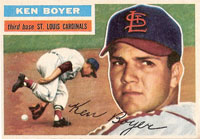
_ Ken Boyer: In his second big-league season, the third baseman became a star in 1956, with 26 home runs, 98 RBI and a .306 batting average. As Cardinals manager from 1978-80, he was 166-191, though he did post a winning record (86-76) in his only full season (1979).

_ Alvin Dark: Acquired from the Giants on June 14, 1956, in a trade involving fan favorite Red Schoendienst, Dark played shortstop and hit .286. In 13 years as a big-league manager (Giants, Athletics, Indians, Padres), Dark was 994-954. He won pennants in both leagues (1962 Giants and 1974 Athletics) and a World Series title (1974 Athletics).

_ Joe Frazier: A 33-year-old outfielder in 1956, Frazier hit .211 in 14 games for the Cardinals before being traded to the Reds on May 16 with shortstop Alex Grammas for outfielder Chuck Harmon. After managing the Mets to an 86-76 record in 1976, Frazier was replaced by Joe Torre when the Mets went 15-30 to start 1977.

_ Alex Grammas: In his third season with the Cardinals, Grammas was the Opening Day shortstop in 1956 and hit .250 in six games before being dealt with Frazier to the Reds. After managing the Pirates for five games at the end of the 1969 season, Grammas managed the Brewers in 1976 and 1977. His big-league managerial mark: 137-191.

_ Grady Hatton: A reserve second baseman, Hatton hit .247 in 44 games for the 1956 Cardinals before his contract was sold to the Orioles on Aug. 1. As Astros manager from 1966-68, he was 164-221.

_ Solly Hemus: A Cardinals player since 1949, Hemus was traded to the Phillies on May 14, 1956, for infielder Bobby Morgan. He was 190-192 as Cardinals manager from 1959-61, including an 86-68 record in 1960.

_ Whitey Lockman: Acquired from the Giants along with Dark, the outfielder batted .249 in 70 games in his only Cardinals season. Lockman was 157-162 as Cubs manager from 1972-74.

_ Red Schoendienst: An eight-time all-star as a Cardinal, the second baseman was hitting .314 for St. Louis in 1956 when he was traded to the Giants. As Cardinals manager from 1965-76 (plus stints as an interim in 1980 and 1990), Schoendienst won two pennants (1967, 1968), a World Series championship (1967) and compiled a record of 1,041-955.

_ Bill Virdon: The Opening Day center fielder for the Cardinals was hitting .211 in 24 games when traded to the Pirates on May 17 for pitcher Dick Littlefield and outfielder Bobby Del Greco. In 13 years as manager of the Pirates, Yankees, Astros and Expos, Virdon was 995-921.

In his lone season with the Cardinals, Gino Cimoli achieved a standard no other St. Louis right-handed batter had matched in 20 years.

Cimoli hit 40 doubles for the 1959 Cardinals.

He was the first Cardinal to reach the 40-double mark since Stan Musial hit 41 in 1954 and the first right-handed batter to do it for St. Louis since Joe Medwick’s 48 in 1939.

Cimoli’s output placed him fourth in the National League in doubles in 1959, trailing only the Reds’ Vada Pinson (47), the Braves’ Hank Aaron (46) and the Giants’ Willie Mays (43).

Cimoli was an unlikely candidate to hit 40 doubles. In a 10-year big-league career, his next-best total was 22 doubles.

Acquired by the Cardinals from the Dodgers on Dec. 4, 1958, for outfielder Wally Moon and pitcher Phil Paine, Cimoli opened the 1959 season as the starting center fielder, ahead of Curt Flood.

In need of better corner outfield play _ the Cardinals had three first basemen (Stan Musial, Joe Cunningham and Bill White) playing outfield _ St. Louis sometimes shifted Cimoli to right or left and put Flood in center.

Cimoli played 95 games in center field, 56 in right and 47 in left for St. Louis.

Primarily batting second in the order, Cimoli had 145 hits in 143 games, batting .279 with eight home runs and 72 RBI.

On May 10, 1959, he went 7-for-10 with six runs, three doubles, a homer and four RBI in the Cardinals’ doubleheader split with the Cubs.

In the opener, won by the Cubs, 10-9, Cimoli was 4-for-6 with a double, homer and two RBI. Boxscore

In the second game, Chicago led 7-6 in the ninth before Cimoli’s RBI-double into the left-field corner tied the score. Flood followed with a single, scoring Cimoli with the winning run in St. Louis’ 8-7 victory. Boxscore

“It’s great to play every day,” Cimoli told the Associated Press. “I’m off to a good start (.349 batting average) and I feel I have a better future with the Cardinals than I did with the Dodgers.”

Desperate for pitching after finishing in seventh place with a 4.34 team ERA in 1959, the Cardinals dealt Cimoli and pitcher Tom Cheney to the Pirates for pitcher Ron Kline, an 11-game winner, on Dec. 21, 1959.

The deal backfired on St. Louis. Kline was 4-9 with a 6.04 ERA in 34 games for the 1960 Cardinals. Cimoli, used as a regular replacement for outfielders Roberto Clemente, Bill Virdon and Bob Skinner, helped Pittsburgh to the 1960 World Series title.

The Cardinals rejected a chance to acquire Chuck Tanner in June 1957 and he made them pay a couple of months later.

As an outfielder for the Braves and Cubs in the 1950s and as manager of the Pirates and Braves in the 1970s and 1980s, Tanner had a long history as a Cardinals opponent.

Tanner broke into the majors with the Braves in 1955. On Aug, 15, he had his first three-RBI game as a big leaguer in the Braves’ 12-1 victory over St. Louis. Boxscore Three days later, Tanner hit a home run against Larry Jackson in the second inning, sparking the Braves to a 5-3 win against the Cardinals. Boxscore

On Sept. 16, 1955, Tanner’s three-run home run against Brooks Lawrence erased a 3-1 Cardinals lead and paced the Braves to a 9-4 victory. Boxscore

In 1957, the Braves were headed to a National League championship. To help their pennant push, the Braves wanted St. Louis outfielder Del Ennis. On June 1, the Braves offered the Cardinals three players _ Tanner, reliever Dave Jolly and their choice of a pitcher, Ray Crone or Gene Conley _ for Ennis, the Associated Press reported.

Cardinals general manager Frank Lane wanted more _ either pitcher Juan Pizarro or pitcher Bob Trowbridge. When the Braves declined, trade talks ceased.

A week later, the Cubs claimed Tanner off waivers.

Inserted into the starting outfield, Tanner produced. In two games against the Cardinals in August 1957, he went 5-for-8 with two runs scored and three RBI. On Aug. 13, Tanner was 3-for-4 with two RBI in Chicago’s 6-2 victory over the Cardinals. Boxscore Two days later, Tanner’s seventh-inning home run against the Cardinals’ Sam Jones helped the Cubs to a 4-1 win. Boxscore

In 1958, Tanner’s last season as a National League player, he delivered a key blow against the Cardinals in an unusual situation. On Aug. 31, the Cubs led, 2-1, in the third with two on and Lee Walls at the plate. Cardinals starter Sal Maglie brushed back Walls with a pitch the Cubs batter claimed hit him.

Umpire Frank Secory ruled the ball missed Walls, who argued and was ejected. Tanner took over the at-bat and hit a three-run home run, helping Chicago to an 8-5 victory. Boxscore

Tanner batted .236 with four home runs and 20 RBI in his career against the Cardinals.

After managing the White Sox and Athletics, Tanner went to the National League as manager of the Pirates (1977-85) and Braves (1986-88).

Tanner had a 76-106 record as manager against the Cardinals. He was 29-25 versus St. Louis in the 1970s and 47-81 when facing the Cardinals in the 1980s.

(Updated Nov. 30, 2021)

The Cardinals gave Elston Howard a chance to become the first black broadcaster of a major-league team.

Howard rejected the offer because he had hopes of becoming the first black big-league manager.
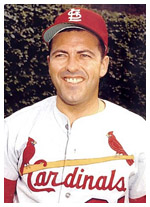
Manager material

Howard, a St. Louis native who played against the Cardinals in the 1964 and 1967 World Series, retired after the 1968 season, ending a 14-year major-league playing career as a catcher and outfielder with the Yankees and Red Sox.

He joined the Yankees coaching staff in 1969. After that season, the Cardinals offered him a chance to join Jack Buck on their broadcasting team, replacing Harry Caray. Howard had broadcast high school football games in 1969 for a New York television station.

Howard thought he had a good chance to eventually replace Ralph Houk as Yankees manager, so he opted to remain a coach rather than take the Cardinals’ offer.

Jim Woods, who had been on the Pirates broadcast team with Bob Prince, replaced Caray in St. Louis. It wasn’t until two years later that Howard revealed the Cardinals’ offer.

“Yankees coach Elston Howard said he was offered a job on the Cardinals play-by-play broadcast team after the 1969 season, but decided against it,” The Sporting News reported in February 1971.

In the book “Elston and Me: The Story of the First Black Yankee,” authors Arlene Howard (Elston’s widow) and Ralph Wimbish wrote, “Someone from the Cardinals called and asked if he was interested in becoming a broadcaster … He (Howard) turned down an offer to work with Jack Buck doing St. Louis Cardinals games.”

Bill White, the former Cardinals first baseman and a friend of Howard, became the first black broadcaster of a big-league team, joining the Yankees crew in 1971. White told me in a 2011 interview he also was offered a broadcasting job with the Cardinals when Caray was fired after the 1969 season. White said he initially accepted the offer but reconsidered.

In the “Elston and Me” book, the authors said White and Howard were friends. When White became the Yankees’ broadcaster, he turned to Howard, the Yankees’ coach, for advice.

“Elston made my job much easier because he had great knowledge of the players,” White said in the book. “I had to depend on him. He was my eyes and ears on the field.”

When Houk stepped down as manager after the 1973 season, the Yankees bypassed Howard and hired former Cardinals outfielder Bill Virdon as manager for 1974.

“I knew Ellie wanted to manage,” White said in the Howard biography. “He should have. He had as much experience as anybody out there. There is no reason he couldn’t have been a manager.”

In 1975, Frank Robinson became the first black big-league manager, with the Cleveland Indians.

Cardinals tryout

Howard had hoped, even expected, to begin his big-league playing career with his hometown Cardinals. After graduating from Vashon High School in the late 1940s, he attended a four-day tryout camp at St. Louis’ Sportsman’s Park and performed well, but the Cardinals never made an offer.

“The Cardinals once had Howard all set for signing,” The Sporting News reported in 1971, “but that was just before they began signing Negroes.”

In the “Elston and Me” book, Howard recalled, “I did as good as anybody else at the tryout. I pumped about three of them out of the park and I made it to the final day of the tryout, then they said they’d send me a letter.”

According to the book, “Elston would have signed with the Cardinals, but he never heard back from them. They were not ready to sign any black players.”

After playing for the Negro American League Kansas City Monarchs, Howard signed with the Yankees in 1950. When he made it to the big leagues with them in 1955 at 26, he was the first black Yankees player _ eight years after Jackie Robinson had broken the color barrier with the Dodgers and one year after the first black, Tom Alston, played for the Cardinals.

After Howard was named Most Valuable Player of the International League while a Yankees prospect in 1954, the Cardinals tried to trade for him. Cardinals general manager Dick Meyer confirmed the Cardinals submitted a list of shortstops for the Yankees to choose from in exchange for Howard, but the negotiations ended when the Yankees asked for third baseman Ken Boyer, The Sporting News reported.

Howard played in 10 World Series (nine with the Yankees) and won the American League Most Valuable Player Award in 1963.

In his first two appearances for the Cardinals, Ron Piche earned saves in both games, energizing a staff making a mid-summer push to get the club back into the pennant race.

Piche couldn’t sustain that splendid start, however, and, after finishing the 1966 season with the Cardinals, never pitched in the major leagues again.
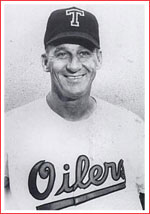
Piche made his major-league debut with the Braves in 1960.

After four seasons with the Braves and a year with the Angels, Piche, 31, began the 1966 season with Class AAA Seattle of the Pacific Coast League. On April 30, 1966, the Cardinals acquired Piche for Earl Francis, a former big-league pitcher who was on their Class AAA Tulsa roster.

Piche, 31, was assigned to Tulsa, managed by Charlie Metro, and he performed well as a reliever. On July 4, 1966, he got his break. With Cardinals general manager Bob Howsam and farm director Sheldon Bender in attendance, Piche made a rare start and pitched a complete-game four-hitter in Tulsa’s 11-2 victory over Tacoma.

The win boosted Piche’s record to 5-3 with a team-best 2.20 ERA and impressed Howsam and Bender.

On July 17, 1966, Cardinals starter Art Mahaffey was lifted with one out in the first inning after surrendering three runs on three hits and two walks. With his staff weakened by injuries and overwork, Cardinals manager Red Schoendienst seriously considered using infielder Jerry Buchek and outfielder Mike Shannon in emergency relief.

Instead, the Cardinals dispatched Mahaffey to Tulsa two days later and promoted Piche, who was 6-3 with a 2.00 ERA in 25 games for the Oilers.

The Cardinals began winning, playing as hot as the mid-summer temperatures.

On July 21, 1966, against the Braves at St. Louis, starter Al Jackson took a 7-2 lead into the eighth inning. When he tired, allowing two runs with one out, Schoendiest turned to Piche to protect the 7-4 lead in his Cardinals debut.

Piche faced two batters in the eighth and three in the ninth _ and retired all five on groundouts, earning his first big-league save since 1961 with the Braves.

The win was the Cardinals’ fourth in a row and evened their record at 46-46. Boxscore

The next day, at Chicago, Piche saved a 9-4 Cardinals victory over the Cubs with two scoreless innings of relief, moving St. Louis above .500 for the first time in more than a month. Boxscore

In two games with St. Louis, Piche had more saves than he had in his previous four big-league seasons combined.

Sparked by the improved pitching, the Cardinals climbed to seven games above .500 before slipping back again.

Piche earned a win against the Dodgers with two perfect innings of relief in St. Louis’ 3-2, 13-inning victory on Aug. 20, 1966. Boxscore

He finished with a 1-3 record, two saves and a 4.26 ERA in 20 relief appearances.

In the winter, the Cardinals assigned Piche to Tulsa. He pitched well for manager Warren Spahn’s Oilers in 1967 (4-2, 3.07 ERA in 46 games) but never got called back by the Cardinals.

On April 22, 1968, St. Louis traded Piche and pitcher Jack Lamabe to the Cubs for pitchers Pete Mikkelsen and Dave Dowling.

Piche pitched in the minor leagues until 1972 before he became a coach, scout and community ambassador for the Expos. Nicknamed “Monsieur Baseball” in Quebec, he was elected to the Canadian Baseball Hall of Fame.

Less than a year after offering him their big-league pitching coach job, the Cardinals fired Hall of Fame left-hander Warren Spahn as manager of their Class AAA team.

The Tulsa Oilers were 15 games below .500 and in last place when Spahn was fired. The Cardinals said Spahn’s dismissal was based on a desire to give other managers in their system a chance to advance.

On Aug. 27, 1971, Cardinals general manager Bing Devine arrived unannounced in Tulsa, met with Spahn and told him his contract would be terminated after the completion of the American Association season.

Spahn responded he wouldn’t manage the remaining seven games. Tulsa outfielder Gary Geiger, a former big-leaguer, filled in for Spahn.

“I certainly respect Bing for flying to Tulsa to tell me,” Spahn said to The Sporting News. “He could have as easily picked up a phone and told me.”

Spahn, 50, said Devine informed him there were no other jobs for him with the Cardinals and “there were young prospective managers in the organization who needed to move up.”

Jack Krol, 35, who managed Class AA Arkansas in 1971, replaced Spahn at Tulsa for the 1972 season.

According to The Sporting News, Spahn had been offered the job of pitching coach on Cardinals manager Red Schoendienst’s staff in October 1970 after Billy Muffett was fired. Spahn chose to remain Tulsa manager.

Clyde King, a former Cardinals minor-league manager and pitching instructor, also was considered to replace Muffett, but King became manager of the Class AAA Richmond Braves, and the Cardinals settled for former reliever Barney Schultz as their pitching coach.

A day after Spahn’s firing, Aug. 28, 1971, Tulsa general manager Hugh Finnerty quit in protest, saying he hadn’t been consulted.

“I haven’t felt like I was general manager,” Finnerty said. “I felt like the releasing of Spahn was ill-timed, coming just seven days before the end of the season.”

Oilers owner A. Ray Smith told The Sporting News the Cardinals had contacted him two weeks before Spahn’s firing to advise him of their decision.

“The Cardinals pay 100 percent of the manager’s salary and I think that gives them the right to do what they want _ although they have never tried to cram anything down our throats,” Smith said.

Spahn had been Tulsa’s manager for five seasons _ the longest stint in franchise history. When he became Tulsa manager in 1967, it was at the urging of Smith and at great cost to the Cardinals.

According to The Sporting News, the Cardinals’ first choice to manage the 1967 Tulsa team was Sparky Anderson, who managed the Cardinals’ Class A St. Petersburg club to a Florida State League championship in 1966. Smith wanted Spahn, who never had managed. The Cardinals relented and assigned Anderson to manage their Class A Modesto team in 1967.

Upset he had been passed over for the Class AAA job, Anderson left the Cardinals’ organization after the 1967 season and accepted a minor-league managing job in the Reds’ system.  In October 1969, Anderson was selected manager of the Reds and embarked on his Hall of Fame career.

After the Cardinals fired him, Spahn became pitching coach of the 1972 Cleveland Indians. Gaylord Perry earned 24 wins and received the Cy Young Award with Spahn as his coach that season, and the Indians had a 2.92 team ERA.